 May 2023 in “Research Square (Research Square)”
 Shi-Bi-Man activates hair follicle stem cells and promotes hair growth by changing lactic acid metabolism and other cellular processes.
44 citations
,
January 1984 in “Molecular and Cellular Biochemistry” January 2012 in “프로그램북(구 초록집)”  24 citations
,
May 2019 in “PLOS ONE”
24 citations
,
May 2019 in “PLOS ONE” The African spiny mouse can fully regenerate its muscle without scarring, unlike the common house mouse.
43 citations
,
January 2016 in “Oxidative medicine and cellular longevity” THSG from a Chinese plant helps with aging and related diseases.
 36 citations
,
June 2021 in “Experimental & Molecular Medicine”
36 citations
,
June 2021 in “Experimental & Molecular Medicine” Targeting Hedgehog signaling may help treat ligamentum flavum fibrosis.
2 citations
,
July 2024 in “Biomedicines” Bone marrow cells improved tendon health better than platelet-rich plasma.
52 citations
,
June 1991 in “Journal of Virology” The hamster polyomavirus middle T antigen is linked to tumors in hamsters and associates with a specific tyrosine kinase.
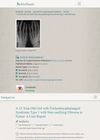 August 2022 in “Journal of Comprehensive Pediatrics”
 A girl with a rare genetic disorder had a unique bone condition, highlighting the need for careful diagnosis and suggesting the disorder might be more common than thought.
46 citations
,
November 2007 in “Gene Expression Patterns” Trps1 plays a key role in hair follicle development and cycling.
 1 citations
,
November 2023 in “iScience”
1 citations
,
November 2023 in “iScience” A protein called desmoglein 3 is important for keeping hair follicle stem cells inactive and helps in their regeneration.
19 citations
,
April 2021 in “Stem Cell Research & Therapy” SVF cell transplantation improves skin regeneration safely.
11 citations
,
March 2023 in “Stem Cell Research & Therapy” Epidermal stem cells improve skin graft survival by promoting early blood vessel formation.
CCC1 is essential for pH balance and normal cell function in plants.
 25 citations
,
April 2015 in “Journal of Investigative Dermatology”
25 citations
,
April 2015 in “Journal of Investigative Dermatology” GasderminA3 is important for normal hair cycle transitions by controlling Wnt signaling.
August 2025 in “Stem Cells” A systems biology approach helps improve mesenchymal stromal cell therapies by mapping interactions and identifying treatment targets.
 April 2025 in “Journal of Investigative Dermatology”
 Two microRNAs in stem cell exosomes help treat hair loss by targeting a specific signaling pathway.
 12 citations
,
September 2021 in “Stem Cell Reviews and Reports”
12 citations
,
September 2021 in “Stem Cell Reviews and Reports” StemMACS media is better for growing therapeutic stem cells than PowerStem media.
50 citations
,
September 2023 in “Biomarker Research” S100A6 is important for cell functions and can help diagnose and treat diseases.
The gene Endothelin 3 makes mice's fur darker by increasing pigment cells and pigment levels.
MSC-CM improved aged skin in mice.
 93 citations
,
June 2011 in “Journal of Neuroscience”
93 citations
,
June 2011 in “Journal of Neuroscience” p63 is essential for activating and differentiating stem cells in the nose's olfactory tissue.
April 2021 in “Journal of Investigative Dermatology” A deep learning model was developed to help diagnose trichothiodystrophy by analyzing hair patterns.
 March 2026 in “Zenodo (CERN European Organization for Nuclear Research)”
 The N-K GM Series offers highly selective, eco-friendly medicines targeting harmful microbes, free for personal use.
 October 2023 in “Cell & bioscience”
 A special gene region controls the re-emergence of a primitive wool type in Merino sheep, improving their wool yield and adaptability.
 81 citations
,
November 2012 in “Journal of the National Cancer Institute”
81 citations
,
November 2012 in “Journal of the National Cancer Institute” The tumor suppressor gene FLCN affects mitochondrial function and energy use in cells.
MFN2 mutations cause mitochondrial problems, unusual fat distribution, and low leptin despite high body fat.
10 citations
,
March 2022 in “Frontiers in Oncology” HOTTIP and miR-10b contribute to glioma therapy resistance by affecting cell behavior, suggesting they could be targets for treatment.
 December 2024 in “Stem Cell Research & Therapy”
 ZO-1 helps hair follicle stem cells renew better by changing their structure.
 9 citations
,
July 2010 in “British Journal of Dermatology”
9 citations
,
July 2010 in “British Journal of Dermatology” The document suggests a rare skin condition might be caused by a genetic phenomenon.