 2 citations
,
December 2008 in “Clinical and Experimental Dermatology”
2 citations
,
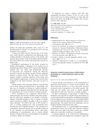
December 2008 in “Clinical and Experimental Dermatology” A small forehead lesion led to the discovery of a significant brain arteriovenous malformation in a young girl.
110 citations
,
January 1983 in “Brain Research Reviews” Monkey lips have dense sensory nerves similar to those in other skin areas, explaining their sensitivity.
 3 citations
,
September 2010 in “International Society of Hair Restoration Surgery”
3 citations
,
September 2010 in “International Society of Hair Restoration Surgery” Balancing artistic design and precision improves hair transplant results.
 3 citations
,
May 2013 in “Pediatric Dermatology”
3 citations
,
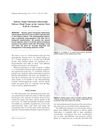
May 2013 in “Pediatric Dermatology” A newborn girl had a rare case of salivary gland tissue on her chest, which was safely removed.
December 2023 in “JEADV Clinical Practice” Brownish halos around axillary hair can help diagnose frontal fibrosing alopecia.
January 2022 in “Clinical Cases in Dermatology” A woman's scalp nodule was a common, harmless pilar cyst, treated by surgical removal.
January 2026 in “Case Reports in Dermatological Medicine” Intralesional steroids effectively treated a young female's scalp nodules without recurrence.
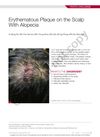
The woman has a scalp condition causing hair loss.
 August 2023 in “British journal of dermatology/British journal of dermatology, Supplement”
 Rubbing or pressing on the face can cause small bumps, and changing posture along with certain creams can improve them.
March 2024 in “International journal of molecular sciences” taVNS reduces vitiligo symptoms in mice.
7 citations
,
January 2015 in “PubMed” Ultrasound biomicroscopy is useful for viewing hair follicles in alopecia areata.
June 2023 in “Value in Health” Alopecia areata treatments often cause headaches and infections, highlighting the need for safer options.
 2 citations
,
August 2010 in “Journal of the American Academy of Dermatology”
2 citations
,
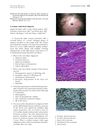
August 2010 in “Journal of the American Academy of Dermatology” A 65-year-old woman has a growing bald spot on her scalp.
7 citations
,
May 2021 in “Clinical Case Reports” Alopecic and aseptic nodules of the scalp are rare, treatable, and often resolve with doxycycline or on their own.
 35 citations
,
November 2010 in “Journal of Cutaneous Pathology”
35 citations
,
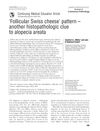
November 2010 in “Journal of Cutaneous Pathology” Dilated follicular infundibula and increased catagen/telogen follicles are key indicators for diagnosing alopecia areata.
18 citations
,
December 1992 in “Journal of Cutaneous Pathology” Skin tumors and normal skin structures have different lectin-binding patterns.
 February 2026 in “Cureus”
 Two methods reliably measure scalp area and hair count.
2 citations
,
October 2000 in “Journal of Investigative Dermatology” AUC and APL are distinct conditions needing careful clinical assessment.
July 2026 in “Journal of the American Academy of Dermatology” 4 citations
,
January 2025 in “Diagnostics” High-frequency ultrasonography helps diagnose and manage hair and nail disorders safely and effectively.
 1 citations
,
August 2023 in “bioRxiv (Cold Spring Harbor Laboratory)”
1 citations
,
August 2023 in “bioRxiv (Cold Spring Harbor Laboratory)” Certain cells in the adult mouse ear come from cranial neural crest cells, but muscle and hair cells do not.
 10 citations
,
July 2008 in “Journal of Cutaneous Pathology”
10 citations
,
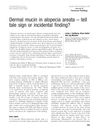
July 2008 in “Journal of Cutaneous Pathology” Increased mucin in the skin might indicate lupus in patients with hair loss, but more research is needed.
July 2025 in “Journal of Investigative Dermatology” Candida auris uses the immune response to colonize hair follicles.
 13 citations
,
April 1994 in “Journal of Investigative Dermatology”
13 citations
,
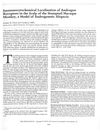
April 1994 in “Journal of Investigative Dermatology” Androgen receptors found in monkey scalps, similar to humans, affect hair growth.
 April 2023 in “Journal of Cutaneous and Aesthetic Surgery”
 The conclusion is that a safe donor area for hair transplants varies and should be chosen based on individual factors like race, future hair loss, family history, and specific thinning patterns.
 April 2020 in “International Journal of Research in Dermatology”
 Scalp skin conditions are more common in young adults and teenagers, especially males, with itching being the main complaint. The most common conditions are psoriasis and alopecia areata, and these can significantly affect a person's social life due to their psychological impact.
18 citations
,
January 2013 in “PLoS ONE” HLA-DRB5 and other genes may be linked to alopecia universalis.
July 2026 in “SKIN The Journal of Cutaneous Medicine” Accurate diagnosis of AANS is crucial for effective treatment and hair regrowth.
 September 2024 in “Journal of the American Academy of Dermatology”
 Most patients prefer clinics that play music during procedures.