19 citations
,
April 2021 in “Stem Cell Research & Therapy” SVF cell transplantation improves skin regeneration safely.
 11 citations
,
August 2021 in “Stem Cell Research & Therapy”
11 citations
,
August 2021 in “Stem Cell Research & Therapy” The document concludes that using a person's own fat cells (SVF) can significantly increase hair thickness and density, suggesting it could be a promising treatment for hair loss.
11 citations
,
August 2023 in “Regenerative Therapy” SVF is safe and effective, but research quality is low; new guidelines are proposed to improve future studies.
36 citations
,
July 2022 in “Stem Cell Research & Therapy” SVF may improve nanofat treatment for acne scars, but more research is needed.
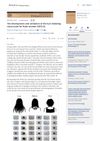 October 2023 in “The Journal of Dermatology”
 The HSVS-A is an effective tool for quickly screening hair shedding in Asian women.
 30 citations
,
July 2017 in “Stem cells and cloning”
30 citations
,
July 2017 in “Stem cells and cloning” SVF-enhanced adipose transplantation shows potential as a hair loss treatment.
 316 citations
,
June 2017 in “Stem Cell Research & Therapy”
316 citations
,
June 2017 in “Stem Cell Research & Therapy” Fat tissue-derived cells show promise for repairing body tissues, but more research and regulation are needed for safe use.
19 citations
,
October 2023 in “Bioengineering” tSVF is effective for treating inflammation-related conditions, with centrifugation being the best method for isolation.
 4 citations
,
June 2022 in “Clinical, cosmetic and investigational dermatology”
4 citations
,
June 2022 in “Clinical, cosmetic and investigational dermatology” The new SFS Scale predicts hair transplant difficulty using hair and skin types, with thick skin and coily hair being hardest to work with.
 June 2021 in “Research Square (Research Square)”
 Using fat-derived cells to treat hair loss increased hair density and thickness without side effects.
January 2026 in “Minia Journal of Medical Research” SVF cell therapy may help regenerate hair in androgenic alopecia.
1 citations
,
April 2023 in “Preprints.org” SEFFI is a safe and effective anti-aging treatment with few complications.
28 citations
,
June 2023 in “Small” VVF alone can't fully describe porosity in granular scaffolds.
 12 citations
,
July 2011 in “European Journal of Dermatology”
12 citations
,
July 2011 in “European Journal of Dermatology” The VSCAPSI is a helpful method for evaluating the severity of scalp psoriasis.

Fat stem cell treatment is safe and increases hair density for hair loss, but more research is needed.
December 2020 in “American Journal of Transplantation” Early recognition and treatment of VATS in transplant patients improve outcomes.
28 citations
,
June 1995 in “The Journal of Dermatology” The flaky skin mouse mutation is a natural model for studying human psoriasis.
 March 2026 in “Frontiers in Cell and Developmental Biology”
 Autologous cell-based therapies, especially SVF, effectively and safely improve atrophic acne scars.
July 2017 in “DOAJ (DOAJ: Directory of Open Access Journals)” SVF-enhanced fat injections may effectively treat baldness by promoting hair growth.
February 2021 in “International journal of regenerative medicine” A new method using fat tissue cells may help treat hair loss.
4 citations
,
December 2017 in “Journal of zoo and wildlife medicine” Hormonal changes during the reproductive cycle may cause seasonal skin problems in captive female fossas.
 134 citations
,
June 2012 in “International Journal of Oral and Maxillofacial Surgery”
134 citations
,
June 2012 in “International Journal of Oral and Maxillofacial Surgery” Facial feminization surgery is effective in helping transgender women appear more feminine and has high patient satisfaction.
6 citations
,
June 2014 in “PubMed” Combining TUSV with finasteride effectively treats recurrent hemospermia.
 April 2023 in “Research Square (Research Square)”
 Combining stromal vascular fraction (SVF) injections with fractional CO2 laser treatment is more effective for treating burn scars than using the laser alone.
March 2022 in “Al-Azhar International Medical Journal (Print)” SVF treatment is more effective than Nanofat for hair growth.
March 2026 in “Journal of the European Academy of Dermatology and Venereology” VESALT improves alopecia areata assessment by including non-scalp areas and is reliable and user-friendly.
 33 citations
,
August 2013 in “British Journal of Dermatology”
33 citations
,
August 2013 in “British Journal of Dermatology” Lack of small, fine hair on the front hairline is a key sign of frontal fibrosing alopecia.
157 citations
,
May 2016 in “Plastic and reconstructive surgery/PSEF CD journals” Facial feminization surgery is safe and patients are satisfied, but more detailed research is needed.

Processed fat, SVF, and PRP are safe and effective for facial rejuvenation and hair growth.
21 citations
,
August 2002 in “British Journal of Ophthalmology” Intralesional cidofovir may be a viable alternative treatment for SCC.