April 2026 in “Proceedings of the National Academy of Sciences” Tmem30b is essential for hearing by maintaining hair cell structure in the ear.
27 citations
,
February 1991 Cuticle damage doesn't affect hair's tensile strength; the cortex is responsible for it.
July 2024 in “Journal of Investigative Dermatology” Substance P helps restore skin thickness and cell renewal when sensory nerves are reduced.
 November 2022 in “Journal of Investigative Dermatology”
 Human-induced stem cell-created skin models can help understand skin diseases by studying the skin's layers.
June 2018 in “Chinese Journal of Dermatology” Connective tissue nevi have distinct features, and reflectance confocal microscopy is useful for early diagnosis.
77 citations
,
September 2017 in “Journal of Investigative Dermatology” TRPV3 in skin cells causes inflammation and cell death.
 April 2016 in “Journal of Investigative Dermatology”
 Sonic hedgehog signaling is needed for the development of touch-receptor cells in the skin, and the loss of Polycomb repressive complex 2 can lead to more of these cells.
 88 citations
,
August 2019 in “Nature communications”
88 citations
,
August 2019 in “Nature communications” Researchers found a specific immune receptor in patients that causes severe skin reactions to a drug.
March 2024 in “International journal of molecular sciences” taVNS reduces vitiligo symptoms in mice.
 April 2023 in “Journal of Investigative Dermatology”
 An automated system can predict death risk in thin melanoma by analyzing immune cells.
97 citations
,
January 2005 in “Wear” Human hair and skin friction vary by ethnicity, hair type, and environmental conditions.
16 citations
,
May 2017 in “Journal of Clinical Ultrasound” A rare finger tumor was imaged, showing a unique pattern not seen before.
 4 citations
,
July 2022 in “International Journal of Cosmetic Science”
4 citations
,
July 2022 in “International Journal of Cosmetic Science” Hair moisture behavior helps tell apart different chemical treatments and reveals insights into hair structure.
 31 citations
,
September 2016 in “PLoS ONE”
31 citations
,
September 2016 in “PLoS ONE” Cell division orientation varies by body site and is linked to epidermal thickness and cell density.
1 citations
,
April 2024 in “Lasers in Surgery and Medicine” The model helps improve medical devices by showing how skin deforms under pressure.
 1 citations
,
February 2025 in “Scientific Reports”
1 citations
,
February 2025 in “Scientific Reports” The method effectively analyzes skin tissue changes, especially in the arrector pili muscle and nerve fibers with hair follicles.
January 1994 in “Journal of the society of cosmetic chemists”  17 citations
,
December 2009 in “Journal of Pediatric Orthopaedics”
17 citations
,
December 2009 in “Journal of Pediatric Orthopaedics” Two babies needed surgery to remove hair tightly wrapped around their toes to prevent serious injury.
106 citations
,
June 1990 in “Journal of Investigative Dermatology”  February 2023 in “International journal of research - granthaalayah”
 The new microscope method helps study energy from pre-cancerous skin cells.
 April 2024 in “arXiv (Cornell University)”
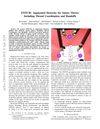
 STITCH improves suture accuracy and efficiency, especially with human help.
5 citations
,
March 2025 in “Tissue Engineering and Regenerative Medicine” 15 citations
,
December 2020 in “The Journal of General Physiology” Acid can block TRPV3 from outside the cell but boost its function from inside.
13 citations
,
April 2023 in “Biochemical Society Transactions” Tissue stiffness helps shape how organisms develop.
20 citations
,
August 2015 in “Behaviour change” Cognitions significantly influence Trichotillomania, suggesting cognitive therapies could help.
 17 citations
,
January 1996 in “Aesthetic Plastic Surgery”
17 citations
,
January 1996 in “Aesthetic Plastic Surgery” The tumescent technique improves hair micrografting by providing lasting anesthesia, reducing bleeding, and increasing patient comfort.
 April 2026 in “Zenodo (CERN European Organization for Nuclear Research)”
 Cationic conditioning systems improve hair combability and sensory feel.
 December 2013 in “Appetite”
 A defective gene causes hair loss and taste insensitivity in BTBR mice.
 August 2019 in “Journal of Investigative Dermatology”
 The study found that tight junctions reach the top layer of the skin's stratum granulosum, not just the second top layer as previously thought.
2 citations
,
August 2002 in “British Journal of Ophthalmology” Tangent screens help detect visual field defects from vigabatrin.