 140 citations
,
December 2017 in “Journal of Controlled Release”
140 citations
,
December 2017 in “Journal of Controlled Release” Microneedles improve drug delivery in various body parts, are safe and painless, and show promise in cosmetology, vaccination, insulin delivery, and other medical applications.
14 citations
,
March 2017 in “Genes and immunity” Certain microRNAs may help treat alopecia areata by targeting immune pathways.
July 2025 in “Ultrasound in Medicine & Biology” UTMD with diclofenac and Doxil® improves cancer treatment by boosting immune response and reducing tumor-supporting cells.
25 citations
,
June 2024 in “Pharmaceutics” Scaffold-based drug delivery systems improve oral cancer treatment by targeting drugs directly to cancer cells, reducing side effects.
16 citations
,
January 2025 in “Burns & Trauma” Nanomedicine-based immunotherapy shows promise in improving tissue repair and regeneration.
2 citations
,
November 2025 in “Pharmaceutics” Cell-mediated drug delivery systems improve skin disease treatment by using living cells for precise, prolonged, and less toxic therapy.
1 citations
,
February 2023 in “Pharmaceutics” Cell proteomic footprinting enhances cancer vaccine quality by ensuring correct antigen composition.
4 citations
,
January 2021 in “Genetics and Molecular Biology” COVID-19 treatments and vaccines face challenges due to genetic differences in people and the virus.
 March 2026 in “Journal of Nanotheranostics”
 Nanotechnology improves CRISPR-Cas9 delivery for cancer treatment, but challenges remain.
September 2025 in “Diseases” Higher levels of certain proteins in the blood are linked to more severe patchy alopecia areata.
June 2020 in “Journal of Investigative Dermatology” The symposium highlighted the importance of genetics in understanding and treating complex skin diseases.
15 citations
,
August 2023 in “Journal of Nanobiotechnology” Nanotechnology could improve scar treatment but needs more development.
7 citations
,
January 2025 in “Journal of Experimental & Clinical Cancer Research” PRMT5 inhibitors effectively fight adenoid cystic carcinoma in salivary glands.
3 citations
,
October 2018 in “Journal of Mind and Medical Sciences” Biological therapy boosts the immune system to effectively fight melanoma.
2 citations
,
March 2025 in “Nanoenergy Advances” Bioelectronic nanogenerators show promise for cancer treatment but need better understanding and development.

Polydopamine is promising for personalized medicine and biomedical technology due to its strong adhesion and biocompatibility.
March 2024 in “Current issues in molecular biology” Personalized medicine in dermatology uses molecular biomarkers to improve diagnosis and treatment but needs further advancements for practical use.
21 citations
,
April 2025 in “MedComm” Alopecia areata causes unpredictable hair loss, and more research is needed to fully understand and treat it effectively.
4 citations
,
May 2025 in “International Journal of Nanotechnology and Nanomedicine” Nanocarriers show promise for improving skin drug delivery in treating skin conditions.
 1 citations
,
January 2023 in “International Journal of Molecular Sciences”
1 citations
,
January 2023 in “International Journal of Molecular Sciences” Understanding how Regulatory T Cells work could help create treatments for certain skin diseases and cancers.
8 citations
,
August 2025 in “Journal of Translational Medicine” CD44 signaling can help heal wounds without scars.
5 citations
,
March 2025 in “Pediatric Dermatology” Alopecia areata in children is caused by the immune system attacking hair follicles due to genetic factors.
 318 citations
,
January 2022 in “Signal Transduction and Targeted Therapy”
318 citations
,
January 2022 in “Signal Transduction and Targeted Therapy” The Wnt/β-catenin pathway is important for body functions and diseases, and targeting it may treat conditions like cancer, but with safety challenges.
 23 citations
,
September 2017 in “Journal of the American Academy of Dermatology”
23 citations
,
September 2017 in “Journal of the American Academy of Dermatology” Apremilast did not work for treating severe alopecia areata.
 15 citations
,
November 2023 in “Supportive Care in Cancer”
15 citations
,
November 2023 in “Supportive Care in Cancer” Dermocosmetics help manage skin issues in cancer patients, improving outcomes and reducing treatment interruptions.
 4 citations
,
January 2018 in “Cancer treatment and research”
4 citations
,
January 2018 in “Cancer treatment and research” The document concludes that systemic therapy is becoming more important in treating head and neck cancer, with new treatments showing promise.
 January 2025 in “Acta Dermatovenerologica Alpina Pannonica et Adriatica”
 JAK inhibitors can help regrow hair in alopecia areata but have potential long-term risks and require careful monitoring.
 74 citations
,
May 2016 in “Current opinion in pediatrics, with evaluated MEDLINE/Current opinion in pediatrics”
74 citations
,
May 2016 in “Current opinion in pediatrics, with evaluated MEDLINE/Current opinion in pediatrics” Both vitiligo and alopecia areata involve an immune response triggered by stress and specific genes, with treatments targeting this pathway showing potential.
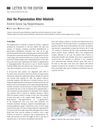 April 2025 in “Turkish Journal of Hematology”
 Nilotinib may cause gray hair to return to its original color.
 April 2019 in “The journal of investigative dermatology/Journal of investigative dermatology”
 High potency topical steroids are the most effective treatment for pediatric alopecia areata.