9 citations
,
January 2012 in “International journal of trichology” Trichostasis spinulosa can be diagnosed with a simple skin biopsy and treated with specific gels, but lesions may return after stopping treatment.
July 2024 in “Skin Appendage Disorders” Trichotillomania requires combined dermatology and psychiatry care for better management and quality of life.
May 2005 in “Faculty Opinions – Post-Publication Peer Review of the Biomedical Literature” Truncated LTBP-1 disrupts TGF-beta signaling, affecting hair growth.
5 citations
,
June 2015 in “The Journal of Dermatology” HTLV-1-associated lichenoid dermatitis (HALD) is linked to an immune response against HTLV-1-infected cells.
 2 citations
,
June 2016 in “PubMed”
2 citations
,
June 2016 in “PubMed” An 11-year-old girl with compulsive hair pulling was successfully treated with therapy and medication.
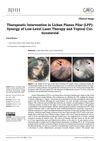 January 2024 in “Brazilian Journal of Hair Health”
 Combining low-level laser therapy with topical corticosteroids effectively improved Lichen Planopilaris symptoms.
13 citations
,
April 2013 in “Immunotherapy” Inhibiting PLA2 enzymes may help treat inflammatory skin diseases like psoriasis and dermatitis.
 3 citations
,
June 2017 in “Medical lasers”
3 citations
,
June 2017 in “Medical lasers” A treatment combining laser energy and injections improved hair loss and unexpectedly also reduced hair graying.
 June 2026 in “Journal of General-Procedural Dermatology & Venereology Indonesia”
 Tofacitinib effectively improves lichen planus pigmentosus symptoms.
 January 2025 in “Biomedical Reports”
 Telitacicept helped stabilize complement levels in a patient with lupus and thyroid cancer.
 April 2023 in “Journal of Investigative Dermatology”
 PX-12 may help treat psoriasis by blocking inflammation and cell death.
71 citations
,
October 2017 in “Journal of Investigative Dermatology” PPAR-γ agonists like pioglitazone may help manage lichen planopilaris but don't fully reverse scarring.
 11 citations
,
May 2021 in “Journal of Cosmetic Dermatology”
11 citations
,
May 2021 in “Journal of Cosmetic Dermatology” Platelet-rich plasma therapy could be an effective treatment for melasma with minimal side effects.
March 2026 in “Voprosy dermatologii i venerologii/Dermatologiâ ža̋ne veneralogiâ ma̋selelerì” Early diagnosis, genetic testing, and personalized care are essential for managing tuberous sclerosis.
1 citations
,
January 2008 14 citations
,
January 1998 in “Dermatology” Polythelia pilosa is a type of extra breast tissue with hair and should be classified as such.
 3 citations
,
April 2022 in “Frontiers in Physiology”
3 citations
,
April 2022 in “Frontiers in Physiology” Ptch2 plays a key role in controlling stem cell function and the ability to regenerate after birth.
52 citations
,
July 2011 in “PubMed” TRPS1 is crucial for bone, kidney, and hair follicle development.
June 2023 in “International Journal of Dermatology” Lichen planus pigmentosus mainly affects middle-aged women with darker skin, is underreported, and is hard to treat.
January 2002 in “Linchuang pifuke zazhi” A young woman had a rare scalp tumor usually found in older women.
 June 2023 in “Research Square (Research Square)”
 A higher genetic risk score increases the chance of getting benign prostatic hyperplasia and affects treatment outcomes in Han Chinese men.
 1 citations
,
January 2025 in “Frontiers in Pharmacology”
1 citations
,
January 2025 in “Frontiers in Pharmacology” Total glucosides of paeony can help treat skin conditions but need more research for clinical use.
May 2024 in “JAAD Case Reports” A young man was diagnosed with a rare hair loss condition usually seen in older women.
March 2026 in “Bioengineering & Translational Medicine” PEGylated thymosin β4 shows promise for treating heart attacks effectively.
February 2026 in “Biophysical Journal”  April 2016 in “Journal of Urology and Nephrology Open Access”
 Thermobalancing Therapy can treat enlarged prostate and improve men's quality of life.
 July 2026 in “International Journal of Molecular Sciences”
 TSG-enriched Polygonum multiflorum extract may effectively treat hair loss by blocking 5α-reductase and activating hair growth pathways.
 11 citations
,
February 2020 in “Dermatology and therapy”
11 citations
,
February 2020 in “Dermatology and therapy” Low-Level Light Therapy significantly reduced inflammation and promoted hair regrowth in patients with Lichen planopilaris.
 22 citations
,
April 2011 in “Anais Brasileiros de Dermatologia”
22 citations
,
April 2011 in “Anais Brasileiros de Dermatologia” Hair transplants can lead to hair loss from lichen planopilaris, and patients should be tested and wait two years before the procedure.
Hair transplants can cause hair loss if done while lichen planopilaris is active; wait until it's inactive for two years and check with a scalp biopsy first.