 July 2018 in “Plastic and Aesthetic Nursing”
 The 2018 ISPAN Meeting emphasized hands-on learning, patient safety, and professional growth in medical aesthetics and reconstructive practices.
 April 2018 in “D-Scholarship@Pitt (University of Pittsburgh)”
 Keratin-75 is secreted by ameloblasts in a unique way without a signal peptide.
 January 2018 in “Advances in Dermatology and Allergology”
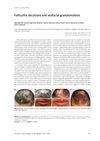
 Treatment with dapsone, topical corticosteroids, and antibiotics improved the man's skin conditions.
 November 2016 in “Endocrinology&Metabolism International Journal”
 PCOS has no cure, but treatments can manage symptoms and improve health.
 April 2016 in “The journal of investigative dermatology/Journal of investigative dermatology”
 MPZL3 is crucial for seborrheic dermatitis development.
 November 2015 in “Aesthetic Surgery Journal”
 Plastic surgery marketing in the U.S. often overlooks men, but targeted campaigns can significantly increase male clientele for cosmetic procedures.
 January 2015 in “Prace Naukowe Uniwersytetu Ekonomicznego we Wrocławiu”
 Using Lasswell's model can make CSR communication more effective and trusted.
 144 citations
,
November 2020 in “Frontiers in immunology”
144 citations
,
November 2020 in “Frontiers in immunology” Targeting the IL-23/IL-17 pathway effectively treats several inflammatory skin diseases.
 125 citations
,
August 2020 in “Frontiers in Immunology”
125 citations
,
August 2020 in “Frontiers in Immunology” Men generally have more severe COVID-19 cases and higher death rates than women due to biological differences.
 86 citations
,
May 2008 in “Cytokine & growth factor reviews”
86 citations
,
May 2008 in “Cytokine & growth factor reviews” TNF family proteins are crucial for the development of skin features like hair, teeth, and mammary glands.
 82 citations
,
April 2008 in “Journal of Investigative Dermatology”
82 citations
,
April 2008 in “Journal of Investigative Dermatology” EDA2R gene linked to hair loss.
 50 citations
,
April 2014 in “Nature Communications”
50 citations
,
April 2014 in “Nature Communications” The research identified new skin traits in mice, some linked to human skin conditions.
 37 citations
,
April 2010 in “FEBS Letters”
37 citations
,
April 2010 in “FEBS Letters” The study concludes that the EDA2R gene is activated by p53 during chemotherapy but is not necessary for chemotherapy-induced hair loss.
 25 citations
,
March 2012 in “Journal of Dermatological Science”
25 citations
,
March 2012 in “Journal of Dermatological Science” Genetic variants linked to ten skin diseases were found, showing both immune and non-immune factors play a role.
 18 citations
,
July 2021 in “Molecular Medicine Reports”
18 citations
,
July 2021 in “Molecular Medicine Reports” The WNT signaling pathway is crucial for mesenchymal stem cells' function and therapy success.
 13 citations
,
March 2017 in “Genomics”
13 citations
,
March 2017 in “Genomics” Genomic approach finds new possible treatments for hair loss.
 11 citations
,
September 2013 in “Journal of the Egyptian Women's Dermatologic Society (Print)”
11 citations
,
September 2013 in “Journal of the Egyptian Women's Dermatologic Society (Print)” Various treatments exist for hair loss, but more research is needed for better options.
 11 citations
,
June 2012 in “Acta histochemica”
11 citations
,
June 2012 in “Acta histochemica” Mice with a Gsdma3 gene mutation have thicker skin and longer hair follicle openings due to increased β-catenin levels.
 5 citations
,
January 2021 in “iScience”
5 citations
,
January 2021 in “iScience” Using a combination of specific cell cycle regulators is better for safely keeping hair root cells alive indefinitely compared to cancer-related methods.
 4 citations
,
May 2025 in “npj Parkinson s Disease”
4 citations
,
May 2025 in “npj Parkinson s Disease” PINK1 is important for controlling gut immune responses linked to early Parkinson's disease.
 2 citations
,
January 2019 in “Medizinische Genetik”
2 citations
,
January 2019 in “Medizinische Genetik” The document reports findings on genetic research, including ethical concerns about genome editing, improved diagnosis of mitochondrial mutations, solving inherited eye diseases, confirming gene roles in epilepsy, linking a gene to aneurysms, and identifying genes associated with age-related macular degeneration.
 2 citations
,
March 2021 in “bioRxiv (Cold Spring Harbor Laboratory)”
2 citations
,
March 2021 in “bioRxiv (Cold Spring Harbor Laboratory)” Hairless mammals have genetic changes in both their protein-coding and regulatory sequences related to hair.
 1 citations
,
November 2025 in “Clinical and Experimental Medicine”
1 citations
,
November 2025 in “Clinical and Experimental Medicine” lncRNAs are important for understanding and treating skin diseases.
 1 citations
,
March 2024 in “Signal transduction and targeted therapy”
1 citations
,
March 2024 in “Signal transduction and targeted therapy” NF-κB signaling is crucial in many diseases and can be targeted for new treatments.
 1 citations
,
October 2025
1 citations
,
October 2025 γδ T cells help control tissue scarring and blood vessel growth in response to foreign objects.
 April 2026 in “Research Square”
 Dapagliflozin helps protect heart cells under stress by improving mitochondrial function and reducing cell damage.

Plakophilin 1 helps control skin cell immune responses to prevent excessive inflammation.

Dual TCR Treg cells are common in mouse tissues and vary by location.

Dual TCR Treg cells are common in various mouse tissues and show diverse characteristics.
 July 2023 in “Письма в Вавиловский журнал генетики и селекции”
 Extracellular nucleic acids help start inflammation needed for tissue repair, but must be properly regulated.