8 citations
,
January 2014 in “Indian Dermatology Online Journal” Trichostasis spinulosa is a common but often unnoticed skin condition involving bundled vellus hairs, especially in people with darker skin or UV exposure.
 1 citations
,
September 2015 in “Clinics in Dermatology”
1 citations
,
September 2015 in “Clinics in Dermatology” The guide helps doctors diagnose hair problems by suggesting a thorough patient history, physical exams, and various diagnostic tools.
February 2023 in “International Journal of Advanced Research” Trichoscopy is a cost-effective and non-invasive tool for diagnosing alopecia areata.
 4 citations
,
May 2021 in “The American Journal of Surgical Pathology”
4 citations
,
May 2021 in “The American Journal of Surgical Pathology” Cutaneous Lymphadenoma is a unique skin tumor with specific protein markers and common gene mutations that may cause continuous cell growth.
 90 citations
,
October 1983 in “British Journal of Dermatology”
90 citations
,
October 1983 in “British Journal of Dermatology” The unit area trichogram is a reliable method to assess hair loss and treatment response in people with androgenic alopecia by measuring hair density and thickness.
 January 2026 in “Indian Journal of Dermatopathology and Diagnostic Dermatology”
 Corkscrew hairs can help diagnose trichotillomania.
52 citations
,
October 1997 in “American Journal of Psychiatry” Trichotillomania is a complex condition involving compulsive hair pulling that causes distress and hair loss.
 April 2026 in “Research Square”
 Trichoscopy is reliable for diagnosing different types of frontal non-scarring hair loss.
54 citations
,
November 1986 in “Journal of the American Academy of Dermatology” Generalized trichoepitheliomas with hair loss may indicate myasthenia gravis.
35 citations
,
September 2003 in “Archives of dermatology” Tiger tail bands in hair are caused by wavy hair fibers with melanin, unlike straight fibers in normal hair.
 34 citations
,
April 2016 in “International Journal of Dermatology”
34 citations
,
April 2016 in “International Journal of Dermatology” Trichoscopy is a useful method for identifying primary cicatricial alopecias and their specific types.
 February 2021 in “IP Indian journal of clinical and experimental dermatology”
 A rare non-cancerous tumor that grows like hair was found in an unusual spot, the vulva.
 June 2021 in “Scholars journal of applied medical sciences”
 Trichofolliculoma, a rare benign hair follicle tumor, can potentially recur.
January 2026 in “Indian Journal of Paediatric Dermatology” Trichoscopy effectively diagnoses and monitors treatment in children with tinea capitis.
121 citations
,
December 2001 in “American Journal of Dermatopathology” TB and BCC tumors show similar follicular differentiation patterns.
July 2002 in “Science Signaling” Modified β-catenin can cause different effects in mouse skin cells, leading to cysts or tumors depending on the cell type.
 28 citations
,
August 2018 in “Dermatologic Clinics”
28 citations
,
August 2018 in “Dermatologic Clinics” Trichoscopy is a useful tool for diagnosing hair and scalp issues, but doctors must be careful to avoid mistakes.
June 2025 in “British Journal of Dermatology” Trichoscopy is highly effective for diagnosing scalp disorders and should be used more in dermatology.
 January 2018 in “Springer eBooks”
 Trichotillomania is a condition where people repeatedly pull out their hair, which can be triggered by stress and has various physical signs.
 June 2026 in “IP Indian Journal of Clinical and Experimental Dermatology”
 Trichoscopy is useful for diagnosing and monitoring male pattern hair loss.
 32 citations
,
January 2014 in “Dermatology Research and Practice”
32 citations
,
January 2014 in “Dermatology Research and Practice” Trichoscopy can effectively tell apart tinea capitis and alopecia areata in children by looking for specific hair shapes.
May 2022 in “Dermatology practical & conceptual” Trichoscopy is crucial for diagnosing and managing androgenetic alopecia, showing increased vellus hairs, empty follicles, and fibrosis with severity.
35 citations
,
September 2011 in “The Journal of Dermatology” Trichoscopy helps accurately diagnose temporal triangular alopecia.
72 citations
,
July 1984 in “Journal of Investigative Dermatology” Trichotillometry can measure hair plucking force, aiding alopecia treatment evaluation.
January 2023 in “Journal of Clinical and Diagnostic Research” Trichoscopic patterns often overlap in scalp disorders, so dermatologists need to stay updated.
January 2003 in “Linchuang pifuke zazhi” A benign skin tumor was removed from a man's leg, and it didn't come back after 9 months.
July 2002 in “Science s STKE” Modified β-catenin causes different effects in hair and skin cells, leading to cysts or tumors.
 2 citations
,
January 2019 in “Dermatology Review”
2 citations
,
January 2019 in “Dermatology Review” Pigmented vellus and upright regrowing hairs predict hair regrowth in severe alopecia.
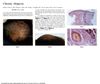 June 1995 in “Archives of Dermatology”
 A woman's hair loss was due to trichotillomania, which is often misdiagnosed and can require different treatments based on age and underlying conditions.