 3 citations
,
January 2016 in “International Journal of Contemporary Pediatrics”
3 citations
,
January 2016 in “International Journal of Contemporary Pediatrics” Children with trichotillomania often pull hair from their scalp and may have other mental health issues.

Trichoscopy is a valuable tool for accurately diagnosing scalp conditions without invasive procedures.
 December 2020 in “TURKDERM”
 A 3-year-old boy was diagnosed with a rare, non-scarring hair loss condition called temporal triangular alopecia.
June 2023 in “The Journal of Family Practice” The hair loss is likely due to a fade haircut.
 April 2016 in “Journal of The American Academy of Dermatology”
 The study found that Temporal Triangular Alopecia often starts in early childhood, mainly affects the left side of the scalp, and has no effective treatment except surgery.
 September 2024 in “Quality in Sport”
 Trichotillomania is an obsessive-compulsive disorder causing hair pulling, needing complex treatment to prevent serious issues.
12 citations
,
January 2001 in “Der Hautarzt” Trichorhinophalangeal syndrome causes hair, facial, and bone issues, with no specific treatment beyond gentle care.
 69 citations
,
January 2015 in “Current problems in dermatology”
69 citations
,
January 2015 in “Current problems in dermatology” Trichoscopy is a quick, noninvasive method to diagnose hair and scalp disorders, often reducing the need for biopsies.
42 citations
,
September 1985 in “British Journal of Dermatology” Trichothiodystrophy causes abnormal protein deposits and distortion in hair follicles.
27 citations
,
February 2006 in “International Journal of Dermatology” Some children and young adults with eyebrow and eyelash hair loss actually have a hair-pulling disorder, often with related psychological issues.
 December 2023 in “Portuguese journal of dermatology and venereology”
 Trichoscopy can reliably distinguish between alopecia areata and trichotillomania.
 November 2017 in “Pediatrics in Review”
 A 4-year-old girl with hair loss was diagnosed with early-onset trichotillomania and improved with behavioral interventions.
October 2025 in “Diagnostics” Temporal triangular alopecia is a harmless, non-progressive hair loss condition.
 November 2024 in “Cureus”
 Combining therapy, behavior techniques, and medication can help manage trichotillomania and depression.
 November 2023 in “International Journal of Dermatology”
 Trichoscopy helps tell apart other hair loss conditions from common hair loss.
 3 citations
,
May 2024 in “Cureus”
3 citations
,
May 2024 in “Cureus” Early detection and removal of hair can prevent damage in hair-thread tourniquet syndrome.
June 2015 in “Turkish Journal of Dermatology” Trichoscopy helps diagnose different hair diseases effectively.
 1 citations
,
January 2018 in “Indian journal of dermatopathology and diagnostic dermatology”
1 citations
,
January 2018 in “Indian journal of dermatopathology and diagnostic dermatology” Trichoscopy helps diagnose and monitor hair and scalp problems without needing many biopsies.
 January 2015 in “Hair therapy & transplantation”
 New hair and scalp disease diagnosis methods are important for correct treatment.
 2 citations
,
July 2015 in “The Open Dermatology Journal”
2 citations
,
July 2015 in “The Open Dermatology Journal” Trichoscopy is a tool for detailed examination of hair and scalp diseases.
September 1998 in “Journal of the European Academy of Dermatology and Venereology” 2 citations
,
April 2008 in “Advances in therapy” Proper diagnosis and treatment of childhood hair loss require distinguishing between alopecia and trichotillomania.
 1 citations
,
July 2024 in “Cutis”
1 citations
,
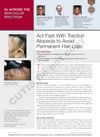
July 2024 in “Cutis” Act quickly to treat traction alopecia to prevent permanent hair loss.
Trichorrhexis nodosa causes hair to break easily, often affecting young to middle-aged black women.
15 citations
,
February 2015 in “Anais brasileiros de dermatologia/Anais Brasileiros de Dermatologia” Dermoscopy helps accurately diagnose temporal triangular alopecia, avoiding unnecessary treatments.
8 citations
,
February 2023 in “Actas Dermo-Sifiliográficas” Dermatologists should learn trichoscopy to better diagnose hair loss conditions.
 January 2017 in “International journal of science and research”
 Trichotillomania is a chronic hair-pulling disorder, more common in females, treated with therapy and sometimes medication.
 6 citations
,
January 2020 in “Postepy Dermatologii I Alergologii”
6 citations
,
January 2020 in “Postepy Dermatologii I Alergologii” Trichoscopy is useful for diagnosing hair-pulling disorder.
 July 2018 in “Elsevier eBooks”
 Stopping tight hairstyles can prevent and reduce traction alopecia.
 2 citations
,
March 2023 in “Skin research and technology”
2 citations
,
March 2023 in “Skin research and technology” Temporal triangular alopecia in infants is mostly seen in males at birth, with unique features that help with diagnosis.