 13 citations
,
January 2018 in “BioMed Research International”
13 citations
,
January 2018 in “BioMed Research International” Scalp involvement is common in pemphigus and can lead to hair loss, with the severity of scalp lesions linked to overall disease severity.
 7 citations
,
July 2019 in “Clinics in Dermatology”
7 citations
,
July 2019 in “Clinics in Dermatology” Hair loss can indicate or worsen with systemic diseases, and treating the underlying condition is important.
 6 citations
,
October 2022 in “American journal of clinical dermatology”
6 citations
,
October 2022 in “American journal of clinical dermatology” The review shows how to properly diagnose and treat the loss of eyebrow and eyelash hair.
 5 citations
,
January 2022 in “Journal of Clinical Medicine”
5 citations
,
January 2022 in “Journal of Clinical Medicine” Dermoscopy and trichoscopy are useful for diagnosing skin signs in Dermatomyositis.
 4 citations
,
May 2022 in “Frontiers in Medicine”
4 citations
,
May 2022 in “Frontiers in Medicine” About 11% of patients with secondary syphilis had Syphilitic Alopecia, which usually improved with treatment.
 3 citations
,
October 2021 in “Journal of Cosmetic Dermatology”
3 citations
,
October 2021 in “Journal of Cosmetic Dermatology” Trichoscopy helps tell apart Frontal Fibrosing Alopecia and Lichen planopilaris by showing different hair and scalp features.
 2 citations
,
May 2022 in “Clinical, Cosmetic and Investigational Dermatology”
2 citations
,
May 2022 in “Clinical, Cosmetic and Investigational Dermatology” Trichoscopy and pathological examination both have unique benefits and cannot completely replace each other in evaluating hair.
1 citations
,
June 2023 in “Cosmoderma” Trichoscopy is better than the hair pull test for tracking alopecia areata.
 June 2026 in “Indian Journal of Dermatology Venereology and Leprology”
 Trichoscopy helps detect and monitor androgenetic alopecia by identifying key scalp signs.
 May 2026 in “Frontiers in Cell and Developmental Biology”
 Collagen networks play a key role in hair loss and follicle miniaturization.
 April 2026 in “International Journal of Drug Delivery Technology”
 Alopecia can often be managed effectively with various treatments, but early diagnosis is crucial for preventing permanent hair loss.
March 2026 in “Pakistan Armed Forces Medical Journal” Trichoscopy is useful for diagnosing and assessing androgenetic alopecia severity.
Loose anagen hair syndrome in children may improve with age, but treatment results vary.
 September 2025 in “IP Indian Journal of Clinical and Experimental Dermatology”
 Minoxidil effectively treats patterned hair loss in both males and females.
 July 2025 in “Clinical Dermatology Review”
 PRP significantly boosts hair growth in androgenic alopecia patients.
 April 2025 in “Clinical Dermatology Review”
 Trichoscopy is effective for diagnosing hair and scalp disorders without invasive biopsies.
 March 2025 in “International Journal of Trichology”
 Injecting stem cells from a patient's own fat can improve hair growth in women with hair loss.
 December 2024 in “Texila international journal of public health”
 Trichoscopy effectively diagnoses and monitors cicatricial alopecias, reducing the need for biopsies.
 November 2024 in “Medicina”
 Recognizing scalp symptoms in PRP is crucial for proper diagnosis and treatment.
 January 2024 in “Journal of Cosmetic Dermatology”
 Men's and women's pattern hair loss progress differently, with men showing more hair thinning and women having more widespread hair loss.
Non-invasive methods can effectively diagnose and manage alopecia areata.
 July 2021 in “Indian journal of dermatopathology and diagnostic dermatology”
 Trichoscopy is a reliable method for diagnosing hair and scalp disorders quickly and non-invasively.
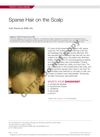
A 5-year-old girl has sparse, dry, and brittle hair but is otherwise healthy.
 July 2018 in “Elsevier eBooks”
 The most common cause of hair loss in children is tinea capitis, followed by alopecia areata and telogen effluvium.
 July 2018 in “Elsevier eBooks”
 Frontal Fibrosing Alopecia is a type of hair loss affecting mostly older women, with no agreed best treatment.
 May 2017 in “InTech eBooks”
 Hair pulling disorder is treated with therapy and medication; hair loss from tension can be reversed if caught early.
October 2025 in “JMIR Dermatology” Exclamation-mark hairs and yellow dots indicate alopecia areata, while follicular ostia loss and white scarring indicate lichen planopilaris and discoid lupus erythematosus.
 74 citations
,
July 2008 in “Journal of Dermatological Case Reports”
74 citations
,
July 2008 in “Journal of Dermatological Case Reports” Trichoscopy is a quick and easy way to diagnose most genetic hair problems without invasive methods.
 46 citations
,
June 2018 in “American Journal of Clinical Dermatology”
46 citations
,
June 2018 in “American Journal of Clinical Dermatology” Hair loss is common in lupus patients and can be permanent or reversible, depending on the type, with various treatments available.
 7 citations
,
January 2015 in “Hair therapy & transplantation”
7 citations
,
January 2015 in “Hair therapy & transplantation” Air pollution can cause hair loss, and using antioxidants, special shampoos, and coconut oil can improve scalp health and hair density.