 May 2026 in “Journal of Basic and Clinical Health Sciences”
 FAGA shows varied hair thickness, while TE has more empty follicles.
 May 2026 in “Journal of the Egyptian Womenʼs Dermatologic Society”
 Intralesional methotrexate effectively treats patchy alopecia areata by reducing inflammation.
An automated system can accurately classify hair disorders using image analysis.
March 2026 in “Journal of Cosmetic Dermatology” Topical Stemoxydine improves hair density in androgenetic alopecia with few side effects.
 March 2026 in “Journal of Skin and Sexually Transmitted Diseases”
 Long hair can cause hair loss in the middle of the scalp, and cutting it shorter helps.
 February 2026 in “Frontiers in Medicine”
 Fibrosing alopecia starts earlier in Latin American men and often looks like common male pattern baldness.
 February 2026 in “SHILAP Revista de lepidopterología”
 Female Pattern Hair Loss is linked to genetics, diet, stress, and certain health conditions.
 February 2026 in “Clinical Cosmetic and Investigational Dermatology”
 Female pattern hair loss is linked to genetics, family history, and lifestyle factors.
 February 2026 in “PubMed”
 PRP-based treatments can increase hair density, but results vary among individuals.
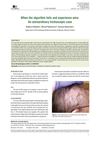 January 2026 in “Forum Dermatologicum”
 Thorough hair examination is crucial for accurate diagnosis and treatment.
 January 2026 in “Dermatology and Venerology”
 Complex therapy is more effective for long-term control of scalp abscesses.
October 2025 in “JMIR Dermatology” Exclamation-mark hairs and yellow dots indicate alopecia areata, while follicular ostia loss and white scarring indicate lichen planopilaris and discoid lupus erythematosus.
May 2025 in “Skin Appendage Disorders” Frontal fibrosing alopecia can be diagnosed by examining facial areas and treated with specific medications to stop its progression.
 March 2025 in “International Journal of Trichology”
 Injecting stem cells from a patient's own fat can improve hair growth in women with hair loss.
 January 2025 in “International Journal of Trichology”
 Topical spironolactone and minoxidil both effectively treat female hair loss, but spironolactone has fewer side effects.
 August 2024 in “Archives of Dermatological Research”
 Androgenetic alopecia may be linked to metabolic syndrome.
August 2024 in “International Journal of Women’s Dermatology” Alopecia is common in severe cases of autosomal recessive congenital ichthyosis.
 June 2024 in “International Journal of Research in Dermatology”
 Combining PRP and minoxidil is more effective for hair loss than using either alone.
 June 2024 in “Research Square (Research Square)”
 Early-onset AGA shows different hair and metabolic characteristics compared to normal-onset AGA.
 April 2024 in “Journal of cosmetic dermatology”
 Children with alopecia areata have more exclamation mark hairs and fewer yellow dots than adults.
 November 2023 in “Journal of Dermatological Science”
 A new computer tool quickly measures hair thickness differences in people with common types of hair loss.
 July 2023 in “Clinical dermatology review”
 Intralesional triamcinolone acetonide is better than PRP for treating scalp alopecia areata, leading to faster and more complete hair regrowth.

Hair loss treatment using stem cells from baby teeth was effective for 75% of men tested, with mild side effects. A scoring system may predict how well this treatment works.
 March 2023 in “Journal of Cosmetic Dermatology”
 Dilated scalp capillaries might be a sign of hair loss related to COVID-19.
 January 2021 in “Nasza Dermatologia Online”
 Plica polonica is a rare condition where hair becomes irreversibly tangled, and the treatment is to cut the matted hair.
Trichoscopic examination is crucial for diagnosing congenital triangular alopecia.
 November 2018 in “Skin appendage disorders”
 The document concludes that a woman has both Frontal Fibrosing Alopecia and Lichen Simplex Chronicus, a previously unreported combination of conditions.
 June 2018 in “The Medical Journal of Cairo University/The Medical Journal of Cairo University”
 Dermoscopy can quickly and reliably distinguish Tinea Capitis from Alopecia Areata by identifying specific hair patterns.
 November 2016 in “대한피부과학회지”
 The document's conclusion cannot be summarized as it is not provided in a language I can understand.
April 2023 in “Dohuk medical journal” Trichoscopy effectively differentiates Androgenetic Alopecia from Telogen Effluvium.