 3 citations
,
August 2017 in “Synlett”
3 citations
,
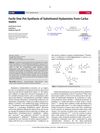
August 2017 in “Synlett” Scientists in India found a safer and efficient way to make a type of medicine called hydantoins from carbamates, which also worked well in making the seizure medicine, Ethotoin.
October 2002 in “Dermatologic Surgery” January 2018 in “bioRxiv (Cold Spring Harbor Laboratory)” The mutant HR bmh protein mis-localizes in cells, affecting skin and hair development.
 December 2025 in “Zenodo (CERN European Organization for Nuclear Research)”
 Ayurvedic treatments using herbs and therapies aim to balance body energies to control hair loss and promote regrowth.
April 2023 in “Journal of Investigative Dermatology” 3D ultrasound can detect hair follicle changes and disease phases in alopecia areata.
23 citations
,
July 2003 in “Journal of Investigative Dermatology” Genetic testing for hairless gene mutations is crucial to correctly diagnose and treat atrichia with papular lesions.
 23 citations
,
June 2010 in “Journal of Investigative Dermatology”
23 citations
,
June 2010 in “Journal of Investigative Dermatology” A mutation in the Soat1 gene causes hair structure defects and other health issues in AKR/J mice.
January 2008 in “HAL (Le Centre pour la Communication Scientifique Directe)” The mutant HR bmh protein affects hair follicle formation by failing to repress vitamin D receptor activity.
 4 citations
,
December 2017 in “International journal of research in ayurveda and pharmacy”
4 citations
,
December 2017 in “International journal of research in ayurveda and pharmacy” The dodder plant has anti-inflammatory, antimicrobial properties, and may promote hair growth.
 5 citations
,
October 2013 in “Experimental Dermatology”
5 citations
,
October 2013 in “Experimental Dermatology” The commentary explains that a balance of HR protein and putrescine is important for normal hair growth.
 January 2026 in “Journal of Ayurveda and Integrated Medical Sciences”
 Pippalyadi Agad may help counteract harmful effects of toxic cosmetics.
3D-ultrasound can non-invasively detect and predict alopecia areata phases and outcomes.
 January 2020 in “International Journal of Research in Pharmacy and Chemistry”
 A reliable method was created to measure dutasteride and related molecules in capsules.
 June 2022 in “International Journal of Research -GRANTHAALAYAH”
 Antioxidants like catalase are important for preventing hair loss conditions like alopecia.
 1 citations
,
May 2026 in “bioRxiv (Cold Spring Harbor Laboratory)”
1 citations
,
May 2026 in “bioRxiv (Cold Spring Harbor Laboratory)” UT-018 speeds up wound healing and boosts hair growth in mice.
 January 2026 in “Zenodo (CERN European Organization for Nuclear Research)”
 Prachhanna followed by Guñjā lepa is more effective for treating alopecia areata than PRP with Minoxidil.
 January 2026 in “Zenodo (CERN European Organization for Nuclear Research)”
 Prachhanna followed by Guñjā lepa is more effective for treating alopecia areata than PRP with Minoxidil.
 November 2022 in “Journal of Investigative Dermatology”
 The study found that skin inflammation and immune response pathways are activated in Solar Urticaria patients after UV exposure, unlike in healthy people.
August 2024 in “JAAD Case Reports” Upadacitinib successfully regrew hair in a child with alopecia universalis and specific genetic mutations.
 December 2025 in “International Journal of Research in Ayurveda and Pharmacy”
 Ayurvedic treatment, including Pracchana Karma, successfully improved vitiligo in a young woman.
44 citations
,
April 1979 in “Journal of Ultrastructure Research”  July 2022 in “Journal of bio innovation”
 Panchakarma detoxifies the body, balances doshas, and is more effective than modern medicine alone for toxin removal and cell rejuvenation.
 January 2026 in “In Vivo”
 People with hidradenitis suppurativa have a higher risk of kidney stones.
29 citations
,
March 2000 in “Journal of Investigative Dermatology” The gene for Marie Unna hereditary hypotrichosis is located on chromosome 8p21.
 December 2025 in “Zenodo (CERN European Organization for Nuclear Research)”
 Ayurvedic treatments using herbs and therapies aim to balance the body to control hair loss and promote regrowth.
April 2025 in “Experimental Eye Research” The Oat mouse model shows mild retinal degeneration, useful for testing treatments.
130 citations
,
December 1998 in “The journal of investigative dermatology/Journal of investigative dermatology” Hair follicle melanocytes die during hair regression.
20 citations
,
January 2002 in “Laboratory Animals” Mutations in the hairless gene cause hair loss and skin cysts in rhesus macaques.
 December 2025 in “International Journal of Research in Ayurveda and Pharmacy”
 Ayurvedic treatment successfully regrew hair in a 19-year-old with alopecia areata in 2 months.
 February 2024 in “Journal of ayurveda and integrated medical sciences”
 Ayurvedic medicine helped increase a young woman's hemoglobin levels and improved her anemia symptoms.