1 citations
,
January 2023 in “Dermatologic Therapy” Macrofocused ultrasound is a safe and effective treatment for reducing enlarged facial pores.
10 citations
,
June 2016 in “The journal of investigative dermatology/Journal of investigative dermatology” Vitamin D receptor helps protect skin cells from UV damage and supports their growth.
148 citations
,
May 2008 in “The journal of investigative dermatology/Journal of investigative dermatology” Mice without the vitamin D receptor are more prone to UV-induced skin tumors.
 January 2023 in “Dermatologic Therapy”
 A new hand-held light therapy device was found to be safe and effective for treating mild-to-moderate acne.
April 2023 in “Journal of Investigative Dermatology” 3D ultrasound can detect hair follicle changes and disease phases in alopecia areata.
 4 citations
,
December 2024 in “Clinical Cosmetic and Investigational Dermatology”
4 citations
,
December 2024 in “Clinical Cosmetic and Investigational Dermatology” Combining baricitinib with UV-B therapy effectively treats non-segmental vitiligo and is well-tolerated.
24 citations
,
October 2008 in “PubMed” Excessive sun exposure damages hair, causing protein loss and color changes.
May 2024 in “Clinical and experimental optometry” 9 citations
,
June 2009 in “Cell Proliferation” Cream 1 protects skin nerve endings from UV damage.
 3 citations
,
October 2022 in “Clinical, Cosmetic and Investigational Dermatology”
3 citations
,
October 2022 in “Clinical, Cosmetic and Investigational Dermatology” The 532 nm laser effectively reduces facial vascular and pigmented lesions, with the VISIA system reliably assessing treatment results.
July 2025 in “Ultrasound in Medicine & Biology” UTMD with diclofenac and Doxil® improves cancer treatment by boosting immune response and reducing tumor-supporting cells.
 February 2024 in “Curēus”
 Prompt diagnosis and treatment of hair tourniquet syndrome involving the uvula are crucial to prevent severe complications.
55 citations
,
January 2020 in “Advances in experimental medicine and biology” Vitamin D and its receptor may help prevent skin cancer.
31 citations
,
January 2014 in “The Scientific World JOURNAL” Eclipta prostrata extract protects skin cells from UVB damage and has strong antioxidant properties.
6 citations
,
May 2025 in “Cosmetics” Sunscreen technology is improving with new ingredients and methods to better protect skin from sun damage.

Enzymatic synthesis improved the water solubility of the flavonoid baicalin, which may help treat hair loss conditions.
Different types of sun exposure damage skin cells and immune cells, with chronic exposure leading to more severe and lasting damage.
 22 citations
,
March 2021 in “Journal of Cutaneous Medicine and Surgery”
22 citations
,
March 2021 in “Journal of Cutaneous Medicine and Surgery” Ultrasound is a useful, non-invasive tool in dermatology for diagnosing skin conditions and guiding treatments, but it has some limitations.
2 citations
,
January 2014 in “Photochemical & photobiological sciences” Grasp protein helps maintain skin health after UVB exposure.
 2 citations
,
February 2023 in “Transgenic Research”
2 citations
,
February 2023 in “Transgenic Research” The E2 protein affects gene activity in hair follicles of mice.
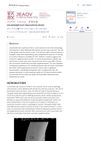 February 2023 in “JEADV Clinical Practice”
 Biotin supplements significantly improved a young girl's uncombable hair.
 December 2024 in “International Journal of Molecular Sciences”
 Human umbilical cord stem cell vesicles may help treat aging and related diseases.
11 citations
,
January 2022 in “Brazilian Oral Research” XP-endo Finisher R removes more root filling material than PUI in curved canals.
January 2010 in “Acta Laboratorium Animalis Scientia Sinica” The UHS promoter is specific to mouse hair follicles.
 9 citations
,
April 2024 in “Cureus”
9 citations
,
April 2024 in “Cureus” Vogt-Koyanagi-Harada disease affects vision and skin, mainly in people with darker skin, and is treated with steroids and immunosuppressants.
 April 2026 in “Frontiers in Bioengineering and Biotechnology”
 Cellulose membranes heal venous leg ulcers faster than standard dressings.
9 citations
,
December 2015 in “Journal of Dermatological Case Reports” Narrowband UVB therapy significantly improved a child's rare skin condition.
 March 2005 in “International Journal of Cosmetic Science”
 DVI provides detailed 3D imaging of hair and shows how various products protect and enhance hair.
September 1998 in “Journal of the European Academy of Dermatology and Venereology” PUVA-turban therapy can help some people with severe alopecia areata regrow hair.
13 citations
,
January 2012 in “Dermatology” Eruptive vellus hair cysts are rare, benign skin lesions that are hard to treat.