55 citations
,
January 2020 in “Advances in experimental medicine and biology” Vitamin D and its receptor may help prevent skin cancer.

COVID-19 may trigger or worsen rapid hair loss in alopecia areata.
10 citations
,
January 2023 in “SAGE Open Medical Case Reports” COVID-19 infection and vaccination may trigger hair loss and rapid hair whitening.
December 2024 in “JEADV Clinical Practice” COVID-19 vaccination is generally safe for people with Hidradenitis Suppurativa.
January 2011 in “Anhui nongye kexue” The vector successfully directed specific gene expression in hair follicles.
 1 citations
,
January 2014 in “The Journal of Dermatology”
1 citations
,
January 2014 in “The Journal of Dermatology” A patient with Ivemark syndrome developed mixed type vitiligo after a hepatitis C infection, showing different treatment responses and immune cell involvement in the skin.
 91 citations
,
July 2004 in “BMJ. British medical journal”
91 citations
,
July 2004 in “BMJ. British medical journal” The document concludes that molluscum contagiosum is a common, benign skin infection in children, often healing without scarring.
28 citations
,
October 2000 in “International Journal of Dermatology” A fungal infection developed on a herpes scar and was successfully treated with antifungal medication.
 January 2023 in “Burns & Trauma”
 The study concluded that the new wound model can be used to evaluate skin regeneration and nerve growth.
13 citations
,
March 2023 in “Tissue Engineering and Regenerative Medicine” 1 citations
,
January 2023 in “Pediatric Dermatology” Early diagnosis and teamwork are crucial for managing ILVASC effectively.
33 citations
,
June 2021 in “Dermatologic Therapy” COVID-19 vaccines can trigger autoimmune flares but are still beneficial for patients with autoimmune conditions.
 1 citations
,
March 2020 in “Poster presentations”
1 citations
,
March 2020 in “Poster presentations” SLE patients need careful diagnosis to distinguish infections from disease flares for proper treatment.
 September 1997 in “Journal of the European Academy of Dermatology and Venereology”
 People with acne have more CD4+ immune cells in their skin than healthy people.
36 citations
,
January 2010 in “Journal of Pediatric Endocrinology and Metabolism” A new gene mutation causes vitamin D resistance and hair loss in two unrelated girls.
14 citations
,
June 2011 in “Australasian Journal of Dermatology” An 8-year-old boy had both alopecia areata and vitiligo on the same spot on his scalp, which is very rare.
29 citations
,
September 1942 in “Archives of ophthalmology” Vogt-Koyanagi syndrome often leads to partial or complete blindness and responds poorly to treatment.
3 citations
,
January 2025 in “SAGE Open Medical Case Reports” Deucravacitinib helped regrow hair and reduce plaques in a woman with discoid lupus erythematosus without side effects.
 14 citations
,
January 2006 in “Skinmed”
14 citations
,
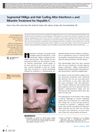
January 2006 in “Skinmed” A woman developed white patches on her skin and curly hair after hepatitis C treatment, likely due to the medication interferon alpha.
May 2024 in “The Journal of Immunology” IL-27 can prevent hair loss in alopecia areata.
17 citations
,
July 2024 in “Frontiers in Oncology” New therapies and trials are needed for Merkel cell carcinoma, a tough skin cancer.
8 citations
,
March 2011 in “Endocrine” A new gene mutation causes vitamin D-resistant rickets and hair loss in two siblings.
June 2026 in “Institutional Repositories DataBase (IRDB)” Vitiligo can occur suddenly in Graves' disease patients with alopecia areata.
 1 citations
,
August 2022 in “JAAD Case Reports”
1 citations
,
August 2022 in “JAAD Case Reports” A woman's complete hair loss condition improved after recovering from COVID-19.
2 citations
,
November 1996 in “Transplantation” Injecting recipient splenocytes into donors' thymus can prevent graft-versus-host disease.
 3 citations
,
May 2022 in “Oncogene”
3 citations
,
May 2022 in “Oncogene” Vav2 and Vav3 proteins help control skin stem cell numbers and activity in both healthy and cancerous cells.
28 citations
,
July 2005 in “International Journal of Dermatology” Vitiligo is caused by the immune system attacking skin pigment cells.
 December 2022 in “bioRxiv (Cold Spring Harbor Laboratory)”
 The new vaccine platform led to a stronger immune response and better protection against the flu than the traditional vaccine.
1 citations
,
July 2025 in “Journal of Investigative Dermatology” IL-27 may help prevent hair loss by creating immune-suppressing cells.
 March 2021 in “Indian Journal of Case Reports”
 A young woman with late-stage Vogt-Koyanagi-Harada disease was successfully treated at a hospital.