 2 citations
,
August 2022 in “Cutis”
2 citations
,
August 2022 in “Cutis” COVID-19 vaccination may cause temporary nail changes, but they're not serious.
 19 citations
,
January 2013 in “International journal of medical sciences”
19 citations
,
January 2013 in “International journal of medical sciences” Increasing Wnt5a in mice skin delays hair growth but doesn't stop it.
 39 citations
,
December 2001 in “JNCI: Journal of the National Cancer Institute”
39 citations
,
December 2001 in “JNCI: Journal of the National Cancer Institute” Using a gene therapy with the Sonic Hedgehog gene helps mice regrow hair faster after losing it from chemotherapy.
 9 citations
,
July 2008 in “Oncology Reports”
9 citations
,
July 2008 in “Oncology Reports” HPV16-transformed cells can change human skin cell properties, aiding tumor growth.
April 2026 in “The Journal of Dermatology” Vitiligo patients have higher risks of autoimmune diseases, infections, and skin cancer.
 January 1994 in “Nippon Ronen Igakkai Zasshi Japanese Journal of Geriatrics”
 Both VEPA and ML-Y1 treatments are not effective enough for elderly non-Hodgkin's lymphoma patients.
67 citations
,
August 2004 in “Endocrinology” A specific gene mutation causes vitamin D resistance, but certain vitamin D analogs might help.
 1 citations
,
September 2007 in “European journal of paediatric neurology”
1 citations
,
September 2007 in “European journal of paediatric neurology” Low dose valproic acid treatment caused hair loss in a young patient.
 6 citations
,
June 2018 in “Journal of pediatric endocrinology & metabolism/Journal of pediatric endocrinology and metabolism”
6 citations
,
June 2018 in “Journal of pediatric endocrinology & metabolism/Journal of pediatric endocrinology and metabolism” Patients with the same genetic mutation for vitamin D-resistant rickets showed different symptoms but all improved with treatment except for hair loss.
January 2025 in “Indian Dermatology Online Journal” Early diagnosis and aggressive treatment are essential for managing Vogt-Koyanagi-Harada syndrome effectively.
 October 2025 in “EMJ Dermatology”
 Histopathology is crucial for accurately diagnosing eruptive vellus hair cysts.
20 citations
,
December 2020 in “Frontiers in Immunology” The immune processes causing VKH and vitiligo are similar in dogs and humans.
7 citations
,
March 2011 in “The Journal of Gene Medicine” Lentiviral vector effectiveness in skin is influenced by external factors, not receptor availability.
 34 citations
,
July 2009 in “Journal of Cell Science”
34 citations
,
July 2009 in “Journal of Cell Science” ΔNp63α helps control a protein that stops cancer cells from spreading.
 May 2023 in “Dermatology Reports”
 The study found that skin conditions in COVID-19 patients can signal serious internal organ damage and may be life-threatening.
13 citations
,
September 2007 in “International Journal of Dermatology” Vitamin D receptor gene variations are not linked to alopecia areata.
 January 2024 in “Pediatric rheumatology online journal”
 Early genetic testing and JAK inhibitors can help treat systemic inflammation in SAVI patients.
 April 2021 in “Indian pediatrics case reports”
 A child's hair loss after Kawasaki disease may help understand the disease's autoimmune causes.
 42 citations
,
July 2007 in “Journal of Biological Chemistry”
42 citations
,
July 2007 in “Journal of Biological Chemistry” Most Hairless gene mutations reduce its ability to work with the Vitamin D Receptor, which might explain a certain type of hair loss.
1 citations
,
August 2013 in “The Journal of Cell Biology” Lack of Evi in skin causes psoriasis-like symptoms in mice.
 32 citations
,
March 2021 in “Journal of cosmetic dermatology (Print)”
32 citations
,
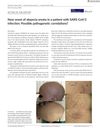
March 2021 in “Journal of cosmetic dermatology (Print)” COVID-19 infection may trigger alopecia areata in some patients.
 4 citations
,
August 2013 in “Case reports in dermatology”
4 citations
,
August 2013 in “Case reports in dermatology” A patient with total hair loss developed vitiligo after using a treatment called DCP.
21 citations
,
June 1992 in “Pediatric Dermatology” Eruptive vellus hair cysts are often underreported and need histologic confirmation for accurate diagnosis.
9 citations
,
June 2011 in “American Journal of Dermatopathology” Molluscum contagiosum can occur in epidermoid cysts, especially with prolonged steroid use.
10 citations
,
October 2000 in “PubMed” E6/E7 oncogenes in hair follicles cause continuous hair growth by skipping the resting phase.
December 2008 in “Annales de Dermatologie et de Vénéréologie” Recent dermatological research highlights include new virus discoveries, genetic links to skin conditions, and insights into skin healing and pigmentation.
1 citations
,
July 2021 in “International Journal of Cosmetics and Dermatology” Vitiligo often runs in families and is linked to genetics and autoimmune factors.
 20 citations
,
July 2017 in “Scientific Reports”
20 citations
,
July 2017 in “Scientific Reports” A single amino acid change in the vitamin D receptor can disrupt its function and lead to hair loss.

CD4 T cells need IFN-γ to cause hair loss in alopecia areata.
1 citations
,
April 2018 in “Journal of Investigative Dermatology” Simvastatin helps hair regrowth in autoimmune alopecia by directly affecting T cells.