4 citations
,
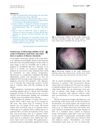
November 2020 in “Case reports in dermatology” A rare skin condition causes red, dark, bumpy facial lesions.
 15 citations
,
November 2016 in “Journal of The American Academy of Dermatology”
15 citations
,
November 2016 in “Journal of The American Academy of Dermatology” Exclamation mark hairs suggest early scalp disease, while white dots indicate it's chronic.
A new method using stamps improves symmetry in hair restoration surgery.
February 2025 in “JEADV Clinical Practice” A rare autoimmune disease caused the woman's scalp blisters and hair loss, successfully treated with medication.
Mechanical stress causes ligament thickening through WISP-1 and Hedgehog signaling.
 December 2025 in “Cureus”
 Localized dystrophic epidermolysis bullosa (DEB) can lead to scarring alopecia, highlighting the need to recognize and address this complication.
 19 citations
,
March 2013 in “Journal of Cutaneous Pathology”
19 citations
,
March 2013 in “Journal of Cutaneous Pathology” The study found unique skin changes in a rare type of alopecia linked to a skin condition called linear morphea.
14 citations
,
August 2004 in “Veterinary Dermatology” The horse had a rare type of hair loss caused by immune cells attacking hair follicles.
 1 citations
,
January 2014 in “Health Renaissance”
1 citations
,
January 2014 in “Health Renaissance” Pseudopelade of Brocq is hard to diagnose and treat, with limited effective options.
11 citations
,
April 2022 in “Biophysical Journal” Disulfide bonds in keratin fibers break more easily under stress, especially when wet, affecting fiber strength.
1 citations
,
September 2021 in “Journal of Cosmetic Dermatology” B-mode ultrasonography and shear-wave elastography can help predict androgenetic alopecia early.
 64 citations
,
June 1992 in “International Journal of Dermatology”
64 citations
,
June 1992 in “International Journal of Dermatology” Pregnancy often causes skin changes like darkening, stretch marks, and hair growth, which may improve after childbirth.
 47 citations
,
May 2002 in “Journal of Cutaneous Medicine and Surgery”
47 citations
,
May 2002 in “Journal of Cutaneous Medicine and Surgery” Pregnancy can cause normal skin changes that usually go away after childbirth and don't need treatment.
18 citations
,
January 1965 in “Stain Technology”  8 citations
,
February 2005 in “British Journal of Haematology”
8 citations
,
February 2005 in “British Journal of Haematology” Chemotherapy caused the patient's hair to have alternating thick and thin segments.
 6 citations
,
July 2011 in “Journal of Plastic Reconstructive and Aesthetic Surgery”
6 citations
,
July 2011 in “Journal of Plastic Reconstructive and Aesthetic Surgery” Eyebrow reconstruction using hair follicle grafts was successful in a man with a benign hereditary disorder affecting his eyebrows.
 March 2021 in “CRC Press eBooks”
 The document concludes that different patterns of hair thickness and scalp changes can help diagnose types of non-scarring hair loss.
 165 citations
,
September 2011 in “Journal of Public Policy & Marketing”
165 citations
,
September 2011 in “Journal of Public Policy & Marketing” People who are more materialistic often expect life changes from buying things, leading to more debt and credit misuse.
 1 citations
,
May 2014 in “Lipid Technology”
1 citations
,
May 2014 in “Lipid Technology” New cleaning surfactants, biofuel production plans, dairy expansions, improved lipid testing methods, and various product launches and developments were reported in lipid technology.
49 citations
,
September 2004 in “Journal of the European Academy of Dermatology and Venereology” Careful light microscopy is crucial for detecting mild cases of pili annulati, which weakens hair and varies widely in expression.
 15 citations
,
January 2019 in “Experimental Dermatology”
15 citations
,
January 2019 in “Experimental Dermatology” Lanyu pigs show that partial-thickness wounds can partially regenerate important skin structures, which may help improve human skin healing.
July 2026 in “Journal of Investigative Dermatology”  July 2010 in “Journal of Investigative Dermatology”
 Scientists found gene mutations that affect hair loss, skin stem cells, and skin disorders, and identified drugs that may help treat blood vessel and skin conditions.
3 citations
,
July 2025 in “Acta Biomaterialia” Murine skin wounds become less stiff over time as they heal.
January 2013 in “Wool textile journal”  1 citations
,
February 2022 in “International Journal of Dermatology”
1 citations
,
February 2022 in “International Journal of Dermatology” Some skin changes from pregnancy like hair loss, excessive hair growth, palm redness, and stretch marks may not go away after birth and could suggest a misdiagnosis or hidden condition.
1 citations
,
August 2023 in “Clinical Cosmetic and Investigational Dermatology” Exclamation mark hairs help distinguish syphilitic alopecia from alopecia areata.
10 citations
,
September 1994 in “International Journal of Dermatology” Three Iranian men had reddish-brown facial pigmentation with no effective treatment.
2 citations
,
May 2024 in “BMC Genomics” Certain genetic changes in the KRT82 gene may cause patchy skin in New Zealand rabbits.
January 2006 in “Dianzi xianwei xuebao” Netherton syndrome causes specific skin and hair changes that help in early diagnosis.