 1 citations
,
October 2020 in “International Journal of Research in Dermatology”
1 citations
,
October 2020 in “International Journal of Research in Dermatology” The study concluded that short vellus hair and yellow dots were the most common signs of alopecia areata, indicating disease activity and remission.
 1 citations
,
June 2020 in “IP Indian journal of clinical and experimental dermatology”
1 citations
,
June 2020 in “IP Indian journal of clinical and experimental dermatology” Yellow dots were the most common sign of alopecia areata found using trichoscopy.
 1 citations
,
April 2020 in “International Journal of Research in Dermatology”
1 citations
,
April 2020 in “International Journal of Research in Dermatology” Trichoscopy is a reliable method for diagnosing different types of hair loss.
 1 citations
,
March 2020 in “Australasian Journal of Dermatology”
1 citations
,
March 2020 in “Australasian Journal of Dermatology” The paper concludes that recognizing bitemporal alopecia areata is important for early treatment and preventing its progression.
 1 citations
,
October 2018 in “Madridge journal of dermatology & research”
1 citations
,
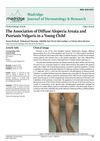
October 2018 in “Madridge journal of dermatology & research” A young child with alopecia areata and psoriasis improved with treatment, suggesting a link between the two conditions.
 1 citations
,
March 2014 in “Turkderm”
1 citations
,
March 2014 in “Turkderm” Trichoscopy helps tell different hair loss types apart using specific scalp and hair patterns.
 1 citations
,
October 2013 in “Expert Review of Dermatology”
1 citations
,
October 2013 in “Expert Review of Dermatology” Diagnosing alopecia areata is challenging and requires careful examination and various tests to distinguish it from other hair loss types.
 June 2026 in “Indian Journal of Dermatology Venereology and Leprology”
 Scalp discoid lupus erythematosus shows two distinct patterns in skin of color.

Coreopsis tinctoria Nutt. extract can effectively dye hair yellow or dark brown with good wash durability.
 May 2026 in “Journal of the Egyptian Womenʼs Dermatologic Society”
 Intralesional methotrexate effectively treats patchy alopecia areata by reducing inflammation.
 February 2026 in “Journal of Clinical Medicine”
 Minoxidil may help nails grow faster and stronger.
 February 2026 in “Journal of the American Academy of Dermatology”
 Ophiasis mainly affects females, lasts longer, and has lower regrowth rates, with a new classification system helping predict treatment response.
 February 2026 in “Dermatology Reports”
 Trichoscopy helps diagnose and treat dissecting cellulitis early, preventing scarring.
 January 2026 in “Archives of Current Medical Research”
 Telogen effluvium is the most common hair loss in women, often linked to low iron, while tight hairstyles and headscarves increase traction alopecia risk.
January 2026 in “Dermatologic Therapy” Alopecia is more common in younger women, and many patients also have thyroid issues, especially subclinical hypothyroidism.
December 2025 in “Yassawi Journal of Health Sciences” Trichoscopy is essential for accurately diagnosing and differentiating types of hair loss.
December 2025 in “Y HOC TP HO CHI MINH” The Trichoscope is a valuable tool for diagnosing and monitoring hair loss conditions.
October 2025 in “JMIR Dermatology” Exclamation-mark hairs and yellow dots indicate alopecia areata, while follicular ostia loss and white scarring indicate lichen planopilaris and discoid lupus erythematosus.
July 2025 in “INTERNATIONAL JOURNAL OF SCIENTIFIC RESEARCH” Trichoscopy is crucial for diagnosing alopecia areata by identifying specific hair features.
July 2025 in “Clinical Medicine” Oral betamethasone works faster than oral tofacitinib for hair regrowth in alopecia areata.
June 2025 in “British Journal of Dermatology” Certain hair and scalp features can predict the severity of alopecia areata.
 June 2025 in “Italian Journal of Dermatology and Venereology”
 Thorough scalp examination is crucial for diagnosing alopecia areata incognita in men with diffuse hair loss.
Teletrichoscopy can effectively diagnose hair and scalp conditions remotely using smartphone apps and affordable tools.
May 2025 in “Apollo Medicine” Trichoscopy is a useful tool for diagnosing and assessing the severity of alopecia areata.
 May 2025 in “IP Indian Journal of Clinical and Experimental Dermatology”
 Trichoscopy is useful for early detection and monitoring of female pattern hair loss.
 March 2025 in “Pakistan Journal of Health Sciences”
 Intralesional steroids improve Alopecia Areata, and trichoscopy effectively tracks this improvement.
 January 2025 in “Dermatology Practical & Conceptual”
 Topical finasteride is as effective and safe as minoxidil for treating female pattern hair loss.
 January 2025 in “TURKDERM”
 Alopecia areata incognito in children can be effectively treated with triamcinolone acetonide and supplements, leading to full hair regrowth.
Alopecia areata causes patchy hair loss but hair can regrow on its own.
 January 2025 in “Journal of Rawalpindi Medical College”
 Alopecia Areata affects both genders almost equally, mostly on the scalp, with common signs like yellow dots and exclamation mark hairs, especially in young people.