12 citations
,
June 2023 in “International Journal of Molecular Sciences” Innovative biomaterials show promise in healing chronic diabetic foot ulcers.
8 citations
,
September 2024 in “International Journal of Molecular Sciences” Polymers can be designed to mimic natural cell environments for medical uses.
7 citations
,
February 2024 in “ACS Applied Materials & Interfaces” A new light-activated treatment speeds up healing of infected wounds without antibiotics.
October 2025 in “Burns & Trauma” Engineered probiotics can help heal wounds faster, especially in diabetic foot ulcers.
January 2025 in “Biomaterials Research” The new zinc peroxide hydrogel speeds up wound healing and tissue regeneration effectively.
48 citations
,
July 2023 in “Biomedicines” Hydrogel-forming microneedles are promising for safe, efficient, and controlled drug delivery through the skin.
238 citations
,
December 2022 in “Frontiers in Public Health” Combining ciprofloxacin with other treatments may improve its effectiveness against resistant bacteria.
57 citations
,
November 2024 in “Aggregate” Smart hydrogels can improve diabetic wound healing by adapting to wound conditions and providing controlled treatment.
30 citations
,
November 2024 in “ACS Materials Au” Microneedles are promising for disease monitoring and drug delivery due to their minimal invasiveness and versatility.
25 citations
,
November 2022 in “Frontiers in Bioengineering and Biotechnology” Composite biodegradable biomaterials can improve diabetic wound healing but need more development for clinical use.
24 citations
,
December 2023 in “Gels” 3D-printed hydrogels show promise in medicine but face challenges in resolution, cell viability, cost, and regulations.
 January 2023 in “Theranostics”
 A patch with curcumin-zinc can improve hair growth and health by delivering beneficial particles to the skin, increasing hair follicles, and reversing effects of a hair loss hormone.
1 citations
,
December 2023 in “Nanomaterials” Combining specific nanoparticles with immune therapy significantly improves cancer treatment.
 62 citations
,
October 2010 in “Journal of biomedical nanotechnology”
62 citations
,
October 2010 in “Journal of biomedical nanotechnology” Nanoparticles can enter the skin, potentially causing toxicity, especially in damaged skin.
12 citations
,
June 2020 in “Crystals” A new method successfully created tiny zinc oxide particles in silica for potential use in drug delivery and other applications.
 14 citations
,
May 2022 in “Asian Journal of Pharmaceutical Sciences”
14 citations
,
May 2022 in “Asian Journal of Pharmaceutical Sciences” New hair follicle-targeting treatments show promise for hair disorders but need more research on safety and effectiveness.
1 citations
,
December 2024 in “Science, Engineering and Health Studies” Nanocomposite patches improve drug delivery through the skin, offering controlled release and fewer side effects.
1 citations
,
January 2024 in “Fibrosis” Hydrogels show promise for scarless wound healing by reducing skin fibrosis.
2 citations
,
December 2025 in “Gels” Nano-zinc oxide affects genes linked to cell death, inflammation, and stress in skin cells.
 2 citations
,
September 2023 in “Scientific reports”
2 citations
,
September 2023 in “Scientific reports” The nanocomposite films with vitamins and nanoparticles are promising for fast and effective burn wound healing.
 September 2022 in “The American journal of dermatopathology/American journal of dermatopathology”
 Sunscreen particles were not found in inflamed or fibrotic areas of skin in FFA patients, suggesting no direct link to the disease.
 2 citations
,
October 2025 in “Journal of Materials Science Materials in Medicine”
2 citations
,
October 2025 in “Journal of Materials Science Materials in Medicine” The composite speeds up skin healing and is safe for use in wound dressings.
January 2022 in “OPAL (Open@LaTrobe) (La Trobe University)” Nanoparticles in sunscreen are generally safe as they stay on the skin's surface.
 22 citations
,
September 2019 in “ACS omega”
22 citations
,
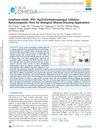
September 2019 in “ACS omega” The new nanocomposite films are stronger, protect against UV, speed up wound healing, and are antibacterial without being toxic.
 June 2026 in “Gümüşhane Üniversitesi Fen Bilimleri Enstitüsü Dergisi”
 PVA/agar films with Achillea millefolium essential oil are promising for wound dressings due to good strength and selective antibacterial effects.

New hydrogel sensors can be quickly made and customized for wearable devices.
 3 citations
,
January 2024 in “Materials advances”
3 citations
,
January 2024 in “Materials advances” Cellulose nanocrystals are promising for making effective, sustainable sensors for various uses.
 January 2026 in “Microsystems & Nanoengineering”
 Research on silica-based nanobiomaterials for tissue regeneration is rapidly growing, with China leading in volume and the U.S. excelling in impact.
 January 2026 in “Journal of Emerging Technologies and Innovative Research”
 Zinc oxide nanoparticles made from Tridax procumbens leaves show strong antibacterial and anticancer effects.
 1 citations
,
October 2024 in “Journal of Clinical Immunology”
1 citations
,
October 2024 in “Journal of Clinical Immunology” Vaccines work well in Netherton syndrome patients, similar to healthy people.