 2 citations
,
January 2014 in “Advanced Biomedical Research”
2 citations
,
January 2014 in “Advanced Biomedical Research” Oral isotretinoin and cyproterone compound are equally effective for treating acne in women with cutaneous hyperandrogenism.
 2 citations
,
January 2011 in “Elsevier eBooks”
2 citations
,
January 2011 in “Elsevier eBooks” Early treatment of acne is crucial to prevent scarring and psychological effects.
 1 citations
,
November 2011 in “Open access journal of contraception”
1 citations
,
November 2011 in “Open access journal of contraception” Birth control pills with low-dose estrogen and antiandrogenic progestins can effectively treat acne.
 June 2026 in “Quality in Sport”
 Treating hirsutism and acne in women with PCOS needs a personalized approach using oral contraceptives, antiandrogens, and sometimes metformin.
 April 2026 in “Ankara Eğitim ve Araştırma Hastanesi Tıp Dergisi”
 Severe acne patients have higher inflammatory markers than healthy people.
 January 2026 in “Frontiers in Natural Products”
 Combining shikimic acid and Prunus mume extract may effectively treat acne naturally.
 January 2026 in “Academic Journal of Medicine & Health Sciences”
 Phage therapy could be a safe and effective new treatment for acne.
 October 2025 in “Pielegniarstwo XXI wieku / Nursing in the 21st Century”
 Oral contraceptives can effectively treat acne by reducing oil production.
 August 2025 in “Scientific Reports”
 C4BPA protein may link acne severity and insulin resistance.

Higher apelin-12 levels may indicate more severe acne.
 June 2024 in “International journal of nanomedicine”
 Azelaic acid micro/nanocrystals, especially with ultrasound and salicylic acid, greatly improve acne treatment.
 February 2024 in “International journal of health, medicine and nursing practice”
 Raising awareness about PCOS can improve women's quality of life.
 January 2024 in “International Journal of Homoeopathic Sciences”
 Homeopathy may help improve acne scars and emotional well-being.
 July 2021 in “Journal of dermatology research and therapy”
 Using combined treatments can help manage acne by targeting the bacteria and skin changes that cause it.
 January 2019 in “Advances in Environmental Biology”
 Propionibacterium acnes contributes to acne and antibiotic resistance, needing new treatments.
 January 2018 in “Springer eBooks”
 The document says that early treatment of Acne Vulgaris is important to prevent scarring and that adult onset acne is common in women, often due to hormonal imbalances.
 April 2018 in “Journal of Investigative Dermatology”
  29 citations
,
January 2007 in “Dermatologic Clinics”
29 citations
,
January 2007 in “Dermatologic Clinics” Photodynamic Therapy is an effective treatment for mild to severe acne.
 39 citations
,
May 2011 in “Human Immunology”
39 citations
,
May 2011 in “Human Immunology” Genetics play a role in acne, but how exactly they contribute is not fully understood.
 10 citations
,
December 1996 in “Fertility and Sterility”
10 citations
,
December 1996 in “Fertility and Sterility” Women with acne have lower levels of a specific hormone marker than women without acne.
 118 citations
,
September 2004 in “Clinics in Dermatology”
118 citations
,
September 2004 in “Clinics in Dermatology” Hormones, especially androgens, play a big role in acne, but most acne sufferers don't have a hormone disorder. Hormonal treatments, including birth control pills, can be very effective for women whose acne doesn't improve with regular treatments.
 99 citations
,
December 2010 in “Journal of The European Academy of Dermatology and Venereology”
99 citations
,
December 2010 in “Journal of The European Academy of Dermatology and Venereology” The document concludes that certain genetic mutations and dietary factors are involved in acne development, and treatments like isotretinoin and diet changes can help manage it.
 75 citations
,
May 1986 in “Clinics in endocrinology and metabolism”
75 citations
,
May 1986 in “Clinics in endocrinology and metabolism” Male hormones are important for hair and oil gland development and can cause conditions like excessive hair growth and acne.
 56 citations
,
June 1970 in “The BMJ”
56 citations
,
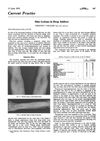
June 1970 in “The BMJ” Drug addicts often have scars, skin color changes, blocked veins, and bruising, with severe ulcers from barbiturate injections.
 32 citations
,
October 2003
32 citations
,
October 2003 Spironolactone is better than placebo for reducing excessive hair growth in women, but its effectiveness for acne is unclear due to small study sizes.
 32 citations
,
September 1989 in “Medical Clinics of North America”
32 citations
,
September 1989 in “Medical Clinics of North America” Skin problems are common in lupus, important for diagnosis, and can be triggered by sunlight.
 31 citations
,
December 2010 in “International Journal of Andrology”
31 citations
,
December 2010 in “International Journal of Andrology” Men with testicular cancer were less likely to experience baldness and severe acne.
 30 citations
,
June 2015 in “British Journal of Dermatology”
30 citations
,
June 2015 in “British Journal of Dermatology” Acne is common in women, often hormone-related, negatively affects quality of life, and requires various treatments.
 24 citations
,
March 2018 in “Pediatric Dermatology”
24 citations
,
March 2018 in “Pediatric Dermatology” Testosterone treatment in transgender teens can worsen acne, requiring careful treatment due to mental health and medication side effects.
 19 citations
,
January 2021 in “Experimental dermatology”
19 citations
,
January 2021 in “Experimental dermatology” Acne inversa is an epithelial-driven disease where inflammation is caused by cyst rupture, and treatments should focus on preventing tendril growth for better results.