Search
for
Sort by
Research
750-780 / 1000+ resultsresearch Study the Levels of Adrenaline and Prolactin as a Stress Monitoring Biomarkers in the Patients with Alopecia Areata in Babylon Governorate
Higher adrenaline and prolactin levels may indicate stress-related alopecia areata in adults.

research Incretin-Based Drugs for Obesity: Common and Drug-Specific Reporting Patterns of Adverse Drug Reactions—A Comparative Disproportionality Analysis Using EudraVigilance Reports Integrating SmPC Data
Incretin-based drugs for obesity often cause gastrointestinal issues, with tirzepatide having the most reports.

research Placental mRNA expression of Neurokinin B is increased in PCOS pregnancies with female offspring.
Neurokinin B levels are higher in the placentas of women with PCOS who have female babies.
research Adipose Tissue-Derived Therapies for Osteoarthritis: Multifaceted Mechanisms and Clinical Prospects
Adipose tissue-derived therapies show promise for improving osteoarthritis symptoms but need more research for safety and effectiveness.
research THE EFFECTS OF THE SYNTHETIC AND NATURAL HORMONE OF THE ADRENAL CORTEX ON MELANIN DEPOSITION IN ADRENALECTOMIZED BLACK RATS FED DIETS ADEQUATE AND DEFICIENT IN THE FILTRATE FACTORS OF VITAMIN B1
Synthetic hormone treatment reduces melanin and hair growth in rats.
research Inhibitory Effects of Apple Polyphenols on Differentiation of 3T3-L1 Cells into Adipocytes.
Apple polyphenols, especially from unripe apples, can help prevent cells from turning into fat cells.
research Review of facial acanthosis nigricans: Easy to diagnose and difficult to treat marker of hyperinsulinemia/metabolic syndrome
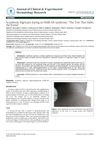
research Acanthosis Nigricans during an HAIR-AN syndrome: "The Tree That Hides the Forest"
The case shows skin changes can indicate deeper health issues like insulin resistance, which are challenging to manage.
research Proteomic Predictors of Baricitinib Response in Severe Alopecia Areata: CCL11 Flags a Refractory Phenotype
High CCL11 levels may indicate poor response to baricitinib in severe alopecia areata.
research Increased hair polyamine levels in patients with alzheimer's disease
Alzheimer's patients have higher levels of certain chemicals in their hair.
research Serum phoenixin-14 and phoenixin-20 concentrations in polycystic ovary syndrome: Associations with anti-Müllerian hormone and diagnostic utility
Phoenixin levels are higher in PCOS patients and may help in diagnosis.
research Assessment of monocyte to high density lipoprotein ratio and ischemia-modified albumin in acne vulgaris patients
Higher ischemia-modified albumin levels are linked to acne severity.
research Dynamic regulation of retinoic acid-binding proteins in developing, adult and neoplastic skin reveals roles for β-catenin and Notch signalling
Retinoic acid-binding proteins in skin are regulated by β-catenin and Notch signalling.
research Hyperandrogenism-Insulin Resistance-Acanthosis Nigricans Syndrome
The document concludes that HAIR-AN syndrome should be considered when a patient shows severe hyperandrogenism and insulin resistance after excluding tumors.
research Composition, isolation, identification and function of adipose tissue-derived exosomes
Adipose tissue-derived exosomes help regulate metabolism and may aid in disease treatment.
research Is SFRP-4 an early potential biomarker related to diabetes and hypertension, in patients with androgenic alopecia?
SFRP-4 might be an early indicator of diabetes and hypertension in men with androgenic alopecia.

research Mast-cell driven dermal white adipose tissue remodeling amplifies inflammation and fibrosis in atopic dermatitis
Adipocytes in atopic dermatitis skin change and worsen inflammation and fibrosis.
research Serum level of calprotectin as a new inflammatory marker in patients with alopacia areata
Calprotectin levels are higher in alopecia areata patients, indicating systemic inflammation.
research Tumor Necrosis Factor-Alpha and Polycystic Ovarian Syndrome: A Clinical, Biochemical, and Molecular Genetic Study
High levels of TNF-α may contribute to obesity and insulin resistance in PCOS, but not due to the C850T genetic variation.

research AB1159 HIGH FAT DIET AND THE ADIPOCYTE TO MYOFIBROBLAST TRANSITION: IMPLICATIONS FOR SYSTEMIC SCLEROSIS CUTANEOUS FIBROSIS
A high fat lard diet may protect against skin fibrosis and affect hair growth.
research Placental mRNA Expression of Neurokinin B Is Increased in PCOS Pregnancies with Female Offspring
Pregnant women with PCOS have higher levels of Neurokinin B in the placenta, especially with female babies.
research Mécanismes moléculaires et cellulaires des processus de différenciation et de plasticité cellulaire pour la formation des adipocytes
EGM2 and SOX2 help form beige adipocytes by maintaining ASC immaturity and activating brown adipocytes.
research ASSESSMENT OF SERUM LEVELS OF ANTIGLIADIN ANTIBODIES (IgG and IgA) IN PATIENTS WITH ALOPECIA AREATA AND THEIR RELATION TO SEVERITY OF THE DISEASE
Higher antigliadin antibodies are linked to more severe alopecia areata, suggesting screening for celiac disease in these patients.
research Global Adiposity Rather Than Abnormal Regional Fat Distribution Characterizes Women with Polycystic Ovary Syndrome
Women with PCOS have overall higher body fat, not abnormal fat placement, and more insulin resistance.
research PLASMA TESTOSTERONE GLUCOSIDURONATE: A RELIABLE INDICATOR OF FEMALE HYPERANDROGENISM (IDIOPATHIC HIRSUTISM AND ANDROGENIC ALOPECIA)
Measuring plasma testosterone glucosiduronate is a reliable way to detect high male hormone levels in women.

research Correlation of cutaneous manifestations with body mass index, blood glucose, and hormonal levels in patients with polycystic ovarian disease
Skin problems in patients with polycystic ovarian disease are linked to body weight, blood sugar, and hormone levels.

research Antimüllerian hormone to determine polycystic ovarian morphology
A blood test level of 3.2 ng/mL of Antimüllerian hormone is good for identifying polycystic ovarian morphology in European women aged 25–45.

research Hair Thickness Growth Effect of Adenosine Complex in Male-/Female-Patterned Hair Loss via Inhibition of Androgen Receptor Signaling
Adenosine complex helps increase hair thickness and density in hair loss.

research Cardiometabolic risk factors in women with non-classic congenital adrenal hyperplasia
Women with non-classic congenital adrenal hyperplasia have higher risk for heart and metabolic problems.