 2 citations
,
June 2022 in “Journal of cosmetic dermatology”
2 citations
,
June 2022 in “Journal of cosmetic dermatology” Dupilumab can help hair regrowth but may also trigger alopecia areata.
 1 citations
,
January 2023 in “Przegląd Dermatologiczny”
1 citations
,
January 2023 in “Przegląd Dermatologiczny” The Polish Society of Dermatology recommends treatments for alopecia areata that vary by severity, including topical and systemic medications, with long-term maintenance important for management.
1 citations
,
July 2022 in “Bali Medical Journal” A combination of cyclosporine and oral corticosteroid successfully regrew hair in a 19-year-old with alopecia universalis.
1 citations
,
March 2017 in “PubMed” Topical minoxidil did not significantly regrow hair in alopecia areata patients after 3 months.
 June 2026 in “Dermatology and Therapy”
 Ritlecitinib provides new treatment options for diverse alopecia areata patients.
 April 2026 in “Dermatology and Therapy”
 Baricitinib 4 mg should be used for at least 1 year to see significant hair regrowth in severe alopecia areata.
 March 2026 in “Dermatology Online Journal”
 Medicaid coverage for alopecia areata treatments is inconsistent and often limited.
 February 2026 in “Zenodo (CERN European Organization for Nuclear Research)”
 Current treatments can slow hair loss and promote regrowth, with hair transplantation being most effective for advanced cases.
 February 2026 in “Zenodo (CERN European Organization for Nuclear Research)”
 Current treatments can slow hair loss and promote regrowth, with hair transplantation being most effective for advanced cases.
January 2026 in “EJC Skin Cancer” The serum effectively improves hair growth and is well-tolerated for post-cancer hair loss.
 January 2026 in “Clinical Cosmetic and Investigational Dermatology”
 Early diagnosis and targeted anti-inflammatory treatments can improve outcomes in androgenetic alopecia with perifollicular inflammation and fibrosis.
 July 2025 in “International Journal of Dermatology Venereology and Leprosy Sciences”
 Microneedling can effectively promote hair regrowth in alopecia areata.
 April 2025 in “Archives of Dermatological Research”
 Microneedling therapy leads to better treatment adherence than drug therapy for hair loss.
 January 2025 in “Balkan Medical Journal”
 Baricitinib helps regrow hair in severe alopecia areata and is safe, but more research is needed.
 December 2024 in “Journal of Clinical Medicine”
 Minoxidil shows promise for alopecia areata, but more research is needed before it can be recommended as a primary treatment.
 July 2024 in “International Journal of Dermatology Venereology and Leprosy Sciences”
 Minoxidil can help regrow hair in people with alopecia areata.
May 2024 in “JEADV Clinical Practice” A change in SALT scores of 42 or 43 indicates meaningful improvement in alopecia areata treatment.
 December 2023 in “Journal of Ayub Medical College Abbottabad”
 Ritlecitinib effectively treats alopecia areata in patients 12 and older with fewer side effects.
 November 2023 in “Journal of Cosmetic Dermatology”
 Tofacitinib is effective and has minor, reversible side effects for treating severe hair loss in Iran.
 September 2023 in “PubMed”
 Baricitinib is a relatively safe and effective treatment for severe alopecia areata.
 July 2023 in “Dermatology practical & conceptual”
 Some lung cancer patients treated with EGFR inhibitors may develop a hair loss condition similar to folliculitis decalvans.
 July 2023 in “GLOBAL JOURNAL FOR RESEARCH ANALYSIS”
 The new treatment showed promise in managing eyebrow hair loss.
 June 2023 in “Asian Journal of Pharmaceutical Research”
 Different types of hair loss require specific treatments, and new treatments are being developed.
 April 2023 in “International Journal of Research in Dermatology”
 Baricitinib is a promising treatment for severe alopecia areata with minimal side effects.
 April 2023 in “Research Society and Development”
 Corticosteroids are safe and effective for treating Alopecia Areata.
 April 2020 in “El-Minia Medical Bulletin”
 Microneedling is an effective treatment for hair regrowth in Alopecia Areata.
JAK inhibitors show promise in treating moderate to severe alopecia areata.
Alopecia Areata is treated with drugs and therapies to reduce inflammation and immune response.
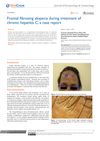 September 2017 in “Journal of Dermatology & Cosmetology”
 Hepatitis C treatment may cause frontal fibrosing alopecia.
November 2015 in “The journal of investigative dermatology. Symposium proceedings/The Journal of investigative dermatology symposium proceedings” Alopecia areata is now understood to be driven by genetic and immune factors.