22 citations
,
December 2020 in “mSphere” A fungal enzyme was used to make compounds more soluble, aiding drug discovery and crop protection.
20 citations
,
February 2021 in “Frontiers in Pharmacology” Angelica sinensis and Tetrapanax papyrifer are common in Taiwanese TCM for lactation, with potential anticancer benefits.
18 citations
,
February 2024 in “Nutrients” A new pomegranate extract lowers blood pressure and has health benefits.
 18 citations
,
December 2021 in “Foods”
18 citations
,
December 2021 in “Foods” Seaweeds contain beneficial compounds with potential uses in food, cosmetics, and health, but more research is needed to improve extraction and safety.
17 citations
,
October 2023 in “Polymers” Electrospun nanofibers are promising for medical, sensing, and energy uses, especially with 3D printing.
 15 citations
,
October 2021 in “Frontiers in Pharmacology”
15 citations
,
October 2021 in “Frontiers in Pharmacology” Natural volatiles and essential oils have health benefits and can enhance the effects of some medicines, but more research is needed to understand how they work and their possible side effects.
13 citations
,
October 2019 in “Oncology Reports” The link between anabolic agents and colorectal cancer risk is unclear.
12 citations
,
November 2024 in “Plants” Phytosterols may help manage prostate issues but are less effective than synthetic drugs.
12 citations
,
May 2023 in “Molecules” Polygoni Cuspidati Rhizoma et Radix contains compounds that inhibit certain enzymes.
5 citations
,
January 2024 in “Advances in Pharmacological and Pharmaceutical Sciences” Pomegranate shows promise for treating various health issues, but more research is needed.
4 citations
,
August 2025 in “Molecules” Medicinal plants show promise for skin disorders but need more research for safe clinical use.
2 citations
,
January 2024 in “Pharmaceuticals” Deep eutectic solvents are eco-friendly and effective for extracting useful pharmaceutical compounds.
 1 citations
,
September 2023 in “Applied sciences (Basel)”
1 citations
,
September 2023 in “Applied sciences (Basel)” Ishige sinicola extract may help prevent muscle atrophy through its antioxidant and anti-inflammatory effects.
 May 2026 in “Applied Sciences”
 Sprout extracts may improve skin and hair health.
 April 2026 in “The Open Biotechnology Journal”
 Resveratrol shows health benefits but faces challenges in effectiveness and regulation.
January 2026 in “International Journal of Molecular Sciences” Hemp's compounds can be used in natural insecticides, cosmetics, and food supplements.
December 2025 in “JEADV Clinical Practice” These new skin treatments are safer and more effective with minimal side effects.
December 2025 in “Dietetics” European olive products are beneficial for skin care and are expected to become more important.
August 2025 in “Therapeutics” Low-dose DMSO may help treat castration-resistant prostate cancer by reducing key cancer cell receptors.
 January 2025 in “Applied Sciences”
 Sulforaphane from broccoli may help treat certain cancers, hormone issues, and hair loss.
New steroid derivatives show promise as anticancer agents, even against resistant cells.
 May 2023 in “Materials research foundations”
 Nanomaterials like silver and gold can improve wound healing but need more research for safety.
May 2022 in “Current Enzyme Inhibition” Compound 7b is a promising candidate for treating benign prostatic hyperplasia and prostate cancer.
 10 citations
,
July 2022 in “Journal of Medicinal Chemistry”
10 citations
,
July 2022 in “Journal of Medicinal Chemistry” Adding a second method to PROTACs could improve cancer treatment.
8 citations
,
August 2025 in “Journal of Translational Medicine” CD44 signaling can help heal wounds without scars.
 April 2025 in “BMC Chemistry”
 Thiadiazole chitosan conjugates improve hair manageability, moisture, and protection in conditioners.
January 2025 in “Pharmaceuticals” Peptide-based hydrogels are promising for healing chronic wounds effectively.
5 citations
,
December 2023 in “Materials” Organic and biogenic nanocarriers can improve drug delivery but face challenges like consistency and safety.
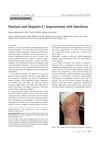 January 2011 in “Annals of dermatology/Annals of Dermatology”
 A woman's psoriasis improved after hepatitis C treatment with interferon, despite interferon's risk of worsening skin conditions.
 April 2018 in “Journal of Investigative Dermatology”
 Mint water extract boosts protective enzymes in skin cells.