20 citations
,
November 2020 in “Stem Cell Research & Therapy” Enhanced stem cells from the placenta can help treat Graves' eye disease by stopping fat cell growth.
December 2022 in “Scientia Pharmaceutica” PRP is more effective than minoxidil and placebo for treating hair loss.
40 citations
,
July 2023 in “Clinical Pharmacology & Therapeutics” Targeted protein degraders show promise in treating cancer but need to target more diverse proteins.
A new topical treatment using micelles shows promise for safer and more effective hair regrowth in androgenetic alopecia.
Combining PRP with a special lotion is more effective for hair loss than PRP alone.
 March 2024 in “Dermatology and therapy (Internet)”
 Genetic factors could lead to personalized treatments for hair loss.
 8 citations
,
October 2023 in “JMIR dermatology”
8 citations
,
October 2023 in “JMIR dermatology” ChatGPT can be a helpful dermatology resource but should not replace professional consultations.
 January 2024 in “Archives of Biological Sciences (Beograd)”
 AP collagen peptides may help hair grow better and become stronger.
January 1980 in “Lluc: revista de cultura i d'idees” Agaricus bisporus β-Glucan particles could effectively treat cervical cancer and offer antimicrobial and antioxidant benefits.
 January 2024 in “Journal of Education, Health and Sport”
 Platelet-rich plasma therapy shows promise in treating hair loss caused by androgenic alopecia.
The new microneedle system safely delivers finasteride through the skin to treat hair loss.
 4 citations
,
November 2020 in “Journal of The American Academy of Dermatology”
4 citations
,
November 2020 in “Journal of The American Academy of Dermatology” No strong proof that platelet-rich plasma effectively treats hair loss.
6 citations
,
September 2018 in “International Journal of Molecular Sciences” PRP derivatives are likely safe for therapeutic use without harmful effects.
January 2026 in “Pattern Recognition” The new method improves accuracy in segmenting scalp tissue layers.
1 citations
,
October 2013 The framework helps develop medical apps on mobile devices to reduce reliance on desktop computers.
 16 citations
,
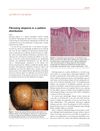
February 2010 in “Journal of the European Academy of Dermatology and Venereology”
16 citations
,
February 2010 in “Journal of the European Academy of Dermatology and Venereology” Fibrosing alopecia in a pattern distribution is a unique hair loss condition that may respond to antiandrogen therapy.
 April 2024 in “Biomedicine & pharmacotherapy”
 Pilose antler extract helps hair grow in mice with a type of hair loss by speeding up the growth phase.
Early balding may be a sign of future prostate problems.
 September 2024 in “Journal of Cosmetic Dermatology”
 Combining CGF and microneedling with betamethasone effectively treats resistant alopecia areata.
 April 2023 in “Journal of Investigative Dermatology”
 Platelet-rich plasma treatment is generally safe and effective for hair loss, acne scars, skin discoloration, and facial rejuvenation, but deeper injections are better and multiple treatments can increase risk of side effects.

Combining platelet-rich plasma with other treatments may improve hair growth in androgenetic alopecia.

Combining platelet-rich plasma with other treatments may improve hair growth in androgenetic alopecia.
 14 citations
,
January 2020 in “Biomaterials Science”
14 citations
,
January 2020 in “Biomaterials Science” Created microspheres show potential for safe and effective use in prostate artery embolization.
PLX, a tomato extract mix, may help treat prostate issues like BPH.
 April 2019 in “Journal of Investigative Dermatology”
 Eating grape powder may reduce the severity of skin allergy symptoms.
 6 citations
,
August 2013 in “한국응용생명화학회지”
6 citations
,
August 2013 in “한국응용생명화학회지” Certain natural compounds can block an enzyme linked to prostate enlargement and hair loss, showing potential for new treatments.
The tool accurately measures hair count and size on scalps with 79.45% and 68.19% accuracy, respectively.
 January 2025 in “Frontiers in Immunology”
 IVIG therapy significantly improved symptoms in a patient with APS-2 and SPS.
 May 2025 in “IP Indian Journal of Clinical and Experimental Dermatology”
 Both microneedling and PRP are effective for hair loss, with microneedling slightly better for hair growth and PRP better for hair retention.

The conclusion is that a treatment called cp-asiAR can reduce hair loss and promote hair growth, making it a potential new therapy for androgenetic alopecia.