 1 citations
,
October 2021 in “International Journal of Research in Dermatology”
1 citations
,
October 2021 in “International Journal of Research in Dermatology” Alopecia areata mainly affects men aged 21-40 and is linked to autoimmune issues, thyroid problems, and inflammation.
 1 citations
,
October 2021 in “Deleted Journal”
1 citations
,
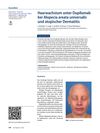
October 2021 in “Deleted Journal” Dupilumab can help regrow hair and improve skin conditions in patients with severe atopic dermatitis and alopecia areata.
1 citations
,
July 2021 in “Journal of the American Academy of Dermatology” Hospitalizations for atopic dermatitis are more due to other health issues now, not the condition itself.
 1 citations
,
January 2020 in “Skin appendage disorders”
1 citations
,
January 2020 in “Skin appendage disorders” A family was found with both Trichorhinophalangeal syndrome and Loose Anagen Syndrome, suggesting a genetic connection.
 1 citations
,
July 2018 in “Journal of dermatology & cosmetology”
1 citations
,
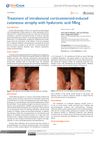
July 2018 in “Journal of dermatology & cosmetology” Hyaluronic acid successfully treated skin atrophy caused by corticosteroid injections.
 1 citations
,
August 2017 in “British Journal of Dermatology”
1 citations
,
August 2017 in “British Journal of Dermatology” Sodium hypochlorite can effectively prevent and remove Staphylococcus aureus biofilms in atopic dermatitis at high enough concentrations.
1 citations
,
January 2017 in “Annals of dermatology/Annals of Dermatology” Mineral levels in hair don't significantly affect the severity of atopic dermatitis in children.
1 citations
,
February 2013 in “InTech eBooks” LEKTI is crucial for skin barrier and immune function, affecting conditions like Netherton syndrome and atopic dermatitis.
1 citations
,
December 2011 in “Arzneimittelforschung” The method accurately measures cyproterone acetate in plasma, showing no significant difference between two formulations.
1 citations
,
January 2010 in “uO Research (University of Ottawa)” Atrazine and finasteride disrupt hormone signaling and affect frog development.
1 citations
,
August 2009 in “ACTUALIDAD MEDICA” Patients with early-onset androgenetic alopecia have a higher risk of metabolic syndrome and carotid arteriosclerosis, suggesting the need for early cardiovascular screening and prevention.
 1 citations
,
November 2004 in “Clinical and Experimental Dermatology”
1 citations
,
November 2004 in “Clinical and Experimental Dermatology” Most bald men don't protect their scalp from the sun, and doctors should encourage prevention.
 March 2024 in “Clinical and experimental dermatology”
 Topical corticosteroids may be a safe and effective treatment for severe alopecia areata in children.
 May 2023 in “Clinical and Experimental Dermatology”
 Alopecia areata has a high chance of persisting and relapsing, with a significant risk of total hair loss, especially if it starts in childhood.
 June 2015 in “한국화장품미용학회지”
 AT-Grow, a natural product, might help with a common type of hair loss by reducing DHT levels.
 February 2007 in “Independent Nurse”
 Different scalp conditions have distinct features and causes.
 July 2026 in “Dermatology and Therapy”
 Hair growth supplements significantly improve hair growth and health in women.
 July 2026 in “Quality in Sport”
 Athletes may experience reduced effectiveness of aesthetic treatments due to high metabolism and stress, and often have body image disorders.
June 2026 in “Nature Communications” Stretching skin helps fibroblasts support stem cell renewal for skin growth.

The supplement may reduce hair shedding but needs more research for skin benefits.
Atopic dermatitis affects the appearance of skin reactions, making certain features more common and improving diagnostic accuracy with dermoscopy.
 April 2026 in “Laboratory Animal Research”
 The new Hairless R/J mice model improves imaging for tumor monitoring and cancer therapy evaluation.
 April 2026 in “Journal of Pharmaceutical Investigation”
 Nanotechnology could improve treatment for scars and atopic dermatitis by targeting skin issues more effectively.
 April 2026 in “Journal of Inflammation Research”
 Alopecia areata and atopic dermatitis share immune system issues, and treatments like JAK inhibitors can help both.
 March 2026 in “Frontiers in Cell and Developmental Biology”
 Autologous cell-based therapies, especially SVF, effectively and safely improve atrophic acne scars.
Iron deficiency worsens inflammatory skin diseases by disrupting iron balance and increasing inflammation.
 February 2026 in “Nature Communications”
 A specific group of immune and skin cells may cause chronic inflammation in atopic dermatitis.
 February 2026 in “Frontiers in Immunology”
 Tralokinumab for atopic dermatitis may cause eye issues and skin reactions, needing careful monitoring.
January 2026 in “Microorganisms” Bifidobacterium animalis subsp. lactis J12 helps reduce atopic dermatitis symptoms.
December 2025 in “International Journal of Cosmetic Science” A new tool helps better assess and treat hair loss in Chinese men.