 1 citations
,
January 2023
1 citations
,
January 2023 Alopecia Areata significantly reduces quality of life, especially in women, long-term sufferers, and severe cases.
 1 citations
,
February 2021 in “International Journal of Research in Dermatology”
1 citations
,
February 2021 in “International Journal of Research in Dermatology” Premature graying of hair significantly harms psychological and social wellbeing.
 1 citations
,
June 2017 in “Actas Dermo-Sifiliográficas”
1 citations
,
June 2017 in “Actas Dermo-Sifiliográficas” Follicular Unit Extraction (FUE) is a hair transplant method with less scarring and discomfort but requires skilled surgeons and has limitations on graft numbers per session.
 1 citations
,
January 2015 in “Springer eBooks”
1 citations
,
January 2015 in “Springer eBooks” The document says a skin condition called alopecia areata causes hair loss and stress, and is treated with strong skin creams, injections, or other therapies, but treatment success varies.
 1 citations
,
March 2025 in “Medical Molecular Morphology”
1 citations
,
March 2025 in “Medical Molecular Morphology” Androgens affect the function and health of the endometrium.
 1 citations
,
July 2023 in “Al-Azhar Medical Journal”
1 citations
,
July 2023 in “Al-Azhar Medical Journal” Higher antigliadin antibodies are linked to more severe alopecia areata, suggesting screening for celiac disease in these patients.
 1 citations
,
January 2012 in “Elsevier eBooks”
1 citations
,
January 2012 in “Elsevier eBooks” The document concludes that the skin is a complex organ providing protection, sensation, and healing, with challenges in treating conditions like itchiness.
Improving oral health may help hair regrowth in children with alopecia areata.
 February 2026 in “Frontiers in Medicine”
 FUE hair transplants are generally safe but require careful planning to avoid rare complications.
 January 2026 in “International Journal of Pharmaceutical Quality Assurance”
 Alopecia Areata patients have low zinc and high copper levels.
 November 2025 in “The Bioscan.”
 Pix Liquida may help treat alopecia areata.
 October 2025 in “Journal of Skin and Sexually Transmitted Diseases”
 Alopecia areata patients often have undetected thyroid issues, so routine thyroid screening is recommended.
The new minoxidil gel may improve hair loss treatment by staying on the scalp longer and penetrating better.

Four genes are linked to alopecia areata, with two increasing risk and two offering protection.
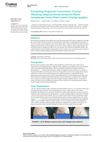
Genetic testing can help diagnose skin conditions but needs more research for full effectiveness.
 April 2024 in “Research Square”
 Children with alopecia areata often experience more anxiety and depression, linked to neglectful family dynamics.
 April 2024 in “Dermatology and therapy”
 There are significant gaps and inconsistencies in diagnosing and treating alopecia areata in Greece and Italy.
 March 2024 in “Clinical, cosmetic and investigational dermatology”
 Severe alopecia areata greatly impacts quality of life, mental health, and daily activities.
 February 2024 in “Sohag Medical Journal”
 Various local treatments for alopecia areata show promise, but individualized plans and more research are needed.
 January 2024 in “International Journal of Dermatology Research”
 PRP is more effective than triamcinolone for treating alopecia areata.
 December 2023 in “Journal of health and rehabilitation research”
 Oral Apremilast effectively treats alopecia areata in most patients.
Alopecia areata patients have higher levels of certain immune receptors, suggesting new treatment possibilities.
 October 2023 in “European medical journal. Dermatology”
 Hair loss greatly affects quality of life, and dermatologists are crucial for proper diagnosis and treatment.
 June 2023 in “International Journal of Research in Dermatology”
 Early diagnosis and treatment of alopecia areata in children is crucial to prevent severe progression.
 July 2022 in “Al-Mağallaẗ al-ʻirāqiyyaẗ li-l-ṣaydalaẗ”
 Lower zinc levels are linked to more severe hair loss in alopecia areata.
 June 2022 in “Al-Azhar International Medical Journal /Al-Azhar International Medical Journal”
 Adding nano fat to hair transplants improves results for scar-related hair loss.
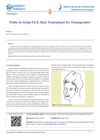
A hair transplant using hair from the back of the head and pubic area was successful in creating a feminine hairline for a male-to-female transgender person.
 April 2019 in “University of Huddersfield Repository (University of Huddersfield)”
 Alopecia causes emotional distress, and better psychological support is needed.
 January 2016 in “Georg Thieme Verlag eBooks”
 Facelift surgery has evolved to focus on natural results and safety, with patient selection and postoperative care being key to success.
 January 2009 in “Springer eBooks”
 The document concludes that treating skin conditions should include psychological care and a multidisciplinary approach is essential for effective management.