Search
for
Sort by
Research
930-960 / 1000+ results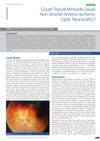
research Could Topical Minoxidil Cause Non-Arteritic Anterior Ischemic Optic Neuropathy?
Topical minoxidil might potentially cause vision problems, but more research is needed.
research Comparative Study Between 2% Minoxidil Topical Spray vs. Intradermal Injection (Mesotherapy) for Treatment of Androgenetic Alopecia in Female Patients: A Controlled, 4-month Randomized Trial
Mesotherapy is more effective than topical spray for female hair loss treatment.
research Natural Sweetener Stevioside‐Based Dissolving Microneedles Solubilize Minoxidil for the Treatment of Androgenic Alopecia (Adv. Healthcare Mater. 2/2026)
Stevioside-based microneedles improve minoxidil delivery for effective hair growth treatment.

research Androgens and acne: perspectives on clascoterone, the first topical androgen receptor antagonist
Clascoterone is a new, effective, and safe acne treatment without systemic side effects.
research Involvement of neurosteroids in the anxiolytic-like effects of AC-5216 in mice
AC-5216 reduces anxiety in mice through neurosteroids affecting GABAA receptors.

research The comparison of treatment with clobetasol propionate 0.05% and topical pimecrolimus 1% treatment in the treatment of alopecia areata
Clobetasol and pimecrolimus are similarly effective for alopecia areata, but pimecrolimus has fewer side effects and is preferred for long-term use.
research Skin Permeation of Small-Molecule Drugs, Macromolecules, and Nanoparticles Mediated by a Fractional Carbon Dioxide Laser: The Role of Hair Follicles
Fractional CO2 laser treatment significantly boosts drug and nanoparticle skin absorption, especially through hair follicles.
research Ketoconazole Hair Spray: An Innovative Topical Approach for the Treatment of Tinea capitis
Ketoconazole hair spray is an effective and easy treatment for scalp fungal infections.
research Enhanced Iontophoretic Delivery of Magnesium Ascorbyl 2-Phosphate and Sodium Fluorescein to Hairless and Hairy Mouse Skin
Iontophoresis greatly improves skin absorption of certain substances, especially in hairy mice.
research The Sodium Valproate: Doctor Jekyll and Mister Hyde
Sodium valproate is effective in treating epilepsy, especially in patients who don't respond to other medications.
research [Advances in topical therapy of skin diseases (author's transl)].
New treatments for skin diseases in 1979 showed promising results with fewer side effects.

research 695 Using MALDI-MSI analysis to study distribution of FOL-005, a potent, novel inhibitor of human hair growth, after subcutaneous injection in mice
FOL-005, a new substance, was found to reduce hair growth without toxicity when injected into skin, suggesting it could be used to treat excessive hair growth.

research Trichogenic effect of topical ketoconazole versus minoxidil 2% in female pattern hair loss: a clinical and trichoscopic evaluation
Minoxidil works faster, but ketoconazole is a safer alternative for female hair loss.

research Potency of Leaf Extracts of Cocor Bebek (Kalanchoe pinnata) as Hair-Growth Promoting Agent
Cocor Bebek leaf extract may promote hair growth better than minoxidil at high concentrations.
research Deoxycholic acid in the submental fat reduction: A review of properties, adverse effects, and complications
Deoxycholic acid is effective for reducing chin fat but can cause side effects and serious complications, so careful patient evaluation is needed.
research Case Report: Multiple Scalp Abscesses due to Mycobacterium abscessus Infection Following Triamcinolone Injection in an Immunocompetent Person
Scalp abscesses can occur after hair loss treatments and may be caused by Mycobacterium abscessus.
research Eyebrow regrowth in patients with frontal fibrosing alopecia treated with intralesional triamcinolone acetonide
Intralesional triamcinolone acetonide helps regrow eyebrows in patients with frontal fibrosing alopecia.
research Laser hair removal, sclerotherapy, injection of collagen and botox.

research The Effectiveness and Safety of Three Treatment Regimens of Topical Minoxidil 5.0%, Betamethasone 0.064% w/w, and Castor and Jojoba Oils for Alopecia Areata: A Multicenter Cohort Study
Minoxidil with betamethasone is the most effective for hair regrowth in alopecia areata.
research Sodium Valproate in Treatment of Epilepsy
Sodium valproate effectively reduces seizures in epilepsy, especially in absences and myoclonic types, with minimal side effects.
research Clinical Snippets
Razor bumps are linked to a genetic variant, misoprostol helps erythromelalgia pain, steroid ointments don't affect skin rhythms, and certain antibodies are common in localized scleroderma.
research Penetration enhancer-containing vesicles (PEVs) as carriers for cutaneous delivery of minoxidil
PEVs improve minoxidil skin penetration, increasing hair growth.
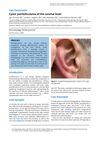
research Cystic panfolliculoma of the conchal bowl
Cystic panfolliculoma is a rare, harmless tumor that can be confused with other skin tumors.

research A PROSPECTIVE CASE SERIES OF EYEBROWS ALOPECIA AREATA TREATMENT WITH 20% TCA APPLICATION ALONG WITH TOPICAL BIMATOPROST SOLUTION AT SHADAN INSTITUTE OF MEDICAL SCIENCES.
The new treatment showed promise in managing eyebrow hair loss.
research Effects of caffeine and siloxanetriol alginate caffeine, as anticellulite agents, on fatty tissue: histological evaluation
Caffeine and siloxanetriol alginate caffeine in emulsion form can reduce fatty cell size and number, potentially treating cellulite effectively.

research Clinical Study to Evaluate Safety and Efficacy of a Topical Hair Minimizing Lotion in Healthy Human Volunteers
The lotion safely and effectively reduces unwanted hair growth.
research Film-trigger applicator (FTA) for improved skin penetration of microneedle using punching force of carboxymethyl cellulose film acting as a microneedle applicator
The film-trigger applicator improves microneedle skin delivery and drug efficiency using simple finger force.

research Clascoterone: a new topical antiandrogen agent.
Clascoterone is a promising topical treatment for hair loss and acne with fewer side effects.

research 4-aminopyridine promotes accelerated skin wound healing via neurogenic-mediator expression
4-aminopyridine, a FDA-approved drug, speeds up skin wound healing and tissue regeneration.