Tofacitinib and low-dose IL-2 may help maintain hair regrowth in alopecia areata without ongoing treatment.
Combining excimer lamp and tofacitinib gel may help treat hair loss in children.
N793 may improve hair density in people with mild hair thinning.
 12 citations
,
March 2014 in “ISRN Pharmacology (Print)”
12 citations
,
March 2014 in “ISRN Pharmacology (Print)” Minoxidil with tretinoin boosts hair growth most effectively, followed by minoxidil alone, and then ketoconazole.
15 citations
,
April 2016 in “The Journal of Dermatology” Multiple courses of pulse corticosteroid therapy improve hair growth in alopecia areata patients with minimal side effects.
November 2025 in “Journal of Dermatological Treatment” Dexamethasone oral mini-pulse therapy effectively treats severe alopecia areata when JAK inhibitors can't be used.
4 citations
,
January 2020 in “PubMed” JAK inhibitors may become the first approved treatment for alopecia areata if they are proven safe and effective.
1 citations
,
May 2025 in “International Immunopharmacology” L-borneol helps skin wound healing by promoting stem cell differentiation.
 22 citations
,
March 2020 in “Cosmetics”
22 citations
,
March 2020 in “Cosmetics” Nanotechnology improves minoxidil treatment for hair loss.
 January 2025 in “Journal of Pharmaceutical Research Science & Technology”
 Dissolving microneedles offer efficient, minimally invasive drug delivery through the skin.
 August 2001 in “Journal of Cutaneous Medicine and Surgery”
 Prednisone has risks for lupus patients, isotretinoin is safe for mental health, transplant patients risk skin cancer, and various treatments are effective for specific skin conditions.
4 citations
,
June 1963 in “Archives of Dermatology” Prednisolone can quickly regrow hair in alopecia universalis, but hair falls out after stopping it.
March 2025 in “NATIONS UNIVERSITY INTERNATIONAL JOURNAL OF MULTI-DISCIPLINARY STUDIES” Baricitinib effectively improved skin and hair conditions in a patient with alopecia areata and atopic dermatitis.
September 2023 in “Journal of the American Academy of Dermatology” Low-dose oral naltrexone may help reduce inflammation in some scarring alopecia patients.
Baricitinib works better than methotrexate for severe alopecia areata.
 August 2024 in “Indian Journal of Animal Research”
 Clove oil effectively treats cattle dermatophytosis in 7 days.
1 citations
,
February 2025 in “Pediatric Dermatology” Tofacitinib helps hair regrow in some kids with severe alopecia areata, but more research is needed on long-term effects.
8 citations
,
January 2017 in “Dermatology online journal” Tofacitinib helped psoriasis but not alopecia universalis, needing more research.
21 citations
,
August 1984 in “BJOG An International Journal of Obstetrics & Gynaecology” Ovarian function was similar in both treatment groups, but both caused excessive hair growth.
Nourkrin effectively promotes hair growth and is well-tolerated without side effects.
 2 citations
,
January 2018 in “International journal of research in dermatology”
2 citations
,
January 2018 in “International journal of research in dermatology” Intralesional corticosteroids are the best for limited alopecia areata, oral steroids are less effective, and PRP is safe and promising, especially for children and severe cases.
 121 citations
,
January 1991 in “Acta dermato-venereologica”
121 citations
,
January 1991 in “Acta dermato-venereologica” Terbinafine quickly builds up in skin and hair, staying effective for over 3 weeks.
 1 citations
,
May 2023 in “International Journal of Applied Pharmaceutics”
1 citations
,
May 2023 in “International Journal of Applied Pharmaceutics” Placenta extract in novasomes improved rat hair growth better than minoxidil and placenta extract in liposomes.
 8 citations
,
January 2008 in “Annals of Dermatology”
8 citations
,
January 2008 in “Annals of Dermatology” Combining Cyclosporine A with low-dose corticosteroids effectively treats severe alopecia areata.
23 citations
,
June 1993 in “PubMed” Medication 1 improved hair quality and growth more effectively than medication 2 and the placebo.
February 2022 in “Institutional Repositories DataBase (IRDB)” Improper steroid use can cause skin issues like rosacea, which may improve after stopping the steroid and using benzoyl peroxide.
 May 2010 in “Dermatologic Clinics”
 The document concludes that new treatments for skin conditions are complex but effective, including spironolactone for female hair loss and propranolol for infantile hemangiomas.
July 2025 in “Materials Today Bio” TFC-loaded microneedles effectively promote hair regrowth in androgenetic alopecia.
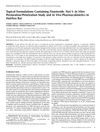 23 citations
,
June 2014 in “Journal of Pharmaceutical Sciences”
23 citations
,
June 2014 in “Journal of Pharmaceutical Sciences” Finasteride cream helps hair growth with less side effects.
3 citations
,
July 2025 in “British Journal of Dermatology” Cinainu is effective and safe for treating children's alopecia areata.