December 2025 in “eScience” A wireless, battery-free system uses Wi-Fi signals to enhance wound healing and enable smart healthcare at home.
November 2025 in “Biomacromolecules” Nanochitins, especially DNCh and PNCh, effectively promote hair growth.
September 2025 in “Journal of Polymer Science” Functionalized bacterial cellulose can improve medical tissue engineering.
September 2025 in “Journal of Drug Delivery Science and Technology” Vitamin D3-coated nanoparticles effectively deliver caffeine for alopecia treatment with minimal side effects.
August 2025 in “Journal of Polymer Science” AcD scaffolds improve tissue repair and regeneration by combining stem cells with a supportive matrix.
 January 2024 in “Regenerative Biomaterials”
 Metal organic frameworks-based scaffolds show promise for tissue repair due to their unique properties.
 January 2024 in “LA Referencia (Red Federada de Repositorios Institucionales de Publicaciones Científicas)”
 Carbon Quantum Dots can effectively detect cobalt ions and methylcobalamin in water.
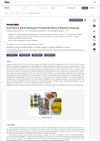
Plant-based compounds can improve wound dressings and skin medication delivery.
83 citations
,
October 2022 in “Materials Today Bio” Biopolymers are key for creating advanced, effective hemostatic materials.
81 citations
,
February 2022 in “Bioactive Materials” The nanoparticles effectively deliver antibiotics to fight resistant bacteria.
55 citations
,
September 2020 in “Frontiers in Bioengineering and Biotechnology” Engineered MOFs show promise for better wound healing but need more research for human use.
26 citations
,
June 2023 in “International Journal of Bioprinting” The hydrogel effectively heals infected wounds and kills bacteria.
21 citations
,
June 2023 in “Journal of Nanobiotechnology” Engineered extracellular vesicles could improve CRISPR/Cas delivery, making gene editing safer and more effective.
11 citations
,
August 2022 in “Green Chemical Engineering” Engineered polypeptide-based systems can improve cancer treatment by targeting specific sites and reducing side effects.
11 citations
,
November 2021 in “ACS applied nano materials” Keratin-associated protein nanoparticles from human hair may help stop bleeding quickly and safely.
 8 citations
,
January 2023 in “RSC Advances”
8 citations
,
January 2023 in “RSC Advances” Carbon dots show promise for tissue repair and growth but need more research to solve current challenges.
 4 citations
,
October 2022 in “Elsevier eBooks”
4 citations
,
October 2022 in “Elsevier eBooks” Plant saponins from Indian plants are natural, cost-effective, and safe for use in soaps, detergents, and hair care products.
3 citations
,
August 2024 in “Biomimetics” The hydrogel effectively heals wounds and fights bacteria.
3 citations
,
September 2023 in “Stem Cell Research & Therapy” Stem cells can be used to create long-lasting skin cells for treating pigment disorders.
2 citations
,
September 2020 in “Swedish Journal of BioScience Research” Chitosan from Lucilia cuprina improves wound healing in diabetic mice treated with insulin.
1 citations
,
January 2025 in “Molecules” More research is needed to effectively measure how well GHK–Cu in liposomes penetrates the skin.
July 2026 in “Plastic and Aesthetic Research” Fat transplantation is becoming important in medicine for repairing tissues and delivering drugs.
July 2026 in “Materials Today Bio” DNA hydrogels can help repair tissues and treat tumors in regenerative medicine.
January 2026 in “Journal of Biomaterials Applications” Fish skin-derived material helps diabetic wounds heal faster than current options.
December 2025 in “ACS Applied Bio Materials” The aloe-collagen dressing speeds up wound healing effectively.
November 2025 in “Interdisciplinary materials” The new silk suture with silver and curcumin helps heal wounds faster and fights bacteria.
 June 2025 in “World Journal of Medical Oncology”
 Bio-based materials like hydrogels show promise in treating skin cancer with fewer side effects, but more research is needed.
 March 2025 in “Wound Repair and Regeneration”
 The hydrogel scaffold improved skin flap healing and reduced inflammation.
 May 2024 in “Journal of colloid and interface science”
 The hydrogel helps skin heal by encouraging new blood vessel growth.
 421 citations
,
January 2015 in “Chemical Society Reviews”
421 citations
,
January 2015 in “Chemical Society Reviews” Improving artificial vascular grafts requires better materials and surface designs to reduce blood clotting and support blood vessel cell growth.