March 2022 in “Research Square (Research Square)” Mushroom compounds may help treat hair loss better than Finasteride.
 7 citations
,
February 2014 in “Talanta”
7 citations
,
February 2014 in “Talanta” Researchers developed a method to identify and analyze cyclosporin compounds and their structures effectively.
13 citations
,
February 2023 in “Pharmaceutics” Bioactive wound dressings can improve healing by promoting beneficial macrophage activity.
9 citations
,
April 2024 in “Advanced Drug Delivery Reviews”  10 citations
,
September 1997 in “Molecular carcinogenesis”
10 citations
,
September 1997 in “Molecular carcinogenesis” Mirex seems to promote a unique group of skin cells different from those affected by another tumor promoter, TPA.
 1 citations
,
January 2024 in “Advances in Engineering Technology Research”
1 citations
,
January 2024 in “Advances in Engineering Technology Research” Bone marrow stem cells from Guizhou miniature pigs can grow well and become different cell types, useful for tissue engineering.
 73 citations
,
March 2017 in “Scientific Reports”
73 citations
,
March 2017 in “Scientific Reports” Bioengineered tooth germ can restore whole teeth in dogs.
 3 citations
,
March 2019 in “PubMed”
3 citations
,
March 2019 in “PubMed” Biofibre hair implants are safe, well-tolerated, and provide immediate cosmetic improvement for hair loss.
 2 citations
,
October 2019 in “Current sports medicine reports”
2 citations
,
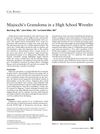
October 2019 in “Current sports medicine reports” A high school wrestler's skin rash was cured with antifungal medication after a misdiagnosis and incorrect treatment led to a fungal infection.
March 2023 in “International Journal of bioprinting” Zinc/silicon-infused hydrogel helps regenerate hair follicles.
 November 2022 in “Journal of Herbal Medicine”
 Certain compounds found in edible mushrooms may help treat hair loss.
1 citations
,
July 2025 in “Methods and Protocols” The CAM is a useful model for studying burn wounds and testing treatments.
 1 citations
,
September 2022 in “River Publishers eBooks”
1 citations
,
September 2022 in “River Publishers eBooks” The document concludes that hair keratin-chitosan scaffolds were successfully made and are suitable for biomedical use.
 April 2026 in “Biomedical Materials”
 Gold nanoparticle-phytochemical combinations work better against melanoma in 3D models than separate components.
January 2026 in “Dermatologic Therapy” Current models for studying alopecia are inadequate, and more human-like systems are needed.
2 citations
,
July 2025 in “Scientific Reports” Acinetobacter strain A1-4-2 can safely clean water pollutants.
December 2024 in “Macromolecular Bioscience” The new collagen template speeds up production and supports skin healing without harmful reactions.
70 citations
,
April 2020 in “Journal of Molecular Cell Biology” Organoid technology helps create mini-organs for studying diseases and testing drugs.
 12 citations
,
November 2014 in “Bioscience, Biotechnology, and Biochemistry”
12 citations
,
November 2014 in “Bioscience, Biotechnology, and Biochemistry” Genetically modifying a bacteria and changing its growth conditions significantly increased the production of a chemical called dipicolinic acid.

Microbial imbalances on the scalp can help diagnose and manage hair loss early.
24 citations
,
January 2023 in “International Journal of Nanomedicine” Biomembrane-based hydrogels can effectively promote chronic wound healing.
April 2017 in “DR-NTU (Nanyang Technological University)” A biodegradable system can deliver finasteride consistently, reducing the need for daily pills.
14 citations
,
July 2004 in “Australasian Journal of Dermatology” Follicular mycosis fungoides can look like a B-cell lymphoma, making diagnosis difficult.
January 2026 in “Methods in molecular biology” Using PMA treatment before sequencing helps accurately identify living microbes on the scalp.
17 citations
,
May 2025 in “MedComm” Organoid technology is improving personalized medicine by better predicting drug responses and treatments.

The bar-cartridge type implanter is the best for implanting dermal papilla cells efficiently and at controlled depths.
477 citations
,
March 2004 in “Proceedings of the National Academy of Sciences” The DMI3 gene is essential for nodule development and symbiosis in certain plants.
13 citations
,
March 2024 in “Cell Transplantation” Engineered skin tissue is a promising tool for safer cosmetic testing.
January 2026 in “SSRN Electronic Journal” 3 citations
,
August 2025 in “Advanced Therapeutics” Engineered cytokines show promise for improving tissue healing and safety in regenerative medicine.