September 2023 in “Journal of the American Academy of Dermatology” Methylprednisolone treatment helps most alopecia areata patients, but young age, extensive hair loss, and low vitamin D can affect results.
July 2025 in “International Journal of Trichology” Intralesional methotrexate and triamcinolone acetonide are more effective than Vitamin D3 for treating alopecia areata.
 June 2023 in “International Journal of Clinical Research and Reports”
 Method B with propylene glycol is better for stable low-concentration DPCP solutions for alopecia areata.
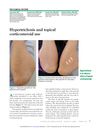 February 2022 in “Cleveland Clinic Journal of Medicine”
 Prolonged use of topical corticosteroids can cause excessive hair growth.
April 2025 in “Digital Commons - East Tennessee State University (East Tennessee State University)” Cromolyn sodium oleate gel is more effective and safer for treating atopic dermatitis than dexamethasone.
 1 citations
,
November 2023 in “International Journal of Dermatology”
1 citations
,
November 2023 in “International Journal of Dermatology” Topical calcineurin inhibitors might be safer than steroids for scarring alopecia, but more research is needed.

Higher doses of prednisone and triamcinolone acetonide successfully treated 8 out of 10 alopecia totalis patients.
 35 citations
,
January 2013 in “Indian Journal of Dermatology, Venereology and Leprology”
35 citations
,
January 2013 in “Indian Journal of Dermatology, Venereology and Leprology” Intralesional triamcinolone acetonide is effective for treating patchy hair loss, and dermoscopy helps detect treatment response and side effects early.
 September 2025 in “Tạp chí Da liễu học Việt Nam”
 2.5 mg/mL TAC is as effective and safe as 5 mg/mL, but 5 mg/mL may improve hair regrowth and density more.
 November 2025 in “Archives of Dermatological Research”
 Using a higher concentration of triamcinolone acetonide leads to faster hair regrowth in scalp patchy alopecia areata.
January 2026 in “Vestnik dermatologii i venerologii” Tacrolimus ointment is effective for various skin conditions but needs more research for long-term effects.
 1 citations
,
March 2017 in “Al-maǧallaẗ al-’irāqiyyaẗ li-l-’ulūm al-ṣaydalāniyyaẗ/Iraqi journal of pharmaceutical sciences”
1 citations
,
March 2017 in “Al-maǧallaẗ al-’irāqiyyaẗ li-l-’ulūm al-ṣaydalāniyyaẗ/Iraqi journal of pharmaceutical sciences” Nutrient antioxidants helped reduce prednisolone dosage and improved hair growth in alopecia areata patients.
1 citations
,
November 2020 in “DOAJ (DOAJ: Directory of Open Access Journals)” Both concentrations of triamcinolone acetonide are equally effective and safe for treating patchy alopecia areata.
9 citations
,
December 1958 in “Journal of Investigative Dermatology” 
The treatment showed limited success in repigmenting hair for vitiligo-associated leukotrichia.
 January 2011 in “Side effects of drugs annual”
 Tretinoin gel is safe for sun exposure, but tacalcitol doesn't significantly improve non-segmental vitiligo.
 9 citations
,
December 2020 in “Dermatologic Therapy”
9 citations
,
December 2020 in “Dermatologic Therapy” Certain drugs are effective for skin conditions like psoriasis, vitiligo, and hair loss.
 16 citations
,
December 2008 in “Journal of The American Academy of Dermatology”
16 citations
,
December 2008 in “Journal of The American Academy of Dermatology” Adults with atopic dermatitis showed similar adherence to different forms of hydrocortisone cream, but actual use varied despite self-reports of near-perfect usage.
10 citations
,
April 1964 in “Journal of the American Geriatrics Society” Triamcinolone acetonide injections effectively treat skin disorders like eczema and psoriasis.
March 2023 in “Reactions Weekly” 1 citations
,
September 2023 in “Journal of the American Academy of Dermatology” Mini pulse corticosteroid therapy with oral dexamethasone is effective and has fewer side effects for treating extensive alopecia areata.
75 citations
,
September 1971 in “British Journal of Dermatology” Both steroids effectively promote hair growth for at least 9 months.
 October 2025 in “Iraqi postgraduate medical journal”
 Combining laser treatment with steroid cream is more effective for alopecia areata than using the cream alone.
2 citations
,
March 1964 in “Archives of Dermatology” Different doses of triamcinolone injections work equally well for skin conditions.
February 2023 in “Reactions Weekly” 1 citations
,
January 2000 in “PubMed” The treatment slightly increased hair growth and was safe for most women.
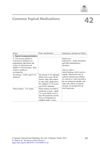 October 2018 in “Springer eBooks”
 The document concludes that various topical medications are effective for skin conditions but often cause skin irritation as a side effect.
 April 2012 in “Journal of the American Academy of Dermatology”
 Clofazimine may be effective for treating ashy dermatosis.
 January 2024 in “Archives of dermatological research”
 Both treatments for alopecia areata showed similar modest effectiveness.
36 citations
,
May 2005 in “BMC dermatology” DPCP is effective for treating severe alopecia areata, but relapse is common.