 52 citations
,
January 1999 in “Journal of Small Animal Practice”
52 citations
,
January 1999 in “Journal of Small Animal Practice” Removing a cat's pancreatic cancer can temporarily reverse hair loss caused by the disease.
36 citations
,
June 2003 in “The journal of small animal practice/Journal of small animal practice” Trilostane helped a cat with a hormone issue but the cat later died from a kidney infection.
 22 citations
,
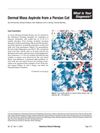
December 2003 in “Veterinary clinical pathology”
22 citations
,
December 2003 in “Veterinary clinical pathology” The Persian cat has a skin infection caused by a fungus, treatable with antifungal medication.
 6 citations
,
February 2013 in “Veterinary Dermatology”
6 citations
,
February 2013 in “Veterinary Dermatology” A young cat had a rare hair condition with twisted hair shafts but stayed healthy.
2 citations
,
July 2021 in “Journal of feline medicine and surgery open reports” A diabetic cat with another gland issue got better after treatment with cabergoline, no longer needing insulin.
2 citations
,
July 2013 in “Journal of Animal Physiology and Animal Nutrition” Shorthaired and hairless cat breeds excrete more felinine than longhaired breeds.
1 citations
,
October 2024 in “Veterinary Sciences” Hemodialysis successfully treated a cat with minoxidil poisoning.
1 citations
,
December 2022 in “Pathogens” A stray cat with severe scabies recovered after 4 weeks of treatment.
March 2022 in “Veterinary dermatology” A one-year-old cat had multiple benign skin tumors similar to those known in humans.
107 citations
,
July 1991 in “Journal of Allergy and Clinical Immunology”  75 citations
,
October 2010 in “Mammalian genome”
75 citations
,
October 2010 in “Mammalian genome” Sphynx cats are hairless and Devon Rex cats have curly hair due to specific genetic mutations.
55 citations
,
August 2009 in “Journal of Feline Medicine and Surgery” Cats with adrenal tumors may have both hyperaldosteronism and hyperprogesteronism.
26 citations
,
August 2014 in “Veterinary Dermatology” Sphynx cats have abnormal hair follicles and keratinization affecting their skin.
 14 citations
,
May 2013 in “Emerging infectious diseases”
14 citations
,
May 2013 in “Emerging infectious diseases” Cryptococcus gattii can remain dormant in animals for over 8 years.
11 citations
,
January 1984 in “Veterinary Pathology” 1 citations
,
January 2024 in “Journal of Feline Medicine and Surgery Open Reports” Fluralaner topical spot-on successfully treated a cat's hair shedding and scales caused by Demodex gatoi.
 April 2026 in “Buletin Veteriner Udayana”
 Apple cider vinegar improved the cat's skin condition and reduced symptoms in a week.
September 2025 in “Journal of Veterinary Cardiology” Minoxidil exposure can cause heart failure in cats.
June 2025 in “Veterinary Sciences” Oclacitinib effectively treated a diabetic cat's severe skin issues without raising glucose levels, and surgery fixed eyelid fusion.

A genetic mutation in the EDA gene causes hypohidrotic ectodermal dysplasia in cats.
January 2024 in “Veterinary Science and Medicine Journal” Ivermectin and pyrantel pamoate effectively treated the cat's conditions, and restricting activity prevents reinfection.
 August 2023 in “Veterinary Record Case Reports”
 High-dose ciclosporin significantly improved a young cat's severe skin condition.
 48 citations
,
March 1997 in “Veterinary Dermatology”
48 citations
,
March 1997 in “Veterinary Dermatology” Some cats with sudden hair loss and tiredness might have cancer-related alopecia.
31 citations
,
November 1991 in “Brain Research” Aδ-LTMRs have complex synapses with glycine, while Aβ-LTMRs have simpler ones.
27 citations
,
June 2020 in “Genes” Lykoi cats' unique sparse hair is linked to specific genetic variants in the Hairless gene.
11 citations
,
May 2010 in “Pigment Cell & Melanoma Research” Two genes, Tabby and Ticked, determine cat coat patterns.
 2 citations
,
March 2019 in “Veterinary dermatology”
2 citations
,
March 2019 in “Veterinary dermatology” Thymoma in cats can cause hair loss without inflammation.
1 citations
,
January 2020 in “Veterinariya Zootekhniya i Biotekhnologiya” Long-haired cats have thinner skin where hair is thicker, and all have unique collagen patterns.

Different drugs are used to manage breeding, prevent or end pregnancy, and treat reproductive issues in dogs and cats.
46 citations
,
April 1987 in “Brain Research” Hair-follicle nerves in cats' spinal cords can be inhibited by GABA-related connections.