April 2021 in “The journal of investigative dermatology/Journal of investigative dermatology” CTCF protein is essential for skin and hair follicle development in mice.
5 citations
,
July 2024 in “Journal of Microbiology and Biotechnology” ICP5249 helps hair grow by activating a specific cell pathway.
December 2025 in “Zenodo (CERN European Organization for Nuclear Research)” December 2025 in “Zenodo (CERN European Organization for Nuclear Research)”  1 citations
,
January 2022 in “Cell Biology International”
1 citations
,
January 2022 in “Cell Biology International” Changing CDK4 levels affects the number of stem cells in mouse hair follicles.
 April 2023 in “Journal of Investigative Dermatology”
 The document's conclusion cannot be provided because the content is not accessible.
65 citations
,
September 2014 in “BMC genomics” Different hair types in mammals are linked to variations in specific protein genes, with changes influenced by their living environments.
14 citations
,
August 2014 in “The FASEB Journal” CAP1/Prss8 does not activate PAR2 or inhibit PN-1.
May 2020 in “The Journal of Pediatrics” Tinea capitis can be quickly diagnosed and treated using dermoscopy to prevent hair damage.
 January 2007 in “대한피부과학회지”
 The document's conclusion can't be summarized because the text is not in English and the document content is not provided.
 April 2017 in “Journal of Investigative Dermatology”
 The protein CTCF is essential for skin development, maintaining hair follicles, and preventing inflammation.
 5 citations
,
August 2013 in “InTech eBooks”
5 citations
,
August 2013 in “InTech eBooks” KLF4 is important for maintaining stem cells and has potential in cancer treatment and wound healing.
24 citations
,
June 2015 in “Journal of Investigative Dermatology” aPKCλ is crucial for keeping hair follicle stem cells inactive and maintaining normal hair growth.
December 2025 in “The American Journal of Interdisciplinary Innovations and Research” The InvisiCaps Method ensures natural-looking hair extensions by carefully matching donor hair characteristics.
 October 2018 in “International journal of clinical & experimental dermatology”
 Baicapil was effective in reducing hair loss and increasing hair growth in women with telogen effluvium.
35 citations
,
May 2011 in “Experimental Dermatology” Aging causes changes in hair follicles, leading to weaker hair growth.
 28 citations
,
February 2012 in “PLoS ONE”
28 citations
,
February 2012 in “PLoS ONE” A PKP1 gene mutation causes skin fragility and hair loss in Chesapeake Bay retriever puppies.
 July 2022 in “Biomedicines”
 4-Aminopyridine improves skin wound healing and tissue regeneration by increasing cell growth and promoting nerve repair.
April 2026 in “The Breast” Both scalp cooling and chemical cooling caps effectively prevent hair loss in breast cancer patients undergoing chemotherapy.
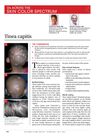 October 2022 in “The Journal of Family Practice”
 Tinea capitis is a scalp fungal infection in children that can cause hair loss, scaling, and other symptoms.
2 citations
,
May 2023 in “Indian Journal of Dermatology Venereology and Leprology” A new genetic mutation in the CAST gene may link PLACK syndrome to alopecia areata.
 June 2020 in “Nihon Ika Daigaku Igakkai Zasshi”
 aPKCλ is essential for hair follicle stem cell maintenance and wound healing.
 1 citations
,
March 2019 in “KnE life sciences”
1 citations
,
March 2019 in “KnE life sciences” HDPCM treatment healed a baby's congenital skin defect caused by varicella infection.
 17 citations
,
February 2015 in “Cell Death and Disease”
17 citations
,
February 2015 in “Cell Death and Disease” Inhibiting AP1 in mice skin causes structural changes and weakens the skin barrier.
1 citations
,
December 2016 in “Rossijskij žurnal kožnyh i veneričeskih boleznej” A new treatment using unactivated platelet leukocyte autoplasma cured 80% of non-scarring alopecia patients.
14 citations
,
April 2016 in “PloS one” The KRTAP11-1 gene promoter is crucial for specific expression in sheep wool cortex.
8 citations
,
November 2010 in “British journal of dermatology/British journal of dermatology, Supplement” Vitamin D protects skin cells from damage caused by captopril.
September 2009 in “Encyclopedia of Life Sciences” The KRTAP gene family helps understand hair evolution and hair disorders.
 March 2022 in “Research Square (Research Square)”
 4-aminopyridine, a FDA-approved drug, speeds up skin wound healing and tissue regeneration.

The CD4 protein may play a role in the behavior of certain skin cells, affecting their growth, movement, and differentiation.