 January 2009 in “Nihon Keshouhin Gijutsushakaishi/Journal of S C C./Nihon Keshouhin Gijutsushakai kaishi”
 Curved human hair has different structures on each side, which might cause its shape and is similar to wool.
 March 2026 in “Zenodo (CERN European Organization for Nuclear Research)”
 The N-K GM Series offers a free, effective solution to eliminate aflatoxin and cancer, improving health and life expectancy.
 2 citations
,
May 2023 in “JAAD Case Reports”
2 citations
,
May 2023 in “JAAD Case Reports” The document concludes that early and accurate diagnosis of hair loss on the top of the scalp in Black men is important to distinguish CCCA from other types of hair loss.
S1PR1 helps control inflammation in blood vessel cells by affecting gene activity differently in various cell types and locations.
 18 citations
,
February 2015 in “Acta Crystallographica Section D: Structural Biology”
18 citations
,
February 2015 in “Acta Crystallographica Section D: Structural Biology” The study concludes that certain domains in Clostridium histolyticum enzymes are structurally unique, bind calcium to become more stable, and play distinct roles in breaking down collagen, with potential applications in medicine and drug delivery.
 December 2011 in “Asia-Pacific biotech news”
 In 2011, there were major scientific breakthroughs in cancer treatment, immunity, Parkinson's, virus simulation, schizophrenia, hair growth, lung cancer, and medical grafts.
January 2026 in “Advanced Healthcare Materials” The new bioreactor improves skin grafts by evenly stretching cells and monitoring conditions for better growth.
 1 citations
,
April 2023 in “International Journal of Molecular Sciences”
1 citations
,
April 2023 in “International Journal of Molecular Sciences” New CRISPR/Cas9 variants and nanotechnology-based delivery methods are improving cancer treatment, but choosing the best variant and overcoming certain limitations remain challenges.
 17 citations
,
January 2014 in “Stem Cells Translational Medicine”
17 citations
,
January 2014 in “Stem Cells Translational Medicine” Canine epidermal neural crest stem cells could be a promising treatment for spinal cord injuries in dogs.
 149 citations
,
July 2017 in “PLoS Biology”
149 citations
,
July 2017 in “PLoS Biology” Hair follicle patterns form through a mix of self-organization and signaling interactions.
1 citations
,
January 2024 in “International Journal of Epidemiology” The study aims to find new risk factors and early signs for heart and brain diseases to improve prevention and management.
 November 2023 in “Research Square (Research Square)”
 NIR-II imaging effectively tracked stem cells that helped repair facial nerve defects in rats.
January 2006 in “Chieh P'ou Hsueh Pao” A method was found to select hair follicle stem cells, and beta-catenin helps them grow and change.
9 citations
,
February 2025 in “Biomimetics” Robotic surgery in plastic and reconstructive procedures improves precision and outcomes but faces challenges like high costs and long operating times.
 1 citations
,
January 2022 in “Electronic Imaging”
1 citations
,
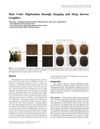
January 2022 in “Electronic Imaging” A new method accurately captures and renders hair color for virtual reality and hair dye use.
17 citations
,
July 2024 in “Advanced Intelligent Systems” Human-robot interaction becomes simpler as robots achieve full autonomy in surgery.
 40 citations
,
June 2013 in “Molecular Pharmaceutics”
40 citations
,
June 2013 in “Molecular Pharmaceutics” The gelatin/β-TCP scaffold with nanoparticles improves wound healing and skin regeneration.

Newly designed proteins can effectively degrade specific proteins in cells, offering a promising alternative for targeted protein degradation.
5 citations
,
March 2024 in “Frontiers in Bioengineering and Biotechnology” A detailed 3D model of human skin was created to help develop artificial skin.
 April 2023 in “Cancer research”
 KRTAP2-3 could help predict cancer recurrence by identifying specific cancer cells.
 December 2024 in “Kırıkkale Üniversitesi Tıp Fakültesi Dergisi”
 Chromosomal microarray analysis is important for diagnosing rare genetic variations and guiding treatment.
34 citations
,
November 1991 in “Choice Reviews Online” Neurons and synapses are key to brain function and learning.
 2 citations
,
November 2024 in “Journal of Nonlinear Science”
2 citations
,
November 2024 in “Journal of Nonlinear Science” Domain shape greatly affects pattern formation.
January 2004 in “Kölner Universitäts PublikationsServer (Universität zu Köln)” Collagen XVII and CD151 affect cell movement, with CD151 inhibiting migration when bound to integrins.
 17 citations
,
June 2019 in “BMC genomics”
17 citations
,
June 2019 in “BMC genomics” Non-coding RNAs help control hair growth in cashmere goats.

The study found genetic variations in sheep linked to traits like milk production, growth, and health.
 7 citations
,
December 2020 in “ACS biomaterials science & engineering”
7 citations
,
December 2020 in “ACS biomaterials science & engineering” Human hair keratins can form stable nanofiber networks that might help in tissue regeneration.
26 citations
,
October 2007 in “American Journal of Dermatopathology” Basal cell carcinoma with matrical differentiation is a rare type linked to hair follicles, with .-catenin important for its development.
 1 citations
,
September 2020 in “Prometheus”
1 citations
,
September 2020 in “Prometheus” Over-reliance on automation limits human problem-solving in emergencies.
 January 2024 in “Wiadomości Lekarskie”
 AI is advancing in dermatology and cosmetology, raising questions about its potential and trustworthiness.