44 citations
,
January 1999 in “Dermatology” Nevus comedonicus is a rare skin condition with grouped open pores, sometimes linked to other body issues.
May 2026 in “International Journal of Technology in Education and Science” The AI system accurately classifies hair loss types and explains its decisions.
February 2020 in “Journal of chemical neuroanatomy” Researchers found a way to make rat hair follicle cells start turning into motor neuron-like cells, but couldn't fully turn them into working motor neurons.
 17 citations
,
January 2014 in “Stem Cells Translational Medicine”
17 citations
,
January 2014 in “Stem Cells Translational Medicine” Canine epidermal neural crest stem cells could be a promising treatment for spinal cord injuries in dogs.
5 citations
,
December 2016 in “Microscopy Research and Technique” EPI-NCSCs from hair follicles may help treat brain development issues in mice.
 September 2023 in “JP Journal of Biostatistics”
 The random forest model effectively helps diagnose COVID-19 using key factors like age and symptoms.
April 2026 in “International Journal of Engineering Research and Science & Technology” The new AI system accurately diagnoses hair disorders and offers personalized treatment recommendations.
18 citations
,
October 2014 in “In vitro cellular & developmental biology. Animal” Hair follicle stem cells can become neural cells using different methods, with varying efficiency.
1 citations
,
April 2021 in “Annals of Otology Rhinology & Laryngology” Surgical removal is advised for large congenital blue nevi due to rare cancer risk.
7 citations
,
January 2017 in “Stem Cells International” Neural organoids show promise for future CNS disease treatments.
 6 citations
,
September 2025 in “Scientific Reports”
6 citations
,
September 2025 in “Scientific Reports” Machine learning can accurately diagnose PCOS non-invasively using clinical and ultrasound features.
January 2006 in “International water power & dam construction” Nevus comedonicus can appear later in life and affect both eyelids.
March 2022 in “Clinical Cosmetic and Investigational Dermatology” CDKN2AIP gene is less active in nevus sebaceous, affecting related RNA networks.
 6 citations
,
July 2022 in “Biomedical Signal Processing and Control”
6 citations
,
July 2022 in “Biomedical Signal Processing and Control” The new hair removal algorithm for skin images works better for detecting and fixing hair, improving melanoma diagnosis.
 September 2024 in “Egyptian Journal of Medical Human Genetics”
 Consider NF1 in newborns with rare congenital anomalies.
2 citations
,
July 2020 in “bioRxiv (Cold Spring Harbor Laboratory)” Neural stem cells use local feedback to maintain balance in the adult brain.
 January 2025 in “Nature Communications”
 Large-scale reconstructions enhance understanding of vibrissal sensory mapping in the brain.
 13 citations
,
September 2021 in “Communications Biology”
13 citations
,
September 2021 in “Communications Biology” Co5M offers a new way to observe and understand wound healing without labels.
2 citations
,
April 2014 in “PubMed” Epidermal neural crest stem cells from hair follicles can help repair nerve injuries.
January 2022 in “Journal of Pharmaceutical Negative Results” The VGG-SVM method accurately identifies and classifies stages of Alopecia Areata and other hair loss conditions.
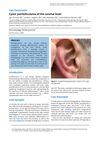 March 2026 in “Dermatology Online Journal”
 Cystic panfolliculoma is a rare, harmless tumor that can be confused with other skin tumors.
August 2024 in “Clinical and Experimental Dermatology” DALL-E 2 can create realistic hair images but struggles with specific hair disorders.
A machine-learning test using hair can help detect autism early in infants.
The hairline can reliably guide neurosurgical planning.
44 citations
,
September 2016 in “American Journal Of Pathology” Neural crest-derived progenitor cells in the cornea could help treat corneal issues without transplants.

An automated system can accurately classify hair disorders using image analysis.
 109 citations
,
January 2011 in “Frontiers in Systems Neuroscience”
109 citations
,
January 2011 in “Frontiers in Systems Neuroscience” Choosing the right model order in brain connectivity analysis can affect the detection of differences between healthy individuals and those with seasonal affective disorder.
March 2026 in “Frontiers in Medicine” A hybrid model using traditional methods, trichoscopy, and AI improves hair loss assessment.
July 2013 in “Neurosurgery” Spinal fMRI can help understand brainstem and spinal cord function, especially in spinal cord injury patients.
3D models from confocal microscopy improve melanoma detection on sun-damaged skin.