December 2019 in “RIUnB Institutional Repository (University of Brasília)” NP-AH-CDM-4 nanoparticles show promise for effective topical acne treatment.
 30 citations
,
February 2022 in “Pharmaceutics”
30 citations
,
February 2022 in “Pharmaceutics” 3D bioprinting improves wound healing by precisely creating scaffolds with living cells and biomaterials, but faces challenges like resolution and speed.
17 citations
,
August 2020 in “Stem Cell Research & Therapy” A 3D cell model can rejuvenate stem cells to improve wound healing.
9 citations
,
March 2015 in “The journal of investigative dermatology/Journal of investigative dermatology” The symposium concluded that understanding the molecular mechanisms of skin aging could lead to better clinical practices and treatments.
 February 2026 in “Journal of Aesthetic Medicine”
 Combining different treatments like fillers, collagen stimulators, botulinum toxin, and energy devices gives better facial rejuvenation results.
 79 citations
,
January 2018 in “Wiley Interdisciplinary Reviews-Developmental Biology”
79 citations
,
January 2018 in “Wiley Interdisciplinary Reviews-Developmental Biology” Understanding how baby skin heals without scars could help develop treatments for adults to heal wounds without leaving scars.
12 citations
,
June 2023 in “International Journal of Molecular Sciences” Innovative biomaterials show promise in healing chronic diabetic foot ulcers.
8 citations
,
August 2025 in “Journal of Translational Medicine” CD44 signaling can help heal wounds without scars.
7 citations
,
May 2024 in “Gels” The new collagen and tannic acid hydrogel effectively stops bleeding and aids tissue repair better than current options.
2 citations
,
July 2025 in “Biopolymers” Eggshells can be used to sustainably and cheaply produce important compounds like glycosaminoglycans.
 1 citations
,
February 2024 in “Journal of nanobiotechnology”
1 citations
,
February 2024 in “Journal of nanobiotechnology” Hydrogels combined with extracellular vesicles and 3D bioprinting improve wound healing.
 July 2024 in “Current Pharmaceutical Design”
 Biodegradable polymers help wounds heal faster.
 April 2024 in “Bioactive materials”
 New microneedle treatment with growth factors and a hair loss drug shows better and faster hair growth results than current treatments.
 July 2023 in “International Journal of Cosmetic Science”
 Biopolymers are increasingly used in cosmetics for their non-toxicity and skin benefits, with future biotech advancements likely to expand their applications.
 May 2023 in “Materials research foundations”
 Nanomaterials like silver and gold can improve wound healing but need more research for safety.
Aesthetic rehabilitation techniques can improve life quality and wellbeing for disabled patients.
 March 2024 in “Clinical, cosmetic and investigational dermatology”
 Skin Radiance Collagen improved skin and hair health in adult females.
 10 citations
,
September 2022 in “Advanced Healthcare Materials”
10 citations
,
September 2022 in “Advanced Healthcare Materials” Current methods can't fully recreate skin and its features, and more research is needed for clinical use.
23 citations
,
January 2017 in “Journal of Functional Biomaterials” Biomaterials can help reduce skin scarring and improve wound healing.
1 citations
,
October 2025 in “Transfusion Medicine and Hemotherapy” Platelet-rich plasma shows promise for treating dry eye disease, but more standardized trials are needed.
September 2023 in “Pharmaceutics” The new face mask with Eflornithine can potentially reduce facial hair growth and moisturize skin.
November 2022 in “Regenerative Therapy” Advancements in tissue engineering show promise for hair follicle regeneration to treat hair loss.
13 citations
,
October 2022 in “Reproductive Biology and Endocrinology” A new hyaluronan-based biomatrix successfully supports the growth of mouse ovarian follicles, producing healthy eggs.
28 citations
,
November 2020 in “Polymers” Crosslinked gelatin sponges show promise as skin substitutes for wound treatment.
14 citations
,
May 2023 in “Dermatologic Surgery” VYC-12L effectively improves skin smoothness, reduces fine lines, and boosts hydration.

The hydrogel speeds up wound healing by fighting bacteria and helping tissue regrow.
37 citations
,
October 2021 in “Journal of Clinical Investigation” Skin inflammation can worsen intestinal inflammation and colitis.
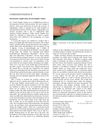 May 2002 in “British Journal of Dermatology”
 A pregnant woman's skin condition improved after giving birth, possibly due to high estrogen levels during pregnancy.
 4 citations
,
June 2013 in “The Journal of Rheumatology”
4 citations
,
June 2013 in “The Journal of Rheumatology” The document concludes that various findings in rheumatology offer insights into disease severity, treatment responses, and potential risks in medication, with some limitations due to unspecified participant numbers.
11 citations
,
October 2024 in “PLoS ONE” Phage-containing hydrogels effectively heal wounds infected with Enterococcus faecalis.