 January 2026 in “Frontiers in Medicine”
 PP-PTKL may help treat hair greying, but more testing is needed.
April 2025 in “Health Science Reports” PRP treatment improved skin pigmentation and appearance in facial lichen planus pigmentosus.
November 2025 in “Journal of Investigative Dermatology” Dark skin has stronger barriers and structure due to specific gene activity.
 13 citations
,
January 2014 in “Postępy Dermatologii i Alergologii”
13 citations
,
January 2014 in “Postępy Dermatologii i Alergologii” Patchy alopecia areata can affect only pigmented hairs, leaving gray hairs untouched.
 41 citations
,
June 2010 in “Journal of Investigative Dermatology”
41 citations
,
June 2010 in “Journal of Investigative Dermatology” New cells are added to the hair's dermal papilla during the active growth phase.
3 citations
,
June 2025 in “Stem Cell Research & Therapy” Hair follicle-derived melanocyte transplant could effectively treat vitiligo by restoring skin color.
 March 2026 in “Journal of Nanobiotechnology”
 A new microneedle treatment can effectively repigment skin in vitiligo.
 8 citations
,
March 2017 in “Journal of Cosmetic and Laser Therapy”
8 citations
,
March 2017 in “Journal of Cosmetic and Laser Therapy” Punch grafting treats vitiligo faster but can cause a cobblestone look, while follicular hair transplantation is slower but looks better and has no side effects.
6 citations
,
November 2020 in “Journal of Recent Advances in Medicine/Journal of Recent Advances in Medicine ” Surgical treatments for vitiligo are improving to enhance results and reduce costs.
March 2011 in “Pigment Cell & Melanoma Research” The Agouti gene influences pigmentation and may have a developmental role in deer mice.
2 citations
,
January 2023 in “Dermatologic Therapy” CEFFE injections effectively and safely improve postinflammatory hyperpigmentation.
2 citations
,
January 2011 in “Feed Review” Adding 0.029% iron glycine chelate to piglet diets improves growth and hair color.
9 citations
,
September 2020 in “Journal of cosmetic dermatology” A woman developed vitiligo from repeated eyebrow microblading.
July 2025 in “Journal of Investigative Dermatology” Reducing PEDF may help treat hair loss.
26 citations
,
December 2022 in “Molecules” Nanotechnology can improve treatments for skin discoloration.
5 citations
,
May 1958 in “Archives of Dermatology” Treatment with corticosteroids and zinc injections can help hair regrowth and restore pigmentation in alopecia totalis.
 29 citations
,
January 2021 in “Journal of Investigative Dermatology”
29 citations
,
January 2021 in “Journal of Investigative Dermatology” Fat under the skin releases HGF which helps hair grow and gain color.
 December 2020 in “Lasers in Surgery and Medicine”
 Laser safely and effectively removes unwanted scalp micropigmentation.
 66 citations
,
December 2014 in “Nature Communications”
66 citations
,
December 2014 in “Nature Communications” Fibroblasts can be turned into melanocytes for potential skin treatments.
September 2024 in “Pigment International” Vitiligo is now seen as a systemic disease with promising new treatments and may offer protection against some diseases.
January 2018 in “Acta dermato-venereologica” 11 citations
,
August 1986 in “Archives of Dermatology” Vitamin B12 deficiency can cause skin and hair color changes, which can be reversed with treatment.
April 2019 in “Institutional Repositories DataBase (IRDB)” Patient-derived stem cell melanocytes could be a promising treatment for vitiligo.
Retinoids or their analogs could treat skin pigmentation disorders like melasma and vitiligo.
 2 citations
,
November 1995 in “American Journal of Obstetrics and Gynecology”
2 citations
,
November 1995 in “American Journal of Obstetrics and Gynecology” Taking vitamin B6 corrected a pregnant woman's metabolic disorder, which changed her hair color.
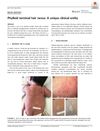 August 2018 in “Pediatric Dermatology”
 A baby had a unique skin condition with a pale patch and surrounding dark hairs, not linked to other health issues.
 5 citations
,
March 2023 in “Journal of the American Academy of Dermatology”
5 citations
,
March 2023 in “Journal of the American Academy of Dermatology” Prurigo pigmentosa mainly affects middle-aged White and Asian women, often linked to a ketogenic diet, and is best treated with oral antibiotics.
1 citations
,
December 2018 in “IOP conference series. Materials science and engineering” CD34+ hair follicle stem cells can become melanin-producing cells for treating skin conditions.
161 citations
,
June 1994 in “The journal of investigative dermatology/Journal of investigative dermatology” Hair stops producing melanin as it transitions from the growth phase to the resting phase.
January 1996 in “대한피부과학회지” Wait at least 8 weeks between hair dyeing for cuticle recovery.