 26 citations
,
May 2012 in “Pharmaceutical Development and Technology”
26 citations
,
May 2012 in “Pharmaceutical Development and Technology” PEVs effectively deliver minoxidil through skin.
11 citations
,
December 2011 in “International journal of pharmaceutics” Ultrasound increases skin permeability but blocks hair follicles.
 157 citations
,
June 2011
157 citations
,
June 2011 Dermatoscopy and videodermatoscopy are useful for diagnosing and monitoring various skin, hair, and nail conditions.
 April 2023 in “Journal of Investigative Dermatology”
 Long-term Imiquimod treatment causes initial skin inflammation that lessens over time, and topical corticosteroids reduce this inflammation and cytokines in a mouse model of psoriasis.
 September 2023 in “Journal of The American Academy of Dermatology”
 Raman spectroscopy is promising for measuring and enhancing drug delivery in alopecia treatments.
 January 2016 in “Experimental Dermatology”
 New findings suggest potential treatments for melanoma, hyperpigmentation, hair defects, and multiple sclerosis, and show skin microbiome changes don't cause atopic dermatitis.
51 citations
,
February 2013 in “JEADV. Journal of the European Academy of Dermatology and Venereology/Journal of the European Academy of Dermatology and Venereology” Metformin is effective for various skin disorders but may cause skin side effects.
 8 citations
,
February 2023 in “American Journal of Physiology-Cell Physiology”
8 citations
,
February 2023 in “American Journal of Physiology-Cell Physiology” Adiponectin and bradykinin play important roles in skin health and may help treat skin conditions.
14 citations
,
March 1987 in “Journal of Investigative Dermatology” 12 citations
,
January 2013 in “Indian dermatology online journal” Dermatopathia pigmentosa reticularis causes skin discoloration, hair loss, and nail problems.
 1 citations
,
October 2025 in “Nano Research”
1 citations
,
October 2025 in “Nano Research” A new microneedle patch effectively treats atopic dermatitis by reducing skin stress and restoring immune balance.
131 citations
,
November 2010 in “Journal of the American Academy of Dermatology” Cyclosporine is effective for skin conditions but has declined in use due to toxicity concerns.
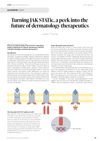 August 2024 in “New Zealand Medical Student Journal”
 JAK inhibitors show promise for treating skin diseases effectively and safely.
May 2018 in “Dermatologic Surgery”  111 citations
,
March 2012 in “Expert Opinion on Drug Delivery”
111 citations
,
March 2012 in “Expert Opinion on Drug Delivery” Liposomes could improve how skin care products work but are costly and not very stable.
19 citations
,
July 2024 in “Drug Delivery” Polymer-based nanocarriers can improve acne treatment by delivering drugs through hair follicles more effectively.
4 citations
,
May 2025 in “The Journal of Immunology” New treatments for atopic dermatitis and alopecia areata have been developed using a targeted approach.
142 citations
,
January 2010 in “Journal of dermatological science” Hair follicles are promising targets for delivering drugs effectively.
9 citations
,
January 2016 in “Journal of Controlled Release” Local hypobaric pressure can significantly improve drug delivery through the skin.
2 citations
,
August 2025 in “Pharmaceutics” PN hydrates skin; PDRN heals and regenerates skin and hair.
February 2026 in “Scientific Messenger of LNU of Veterinary Medicine and Biotechnology” Dermatophytosis in cats is treated with antifungal medications.
October 2025 in “Transplantation” Dissolving microneedles can effectively deliver dutasteride for hair loss treatment.
 3 citations
,
September 2020
3 citations
,
September 2020 Dyclonine can effectively reduce skin issues by inhibiting the TRPV3 channel.
 August 1994 in “Journal of dermatological science”
 Different substances affect hair and skin cell growth in various ways, with some promoting and others inhibiting cell proliferation.
 18 citations
,
February 2025 in “Drug Delivery and Translational Research”
18 citations
,
February 2025 in “Drug Delivery and Translational Research” The microneedle patches effectively treat allergic conjunctivitis with controlled, sustained release of medication.
12 citations
,
May 2022 in “Plants” Nano-phytopharmaceuticals show promise but need more research for safe, effective use in treating certain disorders.
 39 citations
,
April 2010 in “International Journal of Pharmaceutics”
39 citations
,
April 2010 in “International Journal of Pharmaceutics” Nanoparticles improve minoxidil skin permeation, but more research needed for effective hair growth.
 14 citations
,
April 2019 in “Saudi pharmaceutical journal”
14 citations
,
April 2019 in “Saudi pharmaceutical journal” Microparticles help caffeic acid stay longer in hair follicles for better treatment of folliculitis.
19 citations
,
January 2020 in “Journal of Biophotonics” A PEG-400/oleic acid mixture best improves drug delivery monitoring through hair follicles.
3 citations
,
January 2000 Psychoactive drugs can help treat skin conditions linked to psychological issues.