 April 2026 in “International Journal of Drug Delivery Technology”
 Alopecia can often be managed effectively with various treatments, but early diagnosis is crucial for preventing permanent hair loss.
 March 2026 in “Journal of Skin and Sexually Transmitted Diseases”
 Long hair can cause hair loss in the middle of the scalp, and cutting it shorter helps.
 March 2026 in “Reports of Vinnytsia National Medical University”
 Alopecia areata in young Ukrainian men varies in severity, requiring personalized treatment.
 March 2026 in “International Journal of Dermatology Venereology and Leprosy Sciences”
 Vitiligo treatment requires a personalized mix of therapies to restore skin color and improve life quality.
 February 2026 in “Dermatology Reports”
 Trichoscopy helps diagnose and treat dissecting cellulitis early, preventing scarring.
 December 2025 in “Cureus”
 Low serum ferritin is linked to hair loss in women.
 April 2025 in “Dermatology Practical & Conceptual”
 UV-enhanced trichoscopy helps diagnose hair shaft disorders like pili annulati.
 March 2025 in “International Journal of AYUSH Case Reports”
 Individualized homeopathy may help treat alopecia areata.
 January 2025 in “International Journal of Dermatology Research”
 Higher MPV and CRP levels may indicate more severe alopecia areata.
 June 2024 in “Dermatology and therapy”
 Intramuscular injections improved hair density more than intradermal injections for treating hair loss.
 November 2023 in “Laser therapy”
 Trichoscopy is essential for diagnosing and managing alopecia areata in children.
 November 2023 in “Curēus”
 Topical tretinoin effectively treated sebaceous filaments, improving skin appearance.
 September 2023 in “Small animal advances”
 The kitten's skin infection was cured with medication in three weeks.
 July 2023 in “Nasza Dermatologia Online”
 More research is needed on CCCA in children, especially Black and Asian adolescents.
 June 2023 in “International journal of science and research”
 PRP injections help hair regrowth safely but may need more research.
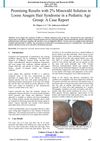 May 2023 in “International journal of science and research”
 2% minoxidil solution improved hair density and quality in children with Loose Anagen Hair Syndrome.
 March 2023 in “International journal of integrated medical research”
 Keratosis pilaris is a common skin condition where hair follicles get clogged with keratin, mostly on the arms and thighs.
 March 2023 in “PARIPEX INDIAN JOURNAL OF RESEARCH”
 Tofacitinib helped regrow hair in most patients with severe hair loss.
 February 2023 in “Indian Journal of Postgraduate Dermatology”
 The IADVL offers residents grants, scholarships, training, and learning resources for academic growth.
 October 2022 in “Medičnì perspektivi”
 Darier-White disease causes skin and nail issues, starts around age 20, worsens until 40-50, and has poor treatment options.
 June 2022 in “Journal of the turkish academy of dermatology”
 The COVID-19 quarantine in Turkey disrupted dermatological care, increased stress-related skin issues, and showed the need for psychological support and teledermatology.
 March 2022 in “Berkala Ilmu Kesehatan Kulit dan Kelamin/Berkala ilmu kesehatan kulit dan kelamin (Periodical of dermatology and venerology)”
 Touching cats can increase the risk of getting a fungal scalp infection, especially in boys and kids over 5.
 January 2022 in “International Journal of Research Publications”
 Griseofulvin effectively treats tinea capitis caused by Microsporum canis.
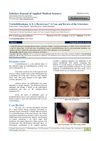 June 2021 in “Scholars journal of applied medical sciences”
 Trichofolliculoma, a rare benign hair follicle tumor, can potentially recur.
 April 2021 in “BMJ Case Reports”
 Accurate diagnosis of pseudolymphomatous folliculitis is crucial to avoid mistaking it for more serious conditions.
 February 2020 in “International Journal of Research in Dermatology”
 EPDS is a rare, chronic scalp condition that's hard to treat and needs better awareness for improved outcomes.
 January 2018 in “Springer eBooks”
 Congenital triangular alopecia is a harmless, non-spreading hair loss condition often seen in young children.
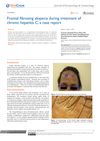 September 2017 in “Journal of Dermatology & Cosmetology”
 Hepatitis C treatment may cause frontal fibrosing alopecia.
 April 2017 in “Our Dermatology Online”
 A 22-year-old with multiple autoimmune diseases needs a multidisciplinary treatment approach.
 November 2015 in “European journal of dermatology/EJD. European journal of dermatology”
 A 55-year-old woman with several health conditions did not see hair regrowth after a transplant.