 May 2026 in “Zenodo (CERN European Organization for Nuclear Research)”
 Natural hair dyes like henna and beetroot are safer but have limited colors and may fade easily.
17 citations
,
May 2019 in “Molecules” These temporary hair dyes may be harmful to human health.
9 citations
,
July 2022 in “Journal of Cosmetic Dermatology” The ammonia-free hair dye is safe and improves hair shine, color, moisture, porosity, and combability.
December 2025 in “Journal of Forensic Sciences” Bleaching hair doesn't affect the accuracy of dye identification using SERS.
9 citations
,
November 2006 in “Journal of Microscopy” Dye mainly stays on the hair surface and endocuticle.
 May 2026 in “Zenodo (CERN European Organization for Nuclear Research)”
 The herbal hair dye gel is a safe and effective natural alternative to chemical dyes, improving hair and scalp health.
 May 2026 in “Zenodo (CERN European Organization for Nuclear Research)”
 The herbal hair dye gel is a safe and effective natural alternative to chemical dyes, improving hair and scalp health.
 20 citations
,
June 2011 in “ISRN Dermatology (Print)”
20 citations
,
June 2011 in “ISRN Dermatology (Print)” A woman lost most of her hair due to an allergic reaction to a hair dye ingredient.
May 2023 in “Sokoto journal of medical laboratory science” Commercial hair dyes can harm the skin and liver.
 January 2024 in “Authorea (Authorea)”
 Using laccase to add poly(tyrosine) to wool makes it less likely to shrink and stronger.
1 citations
,
April 2013 in “Pakistan Journal of Biological Sciences” Hair coloring, waving, and ironing cause more hair damage than not using these treatments.
13 citations
,
March 2010 in “International Journal of Cosmetic Science” Hair coloring increases copper and calcium uptake, damaging hair and reducing shine.

Plant-based dyes are a safe, effective, and eco-friendly alternative to synthetic dyes.
2 citations
,
March 1942 in “JAMA” 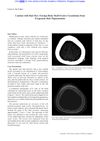 3 citations
,
May 2020 in “Annals of the Academy of Medicine Singapore”
3 citations
,
May 2020 in “Annals of the Academy of Medicine Singapore” Hair dye can cause serious scalp issues, including skull erosion.
 March 2005 in “International Journal of Cosmetic Science”
 DVI provides detailed 3D imaging of hair and shows how various products protect and enhance hair.

Plant-based dyes are a safe, effective, and eco-friendly alternative to synthetic dyes.
6 citations
,
January 2020 in “Elsevier eBooks” Nanoparticles could make hair dyes safer by reducing harmful effects.
November 2024 in “Majalah Farmasetika” The natural hair dye gel with 12% Eleutherine bulbosa extract effectively colors bleached hair dark brown and is stable and non-irritating.
Chemical treatments weaken hair's thermal stability and structure.
August 1985 in “Proceedings ... annual meeting, Electron Microscopy Society of America/Proceedings, annual meeting, Electron Microscopy Society of America” Hair dye can damage dog hair and cause health issues.
 March 2026 in “Portuguese Journal of Dermatology and Venereology”
 Avoid hair dye after microneedling to prevent scalp pigmentation.
79 citations
,
January 1975 in “Food and Cosmetics Toxicology” The hair dye formulations tested did not cause long-term toxicity or cancer in mice.
December 2000 in “Kirk-Othmer Encyclopedia of Chemical Technology” Hair care products are regulated, with shampoos, conditioners, dyes, and styling products designed for cleaning, enhancing, and maintaining hair.
10 citations
,
March 2016 in “Toxicology and applied pharmacology” Using A132 hair dye with sunlight can cause skin damage and hair loss.
 March 2007 in “The FASEB Journal”
 Henna mixed with PPD can cause skin reactions, scarring, and a specific type of baldness, and needs more research to understand these effects.
2 citations
,
January 1999 in “Dermatology”  June 2026 in “Zenodo (CERN European Organization for Nuclear Research)”
 Herbal hair dye with Bhringraj is effective, safe, and eco-friendly.
August 2022 in “Zenodo (CERN European Organization for Nuclear Research)” The herbal hair dye effectively provides a natural reddish-brown color without synthetic chemicals.
5 citations
,
November 2023 in “Journal of Advanced Research” New methods may change hair color and shape from the root, revolutionizing hair styling.