July 2026 in “Cosmoderma” Trichoscopy can identify specific hair patterns in tinea capitis before and after treatment.
 November 2022 in “The journal of investigative dermatology/Journal of investigative dermatology”
 The STRIPAK complex is crucial for skin cell organization and creating a functional skin barrier.
July 2025 in “Dermatologic Surgery”  6 citations
,
July 2018 in “Hair transplant forum international”
6 citations
,
July 2018 in “Hair transplant forum international” Dr. Parsa Mohebi created a new tool to improve hair transplant efficiency and reduce follicle damage.
1 citations
,
December 2022 in “Planta Medica” Combining enzymes papain and chymotrypsin with laser treatment reduces facial hair more effectively than laser alone.
4 citations
,
May 2018 in “Türk pediatri arşivi : İstanbul çocuk kliniği dergisi” Oral retinoic acid effectively treated collodion baby, with hair loss as the main side effect.
 April 2023 in “Journal of Investigative Dermatology”
 The specific skin disease variant p.(Arg2000Trp) in plectin can cause a wide range of symptoms, which should be considered when diagnosing patients.
50 citations
,
December 2017 in “Nanoscale” Polymeric micelle nanocarriers deliver adapalene more effectively to hair follicles than commercial products.
January 2022 in “International journal of dermatology and venereology” A Chinese man with KID syndrome had a new mutation in the GJB2 gene.
 6 citations
,
January 2000 in “Dermatology”
6 citations
,
January 2000 in “Dermatology” A girl's severely tangled hair couldn't be fixed and had to be cut due to a rare condition called plica neuropathica.
 13 citations
,
March 2012 in “The Journal of Dermatology”
13 citations
,
March 2012 in “The Journal of Dermatology” Hair transplant surgery can rebuild muscle and nerve connections, allowing transplanted hairs to stand up like normal hairs.
November 2025 in “Indian Journal of Dermatology” Early diagnosis and multidisciplinary care are crucial for improving the quality of life in patients with ectodermal dysplasia.
2 citations
,
January 1987 in “Acta Agriculturae Scandinavica” Certain chelators lighten mink skin and hair, increase skin elasticity, and disrupt hair growth without affecting fur quality.
 23 citations
,
January 2010 in “Journal of The American Academy of Dermatology”
23 citations
,
January 2010 in “Journal of The American Academy of Dermatology” Effective treatments for lichen planopilaris are unclear due to inconsistent results and a lack of strong research evidence.
 28 citations
,
February 2014 in “PLoS ONE”
28 citations
,
February 2014 in “PLoS ONE” Epidermal stem cells on a special membrane helped mice regrow full skin with hair and functions.
Keratinocytes grew and migrated into hair follicle areas but disappeared after 15-20 days.
 April 2025 in “Journal of Applied Veterinary Science And Technology”
 The cat's health improved significantly after treatment.
 January 2017 in “Nasza Dermatologia Online”
 Both treatments helped hair regrowth in alopecia areata, with isopropanol being better tolerated.
5 citations
,
December 2016 in “Microscopy Research and Technique” EPI-NCSCs from hair follicles may help treat brain development issues in mice.
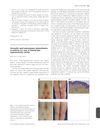
The PI's development is closely linked to skin and hair pigmentation in macaques.
 6 citations
,
February 2016 in “British Journal of Dermatology”
6 citations
,
February 2016 in “British Journal of Dermatology” A woman with a drug allergy to anakinra was successfully desensitized, allowing her to continue treatment without allergic reactions.
1 citations
,
January 2026 in “Science Advances” The 3D skin model mimics pemphigus vulgaris and helps test treatments.
4 citations
,
April 2019 in “JAAD Case Reports” DPR can cause skin, hair, and nail issues, sometimes appearing later in life.
8 citations
,
March 1990 in “Indian Journal of Dermatology Venereology and Leprology” Cutting matted hair stopped further hair loss caused by homemade shampoo.
4 citations
,
March 2024 in “Journal of Investigative Dermatology” SPRY1 deficiency in skin cells causes stem cells to move to the skin surface, leading to increased pigmentation.
February 2013 in “Archives of Disease in Childhood Education & Practice” Kerion, a severe scalp infection, causes hair loss and needs oral antifungal treatment.
10 citations
,
January 2012 in “Case reports in medicine” Diphencyprone can cause unexpected and possibly permanent vitiligo.
April 2026 in “IntechOpen eBooks” Exo.Reset® uses extracellular vesicle technology for skin rejuvenation.
 January 2005 in “Elektronische Hochschulschriften der LMU München (Ludwig-Maximilians-Universität München)”
 Topical immunotherapy with DPCP is most effective for certain alopecia areata types, with success linked to age and disease duration, and influenced by a gene polymorphism.
 July 2025 in “Scientific Reports”
 Dermal papilla cell-conditioned medium can help reduce skin aging caused by oxidative stress.