7 citations
,
July 2024 in “Animals” The Shh gene controls cell growth and death in cashmere goat hair follicles, affecting hair growth.
6 citations
,
August 2024 in “The Journal of Dermatology” Ozenoxacin reduces sebum production, helping manage acne.
2 citations
,
April 2022 in “Genes” The study found that the hair loss condition in Cesky Fousek dogs is influenced by multiple genes affecting skin and muscle structure, fat metabolism, and immunity.
 April 2026 in “International Journal of Molecular Sciences”
 Wnt signaling is crucial for skin, hair, and nail health and regeneration.
November 2025 in “PLoS ONE” Nucleic acids trigger chemokine production in skin cells, affecting skin inflammation.
 January 2025 in “Frontiers in Cell and Developmental Biology”
 Hox proteins help maintain keratinocyte identity by regulating miRNA expression.
January 2025 in “Molecules” Caffeine may help with hair loss, but more research is needed to confirm its effectiveness.
November 2023 in “Biology” N6-methyladenosine affects hair follicle development differently in Rex and Hycole rabbits.
September 2023 in “Animals” Genes linked to wool fineness in sheep have been identified.
 March 2026 in “Journal of Nanobiotechnology”
 A new microneedle treatment can effectively repigment skin in vitiligo.
 20 citations
,
October 2008 in “European journal of endocrinology”
20 citations
,
October 2008 in “European journal of endocrinology” Lower lipin 1β in belly fat is linked to insulin resistance in people with polycystic ovary syndrome.

Vitamin D is crucial for skin health and managing skin diseases.
 April 2026 in “Health Sciences Quarterly”
 Many skin issues in hospitalized adults go unnoticed, needing better checks and teamwork.
November 2023 in “Ensaios e Ciência C Biológicas Agrárias e da Saúde” Optimal hair heat protectant spreadability is achieved with 4% shea butter and coconut oil, and 0.64% cetostearyl alcohol.
 3 citations
,
May 2011 in “Journal of the American Academy of Dermatology”
3 citations
,
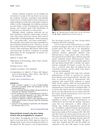
May 2011 in “Journal of the American Academy of Dermatology” A woman's excessive hair growth around a leg ulcer was linked to a treatment with Prostaglandin E1 ointment.
 January 2024 in “Editora In Vivo eBooks”
 H5N1 avian flu poses risks to birds and humans, requiring strict biosecurity measures.
 January 2024 in “Dermatologic therapy”
 Tofacitinib is a safe treatment for hair loss in children, but long-term use may be needed for best results.
 12 citations
,
January 2024 in “Editora In Vivo eBooks”
12 citations
,
January 2024 in “Editora In Vivo eBooks” Environmental enrichment improves lab mice welfare and research outcomes.
 January 2024 in “Editora In Vivo eBooks”
 Early diagnosis and management are crucial for feline inflammatory bowel disease.
 131 citations
,
March 2004 in “The American journal of pathology”
131 citations
,
March 2004 in “The American journal of pathology” Modulating BMP activity changes the number, size, shape, and type of ectodermal organs.
 February 2024 in “Digital Library of Theses and Dissertations (Universidade de São Paulo)”
 Argan, avocado, and coconut oils are absorbed into hair, improving hydration and protection.
 May 2026 in “Signal Transduction and Targeted Therapy”
 BMP signaling is essential for forming skin structures called rete ridges, aiding skin thickness and regeneration.
 April 2023 in “Digital Library of Theses and Dissertations (Universidade de São Paulo)”
 Mesenchymal stem cells from laser-assisted liposuction are as effective and safe as those from conventional liposuction for cell therapy.
 December 2023 in “LA Referencia (Red Federada de Repositorios Institucionales de Publicaciones Científicas)”
 Both photobiomodulation and low-frequency treatments effectively reduce body measurements.

Vaccination is crucial for public health, but anti-vaccine movements are a concern.

Whiskers can form without sensory nerves or Foxd1, thanks to Meis2 in mesenchymal cells.
Meis2 is essential for whisker development, independent of nerve involvement.
 479 citations
,
January 2005 in “BioEssays”
479 citations
,
January 2005 in “BioEssays” Hair follicle development is controlled by interactions between skin tissues and specific molecular signals.
 20 citations
,
July 2013 in “European Journal of Oral Sciences”
20 citations
,
July 2013 in “European Journal of Oral Sciences” A new PAX9 gene mutation causes missing teeth and hair problems, but not skin or nail issues.
 4 citations
,
August 2023 in “Nature Communications”
4 citations
,
August 2023 in “Nature Communications” Mouse zigzag hair bends form due to a 3-day cycle of changes in hair progenitors and their environment.