21 citations
,
June 2004 in “Experimental Dermatology” Ber‐EP4 marks cells related to the secondary hair germ in hair follicles.
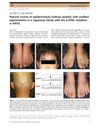 3 citations
,
January 2019 in “Journal of Dermatology”
3 citations
,
January 2019 in “Journal of Dermatology” The p.P25L mutation in the KRT5 gene causes a rare skin condition that worsens over time and may lead to hair loss starting in young adulthood.
 January 2026 in “Academic Journal of Medicine & Health Sciences”
 Phage therapy could be a safe and effective new treatment for acne.
4 citations
,
January 2017 in “Acta dermato-venereologica” A new EDA gene mutation was found in a Chinese family with a specific skin disorder.
 January 2025 in “Dermatology Reports”
 Early and accurate diagnosis is crucial for managing rare genetic disorders like this localized variant of junctional epidermolysis bullosa.
7 citations
,
October 2017 in “Journal of exotic pet medicine” A guinea pig with ovarian cysts had a uterine infection and abnormal uterus lining due to a piece of hay inside it.
 January 2025 in “Annals of Dermatology”
 PCA patients have more harmful bacteria and antibiotic resistance, needing specific testing for treatment.
5 citations
,
September 2009 in “Acta Ophthalmologica” Hyper-keratinisation in Meibomian glands contributes to gland dysfunction.
January 2025 in “Microorganisms” Using Armillaria strain A541 boosts Polyporus umbellatus yield and polysaccharide content.
 18 citations
,
February 2015 in “Acta Crystallographica Section D: Structural Biology”
18 citations
,
February 2015 in “Acta Crystallographica Section D: Structural Biology” The study concludes that certain domains in Clostridium histolyticum enzymes are structurally unique, bind calcium to become more stable, and play distinct roles in breaking down collagen, with potential applications in medicine and drug delivery.
 1 citations
,
February 2024 in “Medicine”
1 citations
,
February 2024 in “Medicine” Eosinophilic cystitis is often misdiagnosed, but accurate diagnosis and treatment improve outcomes.
February 2026 in “Biomaterials” BOOST is a promising, easy-to-use treatment for diabetic foot ulcers that improves healing by reducing inflammation and promoting blood vessel growth.
 September 2022 in “Anais Brasileiros de Dermatologia”
 Dermoscopy helped diagnose a rare skin disease which slightly improved with treatment.
3 citations
,
November 2022 in “Molecules/Molecules online/Molecules annual” The substances improved hair regrowth and protected hair cells in humans and mice.
46 citations
,
May 1995 in “Proceedings of the National Academy of Sciences” A specific gene region can control targeted and responsive gene expression in mice, useful for skin disorder treatments.
 November 2022 in “Journal of Investigative Dermatology”
 DermaCult™ Keratinocyte Expansion Medium allows human skin cells to grow longer while keeping their ability to develop properly.
7 citations
,
September 1997 in “PubMed” November 2013 in “The Journal of Urology” June 2025 in “AgroLife Scientific Journal” Early diagnosis and treatment of dermatophytosis in hedgehogs are crucial for recovery and public health.
 6 citations
,
December 2022 in “Journal of Materials Chemistry B”
6 citations
,
December 2022 in “Journal of Materials Chemistry B” The dressing generates hydrogen sulfide to help heal wounds faster by reducing inflammation and promoting cell growth.
 January 2024 in “Journal of neurogastroenterology and motility”
 Quadruple-coated probiotics significantly improve IBS symptoms.
 March 2025 in “PHARMADEMICA Jurnal Kefarmasian dan Gizi”
 Cucumber extract shampoo effectively fights fungi and meets quality standards.
 44 citations
,
March 2020 in “Antibiotics”
44 citations
,
March 2020 in “Antibiotics” Rosemary extracts with carnosic acid and carnosol can reduce the harmfulness of Staphylococcus aureus without stopping its growth.
1 citations
,
February 2026 in “ACS Nano” The TLMG hydrogel improves wound healing and monitoring with strong adhesion and conductivity.
July 2023 in “Clinical Cosmetic and Investigational Dermatology” Accurate diagnosis of granular parakeratosis is crucial for effective treatment and improvement.
 May 2020 in “International journal of current microbiology and applied sciences”
 A Pug with skin issues was successfully treated for mite and bacterial infections.
November 2025 in “Bioactive Materials” The cryogel effectively heals infected wounds and promotes tissue regeneration without scarring.
November 2025 in “Dermato” The skin microbiome is crucial for skin health and new treatments like probiotics can improve skin conditions.
 March 2026 in “International Journal of Molecular Sciences”
 Grateloupia angusta extract helps heal wounds faster and improve skin repair.