 June 2026 in “bioRxiv (Cold Spring Harbor Laboratory)”
 AQB reduces harmful skin changes in systemic sclerosis.
 November 2022 in “PubMed”
 Deep dermal tissue dislocation injury in pigs leads to thicker fibrotic tissue and increased type III collagen, affecting skin repair.
 1 citations
,
May 2026 in “Nature Communications”
1 citations
,
May 2026 in “Nature Communications” CD19-CAR T cell therapy may help regenerate skin in systemic sclerosis.
 6 citations
,
January 2023 in “npj regenerative medicine”
6 citations
,
January 2023 in “npj regenerative medicine” Transplanting growing hair follicles into scars can help regenerate and improve scar tissue.
April 2021 in “Journal of Investigative Dermatology” Blocking DPP4 can help prevent fat loss and skin fibrosis.
4 citations
,
July 2023 in “Experimental Dermatology” Fat grafting reduces scar fibrosis but may slow skin healing.
 11 citations
,
August 2023 in “Burns”
11 citations
,
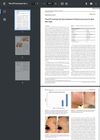
August 2023 in “Burns” Nerve growth factor helps improve healing time and scar quality in burn wounds.
 October 2023 in “Skin research and technology”
 The 675 nm laser effectively improved facial acne scars in dark skin with minimal side effects.

Removing SIX1 in fat cells reduces skin fibrosis.
 1 citations
,
March 2023 in “Science Translational Medicine”
1 citations
,
March 2023 in “Science Translational Medicine” Blocking a certain signal in the gp130 receptor can improve tissue healing and lessen osteoarthritis symptoms.
 April 2018 in “Journal of Investigative Dermatology”
 Aging reduces skin cell renewal and defense against germs due to TGFbeta, but blocking TGFbeta could help restore these functions.
 September 2019 in “Romanian Journal of Pediatrics”
 Fetal skin can heal without scars, offering insights for better wound treatments.
 299 citations
,
January 2018 in “Journal of Clinical Investigation”
299 citations
,
January 2018 in “Journal of Clinical Investigation” Different types of fibroblasts play various roles in diseases and healing, and more research on them could improve treatments.
July 2020 in “Experimental Dermatology” Aging causes hair thinning in women due to changes in the scalp environment.
488 citations
,
July 2021 in “Cell” Fibroblasts are crucial for tissue repair and inflammation, and understanding them can help treat fibrotic diseases.
1 citations
,
January 2021 in “SSRN Electronic Journal” Transplanted hair follicles can improve and remodel mature scars.
 June 2026 in “bioRxiv (Cold Spring Harbor Laboratory)”
 Controlled microtrauma can help skin heal with hair growth instead of scars.
 1 citations
,
April 2021 in “Journal of Investigative Dermatology”
1 citations
,
April 2021 in “Journal of Investigative Dermatology” Activating TRPA1 reduces scarring and promotes tissue regeneration.
6 citations
,
March 2024 in “Experimental Dermatology” Fibrosis causes loss of important fat cells, affecting tissue function.
 August 2024 in “Life Science Alliance”
 Helminth protein helps wounds heal better by reducing scarring and promoting tissue growth.
10 citations
,
September 2021 in “The FASEB Journal” ACKR2 helps prevent skin scarring and hair loss by controlling inflammation.
 70 citations
,
July 2016 in “Aging”
70 citations
,
July 2016 in “Aging” Targeting dermal adipocytes may help combat skin aging.
1 citations
,
January 2024 in “International journal of molecular sciences” TRPV4 helps cells repair tissue and reduce scarring by controlling calcium levels.
 October 2025 in “Clinical Cosmetic and Investigational Dermatology”
 Targeting specific cell interactions may help treat skin fibrosis.
July 2025 in “Journal of Investigative Dermatology” Androgens reduce THY1 in skin cells, leading to less fat, more fibrosis, and worse healing in males.

Adipocytes in atopic dermatitis skin change and worsen inflammation and fibrosis.
3 citations
,
July 2024 in “Cell Proliferation” Blocking TGFβ can help treat fibrotic skin conditions by promoting fat cell formation.
 94 citations
,
June 2016 in “The FASEB Journal”
94 citations
,
June 2016 in “The FASEB Journal” The Wnt/β-catenin pathway helps tissue regeneration but can also cause fibrosis, and drugs that inhibit this pathway may aid in healing skin and heart tissues.
 September 2022 in “The American journal of dermatopathology/American journal of dermatopathology”
 Sunscreen particles were not found in inflamed or fibrotic areas of skin in FFA patients, suggesting no direct link to the disease.
 April 2017 in “Journal of Investigative Dermatology”
 HPH-15, a new compound, effectively reduces skin fibrosis in experiments without causing harm.