 158 citations
,
February 2000 in “Archives of dermatology”
158 citations
,
February 2000 in “Archives of dermatology” Some people with pattern hair loss may also have scalp inflammation and scarring similar to lichen planopilaris.
 71 citations
,
March 1995 in “Journal of The American Academy of Dermatology”
71 citations
,
March 1995 in “Journal of The American Academy of Dermatology” Using both vertical and transverse sections for alopecia biopsies improves diagnosis without extra cost.
 37 citations
,
June 2011 in “Journal of The American Academy of Dermatology”
37 citations
,
June 2011 in “Journal of The American Academy of Dermatology” Loss of sebaceous glands and inflammation may contribute to the development of scarring alopecia.
 16 citations
,
February 2010 in “Journal of the European Academy of Dermatology and Venereology”
16 citations
,
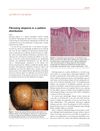
February 2010 in “Journal of the European Academy of Dermatology and Venereology” Fibrosing alopecia in a pattern distribution is a unique hair loss condition that may respond to antiandrogen therapy.
 11 citations
,
January 2013 in “Indian Dermatology Online Journal”
11 citations
,
January 2013 in “Indian Dermatology Online Journal” CCCA is a common, progressive hair loss condition that may not always be linked to hair care practices and requires a biopsy for diagnosis.
 January 2025 in “Revista del Centro Dermatológico Pascua”
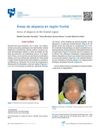
 Early diagnosis and treatment can help manage fibrosing alopecia in older women.
 May 2026 in “International Journal of Molecular Sciences”
 Lactoferrin may improve hair and skin health by reducing inflammation and promoting healing.
 April 2025 in “Pharmaceutics”
 Oil A formulation with Baricitinib shows promise for treating alopecia areata by promoting hair growth.
1 citations
,
December 2015 in “TURKDERM” Lichen planopilaris can be accurately diagnosed and effectively treated.
 31 citations
,
January 2014 in “International Journal of Trichology”
31 citations
,
January 2014 in “International Journal of Trichology” The arrector pili muscle might play a role in hair loss and needs more research to understand its impact.
 4 citations
,
January 2010 in “Journal of Veterinary Medical Science”
4 citations
,
January 2010 in “Journal of Veterinary Medical Science” The analyses helped identify different skin diseases in the two dogs.
 September 2025 in “Sahel Journal of Life Sciences FUDMA”
 Chemical hair straighteners can severely damage hair and scalp with repeated use.
 September 2016 in “Springer eBooks”
 Fat-derived stem cells may help treat skin aging and hair loss.
 January 2026 in “Cirugía Plástica .”
 Topical glutamic acid may help hair regrow after burns, but more human testing is needed.
112 citations
,
October 2008 in “Wound Repair and Regeneration” Sonic hedgehog signaling is crucial for normal wound healing.
 23 citations
,
November 2017 in “Stem cell investigation”
23 citations
,
November 2017 in “Stem cell investigation” Platelet lysate is more effective than activated autologous platelet-rich plasma or saline in improving hair growth after hair restoration surgery.
2 citations
,
September 2025 in “Food Science and Biotechnology” Placenderm® can improve hair health and promote hair regrowth.
1 citations
,
September 2019 PRP and microneedling may help with hair loss, but more research is needed.
April 2026 in “Skin Appendage Disorders” Exosome therapy shows promise for treating hair loss but needs more research and standardization.
 April 2026 in “Asian Journal of Research in Pharmaceutical Sciences”
 Semecarpus anacardium may promote hair growth, but more research is needed for safe use in humans.
February 2026 in “Journal of Korea Society of Ingrielogy” PDO threads might help with hair loss, but more research is needed.
 January 2026 in “Current Issues in Molecular Biology”
 FGF-7 helps hair grow by activating hair follicles and is a promising target for hair loss treatments.
 January 2026 in “Zenodo (CERN European Organization for Nuclear Research)”
 Prachhanna followed by Guñjā lepa is more effective for treating alopecia areata than PRP with Minoxidil.
 January 2026 in “Zenodo (CERN European Organization for Nuclear Research)”
 Prachhanna followed by Guñjā lepa is more effective for treating alopecia areata than PRP with Minoxidil.
 December 2025 in “International Journal of Innovative Technologies in Social Science”
 New treatments for androgenetic alopecia show promise but need more research for validation.
 December 2025 in “Ciencia Latina Revista Científica Multidisciplinar”
 Nanotechnology shows promise in improving hair loss treatments by enhancing drug delivery and reducing side effects.
November 2025 in “Revista Políticas Públicas & Cidades” Microagulhamento e intradermoterapia juntos melhoram o crescimento capilar em mulheres menopausadas.
October 2025 in “Journal of Ethnopharmacology” Andrographolide from Andrographis paniculata promotes hair growth and could be a natural treatment for hair loss.
October 2025 in “Journal of Advanced Trends in Medical Research” Exosomes and PRP both show promise for hair loss treatment, but more research is needed.
 September 2025 in “International Journal of Advanced Academic Studies”
 Combining Anu Taila Nasya and Gokshura Lepa may help reduce hair loss and promote regrowth.