
Technology expands design thinking possibilities, requiring a hybrid, reflective approach.
 February 2026 in “Frontiers in Medical Technology”
 Keratinocyte stem cells are crucial for skin renewal and have potential in wound healing and tissue regeneration.
 January 2026 in “Frontiers in Drug Discovery”
 Transforming skin disease treatment requires new strategies, better drug models, and patient-focused research.
12 citations
,
October 2019 in “Aesthetic Plastic Surgery” 7 citations
,
July 2024 in “Current Issues in Molecular Biology” Understanding skin stem cells and their regulation is key to improving skin healing and treating disorders.
227 citations
,
April 2020 in “Cell” More precise, personalized therapies are needed for autoimmune diseases.
February 2026 in “American Journal Of Pathology” Skin organoids can mimic human skin responses to injury and inflammation, making them useful for studying skin diseases and testing treatments.
11 citations
,
January 2010 in “Springer eBooks” 129 citations
,
July 2019 in “Stem Cell Research & Therapy” Epidermal stem cells help heal severe skin wounds and have potential for medical treatments.
42 citations
,
July 2021 in “Frontiers in Cell and Developmental Biology” Oral mucosa heals with minimal scarring, offering insights for scarless wound healing.
 April 2026 in “International Journal of Molecular Sciences”
 Targeting non-Smad pathways in TGF-β signaling may improve keloid treatment.
19 citations
,
October 2023 in “Bioengineering” tSVF is effective for treating inflammation-related conditions, with centrifugation being the best method for isolation.
10 citations
,
March 2024 in “Endocrine Reviews” Significant progress was made in understanding androgen excess disorders, but much is still unknown.
27 citations
,
October 2021 in “Frontiers in Cell and Developmental Biology” There might be a specific histone code for cellular quiescence, but more research is needed.
4 citations
,
August 2025 in “Molecules” Medicinal plants show promise for skin disorders but need more research for safe clinical use.
4 citations
,
January 2014 in “Stem Cell Discovery” Stem cells can be reprogrammed for various treatments, but safety and expansion challenges remain.
2 citations
,
November 2025 in “Pharmaceutics” Cell-mediated drug delivery systems improve skin disease treatment by using living cells for precise, prolonged, and less toxic therapy.
1 citations
,
November 2025 in “Molecules” Ellagic acid can help treat skin issues, but its effectiveness is limited by poor absorption, so new delivery methods are being explored.
 August 2026 in “Molecular Biomedicine”
 Hydrogels are promising for treating complex diseases due to their adaptability and potential in drug delivery and tissue repair.
 February 2026 in “International Journal of Molecular Sciences”
 Extracellular vesicles show promise for medical use but face challenges in standardization and safety.
57 citations
,
November 2024 in “Aggregate” Smart hydrogels can improve diabetic wound healing by adapting to wound conditions and providing controlled treatment.
 11 citations
,
May 2019 in “BioMed Research International”
11 citations
,
May 2019 in “BioMed Research International” Hair transplantation effectively treats scalp scars with high success and patient satisfaction.
 11 citations
,
April 1999 in “Dermatologic Clinics”
11 citations
,
April 1999 in “Dermatologic Clinics” Different hair transplant methods vary in time and cost, but the best results depend on hairline design and hair qualities, not just the technique.
 10 citations
,
January 2013 in “Journal of Cutaneous and Aesthetic Surgery”
10 citations
,
January 2013 in “Journal of Cutaneous and Aesthetic Surgery” Narrower donor strips and special closure techniques in hair transplants lead to smaller scars and happier patients.
 10 citations
,
May 2012 in “Journal of Plastic Reconstructive and Aesthetic Surgery”
10 citations
,
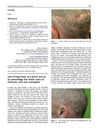
May 2012 in “Journal of Plastic Reconstructive and Aesthetic Surgery” Beard hair can effectively hide hair transplant scars.
 6 citations
,
January 2019 in “Journal of Cutaneous and Aesthetic Surgery”
6 citations
,
January 2019 in “Journal of Cutaneous and Aesthetic Surgery” Follicular unit extraction is an effective hair transplant method for advanced baldness with high patient satisfaction, but some experienced decreased density over time.
January 2020 in “Hair therapy & transplantation” FUE is a modern hair transplant method that avoids large scars and is good for short hair.
 January 2014 in “Journal of Cutaneous and Aesthetic Surgery”
 The document suggests that for better patient satisfaction in hair transplants, high-quality photos are needed, and using a narrow donor strip might lead to fewer grafts and dissatisfaction, but filling the scar with FUE grafts and using tranexamic acid can improve results.
17 citations
,
January 2014 in “Dermatology Online Journal” The Artas robotic system is effective and reliable for hair transplants.
4 citations
,
January 2019 in “Archives of clinical and medical case reports” Combining FUE hair transplantation with PRP improves hair density and patient satisfaction in scarring alopecia.