Griseofulvin is still the best treatment for tinea capitis.
 January 2012 in “Yearbook of Dermatology and Dermatologic Surgery”
 The study concluded that a 'Swiss cheese' pattern in hair follicles is a useful sign for diagnosing alopecia areata.
July 2025 in “Cell & Bioscience” Specific immune cells and pathways contribute to hair follicle inflammation and hair loss, suggesting potential treatments for lichen planopilaris.
Fgf20 helps form hair follicle structures by stopping cell division and increasing cell movement.
 1 citations
,
March 2024 in “Ophthalmic Plastic and Reconstructive Surgery”
1 citations
,
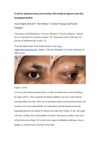
March 2024 in “Ophthalmic Plastic and Reconstructive Surgery” A pilomatrixoma in the eyebrow can cause hair loss and skin lightening.
 100 citations
,
June 2006 in “British Journal of Dermatology”
100 citations
,
June 2006 in “British Journal of Dermatology” Hair loss severity relates to increased miniaturization in female pattern hair loss.
2 citations
,
July 2001 in “Dermatologic Surgery” Trichoblastic carcinoma may be a distinct type of skin cancer different from basal cell carcinoma.
December 2024 in “Annals of Medicine and Surgery” Early diagnosis of pseudopelade of Brocq in men is crucial to prevent permanent hair loss.
1 citations
,
January 1987 in “PubMed” Candida was found in most heroin users with folliculitis.
 22 citations
,
February 2002 in “Journal of theoretical biology”
22 citations
,
February 2002 in “Journal of theoretical biology” The model showed that randomness accurately describes individual hair growth cycles and that synchronization can cause large fluctuations not seen in humans.
7 citations
,
May 1995 in “The journal of investigative dermatology/Journal of investigative dermatology” 10 citations
,
March 1973 in “Journal of Investigative Dermatology” 10 citations
,
January 2018 in “International journal of trichology” Eruptive vellus hair cysts are rare and often misdiagnosed, requiring biopsy for accurate diagnosis.
 October 2023 in “Dermatology practical & conceptual”
 Folliculitis Decalvans and Frontal Fibrosing Alopecia can coexist in people with darker skin, showing features of both conditions.
14 citations
,
January 2010 in “Dermatology” Some people with congenital triangular alopecia have a central tuft of hair in the bald patch, but the cause is unknown.
21 citations
,
December 2007 in “Journal of Investigative Dermatology” Hair follicles evolved from oil glands, with hair aiding secretion transport.
 1 citations
,
January 2014 in “Health Renaissance”
1 citations
,
January 2014 in “Health Renaissance” Pseudopelade of Brocq is hard to diagnose and treat, with limited effective options.
48 citations
,
July 1993 in “Archives of Dermatological Research” Merkel cells are abundant in facial vellus hair follicles, especially during the anagen phase.
 September 2025 in “Dermatology Online Journal”
 Biopsy is crucial for diagnosing unusual hair loss causes like lymphoma.
 55 citations
,
January 2002 in “Journal of liposome research”
55 citations
,
January 2002 in “Journal of liposome research” New liposomal formulations may improve delivery of treatments to hair follicles, potentially helping with hair loss.
 2 citations
,
July 2021 in “JAAD Case Reports”
2 citations
,
July 2021 in “JAAD Case Reports” Trichoscopy of the beard is useful for diagnosing frontal fibrosing alopecia in men.
8 citations
,
January 2017 in “Acta Dermato Venereologica” Thorough clinical examination is crucial for diagnosing unusual alopecia.
 November 2015 in “European journal of dermatology/EJD. European journal of dermatology”
 A 55-year-old woman with several health conditions did not see hair regrowth after a transplant.

Basaloid follicular hamartoma is a rare, benign skin growth often misdiagnosed.
2 citations
,
April 2019 in “Experimental Dermatology” Hair follicles respond differently to pulling forces in various regions.
 1 citations
,
December 2017 in “Acta biomedica scientifica”
1 citations
,
December 2017 in “Acta biomedica scientifica” Women of reproductive age with polycystic ovary syndrome often experience hair loss.
 66 citations
,
June 2010 in “Experimental Dermatology”
66 citations
,
June 2010 in “Experimental Dermatology” The hair follicle is a great model for research to improve hair growth treatments.
 August 2015 in “Dermatología Argentina”
 Frontal fibrosing alopecia causes hairline recession and eyebrow loss in postmenopausal women.
7 citations
,
May 1978 in “Acta Dermato Venereologica” A 36-year-old man had unusual skin lesions on his face without hair loss.
 May 2026 in “Organoid Research”
 Hydrogel-based hair follicle organoids could help treat hair loss and improve drug testing.