December 2016 in “Anales del sistema sanitario de Navarra” Frontal fibrosing alopecia is increasing, especially in postmenopausal women, and treatment with finasteride can improve it.
 August 2015 in “Dermatología Argentina”
 Frontal fibrosing alopecia causes hairline recession and eyebrow loss in postmenopausal women.
 33 citations
,
August 2005 in “The American Journal of Dermatopathology”
33 citations
,
August 2005 in “The American Journal of Dermatopathology” Both vertical and transverse sections are useful for diagnosing alopecia, but using both methods together is best.
Frontal Fibrosing Alopecia mainly affects postmenopausal women and is linked to thyroid disease, hyperlipidemia, and anemia.
September 2023 in “Journal of the American Academy of Dermatology” Including special area involvement helps identify more psoriasis patients who may need systemic treatment.
 24 citations
,
April 2017 in “Aesthetic plastic surgery”
24 citations
,
April 2017 in “Aesthetic plastic surgery” MAFT is a reliable method for forehead contouring with high patient satisfaction and long-term results.
Early diagnosis and treatment of frontal fibrosing alopecia are crucial to prevent permanent hair loss.
9 citations
,
January 2023 in “Journal of Clinical Medicine” The FFA-QLI is a reliable tool for assessing quality of life in women with severe Frontal Fibrosing Alopecia.
 January 2022 in “Дерматологія та венерологія”
 Frontal fibrosing alopecia causes hair loss along the frontal hairline, mainly in postmenopausal women, and needs better treatments.
 June 2024 in “Indian Journal of Plastic Surgery/Indian journal of plastic surgery”
 A new method helps ensure long-lasting hair transplant results by accurately calculating the donor area.
 56 citations
,
July 2005 in “Journal of The American Academy of Dermatology”
56 citations
,
July 2005 in “Journal of The American Academy of Dermatology” Using both vertical and transverse sections gives a better diagnosis of alopecia than using one method alone.
9 citations
,
June 2013 in “Journal of Cosmetic Dermatology” Lateral oblique forehead lines are caused by muscle movement, not sleep positions, and can be treated with botulinum toxin A.
August 2025 in “Journal of Cosmetic Dermatology” Hairline transplants improve forehead appearance and satisfaction in East Asian women.
 April 2026 in “Zenodo (CERN European Organization for Nuclear Research)”
 The model improves understanding of androgen interactions by focusing on signal intensity and system capacity.
 10 citations
,
July 2017 in “Archives of Plastic Surgery”
10 citations
,
July 2017 in “Archives of Plastic Surgery” Hair thickness decreases from the upper to lower areas of the back of the head, affecting hair transplant results.

Lichen planopilaris and frontal fibrosing alopecia are likely the same disease with different clinical appearances.
 July 2016 in “Journal of Cutaneous Medicine and Surgery”
 Receding hairlines in men are uneven, with the right side larger than the left.
June 2025 in “Journal of Ultrasound in Medicine” High-frequency ultrasound effectively evaluates and diagnoses frontal fibrosing alopecia.
January 2024 in “Updates in clinical dermatology” Frontal fibrosing alopecia is a scarring hair loss condition mainly affecting postmenopausal women, with unclear causes.
12 citations
,
February 2017 in “Graefe s Archive for Clinical and Experimental Ophthalmology” Gore-Tex is effective for severe congenital ptosis, with the open approach better for no lid crease and the closed approach better for a preserved crease.
 April 2026 in “Zenodo (CERN European Organization for Nuclear Research)”
 The model improves understanding of androgen interactions by focusing on signal intensity and system capacity.
4 citations
,
August 2008 in “Plastic & Reconstructive Surgery” The flap effectively sealed leaks and served as a barrier, with minor complications, for anterior skull base surgery.
 39 citations
,
July 2015 in “British Journal of Dermatology”
39 citations
,
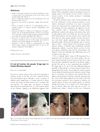
July 2015 in “British Journal of Dermatology” The pseudo 'fringe sign' can also appear in frontal fibrosing alopecia, not just in traction alopecia, showing that this condition may be more common than thought.
 17 citations
,
May 2013 in “Oral and Maxillofacial Surgery Clinics of North America”
17 citations
,
May 2013 in “Oral and Maxillofacial Surgery Clinics of North America” The document concludes that careful surgical methods and choosing the right materials are key for successful scalp, skull, and frontal sinus reconstruction.
 February 2026 in “Cureus”
 Two methods reliably measure scalp area and hair count.
22 citations
,
January 1999 in “Dermatology” The condition might be caused by genetic changes after birth.
5 citations
,
May 2023 in “Frontiers in Immunology” Advanced imaging methods have improved understanding of cancer cell interactions and treatment strategies.
 March 2022 in “Más dermatología”
 Chronic lupus and frontal fibrosing alopecia can occur together, but their connection is unclear.
 1 citations
,
September 2021 in “CRC Press eBooks”
1 citations
,
September 2021 in “CRC Press eBooks” Frontal Fibrosing Alopecia is a hair loss condition mainly affecting postmenopausal women, with unclear causes and various clinical patterns.
 November 2009 in “Cambridge University Press eBooks”
 The document's conclusion cannot be provided because the content is not accessible.