 May 2026 in “Discover Chemistry.”
 Bio-degradable polymers can replace petroleum plastics using eco-friendly methods for a sustainable future.
 1 citations
,
May 2025 in “Discover Chemistry.”
1 citations
,
May 2025 in “Discover Chemistry.” Improving mangiferin's solubility and delivery can enhance its health benefits.
 2 citations
,
January 2024 in “Journal of Pharmacognosy and Phytochemistry”
2 citations
,
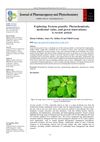
January 2024 in “Journal of Pharmacognosy and Phytochemistry” Teak has valuable compounds for medicine, cosmetics, and industry, with potential in cancer treatment and biodiesel production.
 25 citations
,
August 2007 in “Molecular Therapy”
25 citations
,
August 2007 in “Molecular Therapy” Researchers found a safe and effective way to pick genetically modified skin cells with high growth potential using CD24.
 15 citations
,
October 2010 in “Archives of Toxicology”
15 citations
,
October 2010 in “Archives of Toxicology” A yeast-based test can detect the steroid methyltestosterone in urine longer than traditional methods.
 June 2026 in “Frontiers in Marine Science”
 Codium sp. seaweed fractions can enhance skincare and be used for biochar, promoting sustainability.

Understanding hair surface properties is key for effective hair care products.
 February 2024 in “International journal of biology, pharmacy and allied sciences”
 Plant-based treatments can effectively and safely treat hair loss.

Acidic sandy clay damages archaeological hair the most, while dry conditions preserve but make it brittle; silicone oil can help keep the hair flexible.
Copper levels in green hair decreased significantly after treatment.
15 citations
,
August 2020 in “Analytical chemistry” Hair lipids do not protect against humidity.
May 2023 in “Spectrochimica Acta Part A: Molecular and Biomolecular Spectroscopy” A new green method accurately measures finasteride and tadalafil in drugs and plasma.
 1 citations
,
November 2023 in “Journal of cosmetic dermatology”
1 citations
,
November 2023 in “Journal of cosmetic dermatology” The new anti-dandruff shampoo with ketoconazole-coated zinc oxide nanoparticles is more effective against dandruff.
May 2026 in “Pharmacy Reports” Green formulations are promising in efficacy and safety but lack proven stability for widespread use.
 March 2026 in “Pharmaceutics”
 Plant-derived nanovesicles show promise in cancer treatment but need standardized preparation.
Haircare products may expose users to harmful chemicals despite regulations.
 January 2025 in “International Journal For Multidisciplinary Research”
 Buddhist meditation techniques are better for reducing stress and anxiety than modern methods.
3 citations
,
November 2022 in “Frontiers in Plant Science” Microwave extraction is an effective, eco-friendly way to boost N. jatamansi's anti-Alzheimer's properties.
 June 2024 in “Computational and Structural Biotechnology Journal”
 Multi-omics techniques help understand the molecular causes of androgenetic alopecia.
11 citations
,
January 2025 in “Marine Drugs” All extraction methods can produce similar quality fucoidan, but a holistic approach is needed for method selection.
 May 2024 in “Scientific African”
 Three natural compounds from Ghanaian plants may help treat BPH and alopecia.
 2 citations
,
October 2015 in “Human Gene Therapy”
2 citations
,
October 2015 in “Human Gene Therapy” The congress highlighted new gene therapy techniques and cell transplantation methods for treating diseases.
 1 citations
,
July 2019 in “The journal of applied laboratory medicine”
1 citations
,
July 2019 in “The journal of applied laboratory medicine” Venous catheterization may help diagnose the cause of female hyperandrogenism when imaging is unclear.
 December 2025 in “Revista em Agronegócio e Meio Ambiente”
 Enriched sunflower seed oil with green coffee beans has higher antioxidants and potential for wound treatment.
December 2025 in “Sustainable Chemistry One World” Mangosteen waste can be used as an eco-friendly natural hair dye, producing a lasting reddish color and strengthening hair.
 June 2025 in “Journal of Cluster Science”
 Metal nanoparticles show promise for treating hair loss but need more research to ensure safety.
4 citations
,
March 2024 in “Forensic Sciences Research” Forensic DNA phenotyping faces challenges like inconsistent terms and limited genetic knowledge.
 3 citations
,
February 2023 in “ACS omega”
3 citations
,
February 2023 in “ACS omega” Grape seed oil improved hair quality the most, followed by rosehip and safflower seed oils, and reduced damage from shampoo.
 16 citations
,
June 2022 in “Agronomy”
16 citations
,
June 2022 in “Agronomy” Certain natural biostimulants can increase lettuce yield and improve its nutritional content.
 33 citations
,
January 2017 in “Conservation physiology”
33 citations
,
January 2017 in “Conservation physiology” Measuring reproductive hormones in brown bear hair could help identify their sex and reproductive state, but better collection methods or lab techniques are needed.