 September 2022 in “Research, Society and Development”
 Long-lasting symptoms like fatigue and breathlessness can persist after COVID-19, requiring ongoing medical follow-up.
 December 2016 in “Int J Genet”
 Male pattern baldness is partly caused by specific genes, but most genetic factors are still unknown.
July 2026 in “JAAD reviews.” Female Pattern Hair Loss affects women's quality of life, with limited treatment options and a need for more research.
June 2025 in “Acta Dermato Venereologica” Male pattern baldness doesn't significantly affect mental health or sexual well-being.
139 citations
,
December 2021 in “Journal of Clinical Medicine” Fatigue is the most common symptom in both ongoing symptomatic COVID-19 and post-COVID-19 syndrome.
October 2025 in “JDDG Journal der Deutschen Dermatologischen Gesellschaft” Hair loss negatively impacts quality of life, and psychological support can help.

Male androgenetic alopecia (MAA) is a common, hereditary hair loss condition in men, linked to heart disease, and can be treated with minoxidil, finasteride, or hair transplantation.
63 citations
,
July 2024 in “Journal of the American Academy of Dermatology” Deuruxolitinib effectively promotes hair regrowth in adults with alopecia areata.
September 2023 in “Journal of the American Academy of Dermatology” CTP-543 significantly improved eyebrow and eyelash regrowth and patient satisfaction in adults with alopecia areata.
2 citations
,
September 2024 in “Journal of the American Academy of Dermatology” Deuruxolitinib significantly helps regrow scalp hair in adults with moderate to severe alopecia areata.
January 2026 in “British Journal of Health Psychology” Alopecia affects self-confidence, body image, and social interactions, causing distress and requiring better support and awareness.
 88 citations
,
October 2002 in “Journal of Dermatology”
88 citations
,
October 2002 in “Journal of Dermatology” Finasteride for hair loss may cause depression, affecting sleep and relationships.
 39 citations
,
October 1967 in “British Journal of Dermatology”
39 citations
,
October 1967 in “British Journal of Dermatology” Hair loss in women often doesn't follow a pattern, isn't linked to age, may be genetic, and can be related to thyroid issues or other health factors.
 November 2025 in “Scientific Reports”
 AI improves accuracy and consistency in diagnosing male pattern hair loss.
 May 2021 in “Journal of the Endocrine Society”
 The 18-year-old girl likely has a condition called müllerian agenesis, which caused her to not have a uterus and experience no menstrual periods.
 1 citations
,
July 2010 in “International Society of Hair Restoration Surgery”
1 citations
,
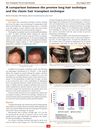
July 2010 in “International Society of Hair Restoration Surgery” The preview long hair technique offers immediate results and better satisfaction than the classic method.
 926 citations
,
June 2010 in “BMC Medicine”
926 citations
,
June 2010 in “BMC Medicine” Polycystic ovary syndrome is a complex condition that affects women's mental, reproductive, and metabolic health throughout their lives.
 108 citations
,
March 2006 in “Archives of Dermatology”
108 citations
,
March 2006 in “Archives of Dermatology” Finasteride with oral contraceptive helps improve hair loss in premenopausal women.
 86 citations
,
February 2009 in “Journal of Neuroscience”
86 citations
,
February 2009 in “Journal of Neuroscience” Pregnancy increases certain GABAA receptors in rat brains, influenced by steroid levels.
 68 citations
,
May 2011 in “European Journal of Dermatology”
68 citations
,
May 2011 in “European Journal of Dermatology” Acne is caused by genetics, diet, hormones, and bacteria, with treatments not yet curative.
 43 citations
,
November 2019 in “American Journal of Clinical Dermatology”
43 citations
,
November 2019 in “American Journal of Clinical Dermatology” FAGA diagnosis uses blood tests and trichoscopy, with treatments like topical minoxidil, oral anti-androgens, and hormone-modulating drugs.
 15 citations
,
May 2004 in “Facial Plastic Surgery Clinics of North America”
15 citations
,
May 2004 in “Facial Plastic Surgery Clinics of North America” Treat pattern hair loss with finasteride and topical minoxidil.
 14 citations
,
April 2020 in “Journal of Cosmetic Dermatology”
14 citations
,
April 2020 in “Journal of Cosmetic Dermatology” QR678 treatments were more effective and comfortable for male hair loss than PRP treatments.
 8 citations
,
January 2020 in “Skin Pharmacology and Physiology”
8 citations
,
January 2020 in “Skin Pharmacology and Physiology” Caffeine improves hair growth, thickness, and reduces shedding.
 2 citations
,
September 2009 in “Hormone Molecular Biology and Clinical Investigation”
2 citations
,
September 2009 in “Hormone Molecular Biology and Clinical Investigation” Low dose finasteride decreases certain steroids, possibly increasing depression risk.
 June 2026 in “International Journal of Current Pharmaceutical Review and Research”
 PRP with minoxidil is more effective for hair growth than minoxidil alone.
 April 2026 in “International Journal of Homoeopathic Sciences”
 Homeopathic treatment improved baldness in a young man.
 October 2025 in “Asian Journal of Oral Health and Allied Sciences”
 Autologous growth factor concentrate therapy shows promise for treating early-stage hair loss safely and effectively.
 September 2025 in “Journal of Dermatology Research Reviews & Reports”
 Rigenera® effectively improves hair condition in Androgenetic Alopecia, and HairMetrix® tracks progress well.
 April 2021 in “Advances in Cosmetic Surgery”
 Hair restoration can be achieved through non-surgical treatments like minoxidil, antiandrogens, phototherapy, and PRP procedures, or through surgical methods like hair transplantation. Continued treatment is needed to maintain results, and full results are visible after 12-18 months.