 June 2026 in “Frontiers in Cell and Developmental Biology”
 MicroRNAs can help regenerate hair by influencing stem cells and immune responses, but delivery challenges exist.
 June 2026 in “Research Square”
 THBS4 helps hair grow by activating hair follicle stem cells.
 May 2026 in “Organoid Research”
 Hydrogel-based hair follicle organoids could help treat hair loss and improve drug testing.
 April 2026 in “Inflammopharmacology”
 Punica granatum leaf extract may help treat skin fibrosis by reducing inflammation and oxidative stress.

The new microneedle system improves hair growth in alopecia treatment.

The study found that different genes are active in cashmere goats' hair growth stages, which can help improve cashmere production.
 January 2026 in “Scientific Reports”
 Sesamin may help treat hair loss by affecting specific cell pathways.

A 5% pomegranate peel water extract optimally enhances hair growth.
August 2025 in “Biomolecules” Fibroblast growth factors could be a better, safer treatment for hair loss than current options.
 August 2025 in “Nutrients”
 Ageratum conyzoides extract promotes hair growth and regrowth.
 January 2025 in “International Journal of Pharmacognosy and Life Science”
 Herbal treatments like Aloe vera, Bhringraj, Neem, Tea tree oil, Amla, and Hibiscus are promising for safer, effective hair care.
 January 2025 in “International Journal of Veterinary Science”
 Hibiscus leaf ointment helps hair growth and reduces UV skin damage in rats.
 August 2024 in “Journal of Animal Science and Technology”
 Angora goat hair growth is influenced by gene expression, sex hormones, and breed differences.
 July 2024 in “International Journal of Molecular Sciences”
 Nannochloropsis salina fermented oil may help treat hair loss by promoting hair growth and reducing oxidative stress.
July 2024 in “International Journal of Molecular Sciences” RF-based therapies might help treat hair loss.
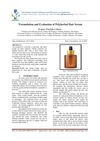 June 2024 in “International Journal of Pharmaceutical Research and Applications”
 Polyherbal hair serum can hydrate the scalp and promote hair growth safely.

675 nm laser therapy effectively improves hair growth in Indian patients with androgenetic alopecia.
 April 2024 in “Journal of translational medicine”
 MJ04, a new compound, effectively promotes hair growth and is a potential topical treatment for hair loss.
 March 2024 in “Vestnik Rossijskogo universiteta družby narodov. Seriâ Agronomiâ i životnovodstvo”
 Wnt and Shh signaling are key in noggin-induced tumors, and blocking them can slow tumor growth.
 January 2024 in “Skin appendage disorders”
 Using growth factors and microneedling shows promise for hair regrowth in Alopecia Areata, but more research is needed.
 November 2023 in “Frontiers in veterinary science”
 The study provides insights into hair growth mechanisms in yaks.
 November 2023 in “bioRxiv (Cold Spring Harbor Laboratory)”
 Disrupted cholesterol production impairs hair follicle stem cells, leading to hair loss.

Nanocarriers with plant extracts show promise for safe and effective hair growth treatment.
 October 2023 in “Peer review”
 PRP is a safe and effective treatment for hair loss.
 October 2023 in “bioRxiv (Cold Spring Harbor Laboratory)”
 A protein called EGFR protects hair follicle stem cells, and when it's disrupted, hair follicles can be damaged, but blocking certain pathways can restore hair growth.
 October 2023 in “International journal of biology, pharmacy and allied sciences”
 Henna helps wounds heal faster and better.
 September 2023 in “bioRxiv (Cold Spring Harbor Laboratory)”
 The mTurq2-Col4a1 mouse model shows that cells can divide while attached to stable basement membranes during development.
 January 2023 in “Kafkas üniversitesi veteriner fakültesi dergisi/Kafkas üniversitesi veteriner fakültesi dergisi”
 Seasonal changes affect gene activity linked to hair growth in Angora goats.
 December 2022 in “bioRxiv (Cold Spring Harbor Laboratory)”
 MicroRNA-205 helps hair grow by changing the stiffness and contraction of hair follicle cells.
 November 2022 in “Research Square (Research Square)”
 Seasonal changes affect hair growth genes in Angora goats, possibly influencing mohair quality.